Clinical Use Only. This reference is intended for healthcare providers, poison control specialists, and trained foragers. It is not a foraging identification guide. Always contact Poison Control (1-800-222-1222) for real-time case management guidance. Treatment recommendations should be confirmed against current clinical guidelines.
Regional Scope: Hawaii’s tropical climate, volcanic soils, and introduction of non-native plant species have created a unique mycological environment. Chlorophyllum molybdites is the most common cause of mushroom poisoning in Hawaii. Amatoxin-bearing Amanita marmorata and Lepiota elaiophylla have been documented. Psilocybin-containing species occur in agricultural areas. Visitor and pediatric exposures account for a disproportionate share of cases.
Quick Reference — Key Hawaii Species
| Common Name | Scientific Name | Tier | Toxin | Onset | Primary Risk |
|---|---|---|---|---|---|
| Green-Spored Parasol | Chlorophyllum molybdites | Tier 1 | Molybdophyllysin | 30 min–3 hr | Violent GI — #1 cause of mushroom poisoning in Hawaii |
| Marbled Amanita | Amanita marmorata | Tier 1 | Amatoxins | 6–24 hr | Fulminant hepatic necrosis — potentially fatal |
| Olive Lepiota | Lepiota elaiophylla | Tier 1 | Amatoxins (alpha-amanitin) | 6–15 hr | Liver parenchymal damage — hepatic coma risk |
| Blueing Hallucinogenic Parasol | Panaeolus cyanescens | Tier 2 | Psilocybin / Psilocin | 15–60 min | Hallucinations, seizure risk |
| Fly Agaric | Amanita muscaria | Tier 2 | Ibotenic acid / Muscimol | 30–90 min | CNS delirium, ataxia |
| Inky Cap / Common Inkcap | Coprinopsis atramentaria | Tier 2 | Coprine (ALDH inhibitor) | 5–30 min (with alcohol) | Disulfiram-like reaction; tachycardia, hypotension |
| Giant Macrocybe | Macrocybe spectabilis | Tier 3 | Cyanogenic Glucosides / GI irritants | 30 min–3 hr | Severe dehydration, hypovolemic shock |
| Lavender Blewit | Lepista tarda / Clitocybe tarda | Tier 3 | Thermolabile proteins | 1–3 hr | GI distress, abdominal cramping |
| Earthstar Puffball | Geastrum saccatum / G. triplex | Tier 3 | GI irritant resins / inhalation risk | 30 min–4 hr | GI irritation; lycoperdonosis if inhaled |
Tier 1 — Life-Threatening
Potentially Fatal Species
These species can cause irreversible organ failure or life-threatening GI crisis even from small ingestions. Any suspected exposure requires immediate emergency evaluation and Poison Control contact.
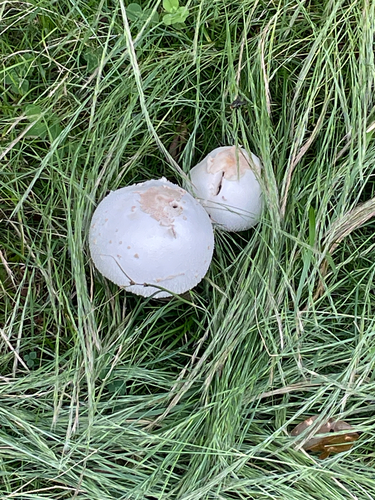
Photo © iNaturalist (CC BY-NC)
Green-Spored Parasol
Chlorophyllum molybdites
Tier 1 — Life-Threatening
30 minutes to 3 hours post-ingestion
Identification Features
5–30 cm wide, white to buff cap with brownish, liftable scales; gills white, becoming greyish-green to olive-green; stem 10–25 cm, with a thick, double-layered ring; spore print dull green to olive-green; found in lawns, pastures, and golf courses.
Toxic Compound(s)
Molybdophyllysin.
Onset Time
30 minutes to 3 hours post-ingestion.
Mechanism of Toxicity
Severe GI irritation, rapid cell shedding, and hypersecretion of fluids.
Clinical Symptoms
Violent vomiting, severe abdominal cramps, explosive diarrhea, severe dehydration, and potential acute kidney injury.
Treatment Protocols
Aggressive IV fluid resuscitation, anti-emetic therapy (e.g., Ondansetron), and electrolyte management. Activated charcoal is generally not indicated due to violent emesis.
⚠ Look-Alike Warning: Edible Parasol (Macrolepiota procera) and Shaggy Parasols (Chlorophyllum rhacodes / C. brunneum). Differentiators: C. molybdites produces a green-tinted gill and green spore print.
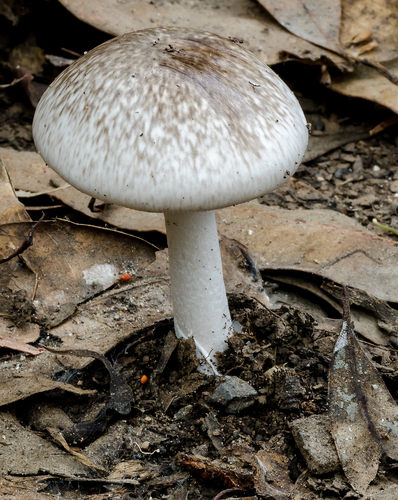
Photo © iNaturalist (CC BY-NC)
Marbled Amanita
Amanita marmorata
Tier 1 — Life-Threatening
6 to 24 hours (latent phase)
Identification Features
4–10 cm wide, white to pale cream cap with grayish-tan/silvery “marbled” patches; white, free gills; white, membranous, skirt-like ring; prominent, sac-like volva cup at the base; spore print white, amyloid; found near Casuarina (Ironwood) and Eucalyptus.
Toxic Compound(s)
Amatoxins (alpha-amanitin, beta-amanitin).
Onset Time
6 to 24 hours (latent phase before GI symptoms).
Mechanism of Toxicity
Hepatocyte uptake via OATPs, inhibiting RNA polymerase II, halting protein synthesis, leading to widespread hepatic necrosis.
Clinical Symptoms
Severe GI distress (Day 1-2), false recovery (Day 2-3), and fulminant hepatic necrosis with coagulopathy and potential kidney failure (Day 3-7).
Treatment Protocols
Aggressive IV hydration, IV Silibinin (or Penicillin G), N-acetylcysteine (NAC). Multidose activated charcoal within 24 hours. Early consultation for liver transplantation.
⚠ Look-Alike Warning: Edible Paddy Straw mushrooms (Volvariella volvacea) and immature Agaricus or puffballs. Differentiators: Amanita has a volva cup and white spore print; paddy straw has a pink spore print and no ring.
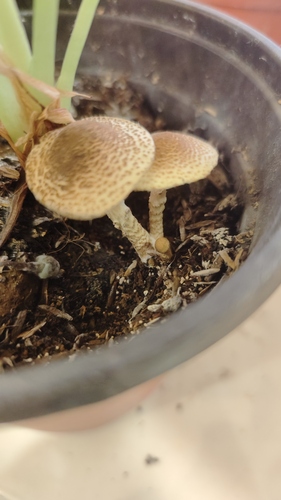
Photo © iNaturalist (CC BY-NC)
Olive Lepiota
Lepiota elaiophylla
Tier 1 — Life-Threatening (Cyclopeptide/Amatoxin Hazard)
6 to 15 hours post-ingestion (characteristically delayed latent period)
Identification Features
Cap: Small, delicate, 1–4 cm wide; initially campanulate (bell-shaped) becoming convex to plane; pale yellowish-green, olive-yellow, to greenish-tan, covered in fine, concentric yellowish-brown scales concentrated at the darker disk (center).
Gills: Pale greenish-yellow to bright olive-yellow, crowded, completely free from the stem.
Stem: 2–6 cm long, thin (2–4 mm), fragile, hollow, pale yellow to olive-tinted; features a small, fragile, membranous, olive-yellow ring that may disappear or leave a faint ring zone.
Spore Print: White.
Habitat in Hawaii: Ubiquitous in tropical disturbed environments, rich garden mulch, commercial greenhouses, flower pots, and wood chips under coastal ironwood (Casuarina) trees across all islands. Often fruits indoors in potted plants.
Gills: Pale greenish-yellow to bright olive-yellow, crowded, completely free from the stem.
Stem: 2–6 cm long, thin (2–4 mm), fragile, hollow, pale yellow to olive-tinted; features a small, fragile, membranous, olive-yellow ring that may disappear or leave a faint ring zone.
Spore Print: White.
Habitat in Hawaii: Ubiquitous in tropical disturbed environments, rich garden mulch, commercial greenhouses, flower pots, and wood chips under coastal ironwood (Casuarina) trees across all islands. Often fruits indoors in potted plants.
Toxic Compound(s)
Amatoxins (specifically alpha-amanitin and beta-amanitin).
Onset Time
6 to 15 hours post-ingestion (characteristically delayed latent period).
Mechanism of Toxicity
Amatoxins are actively transported into hepatocytes via organic anion-transporting polypeptides (OATPs). Once inside the cell, alpha-amanitin binds irreversibly to RNA polymerase II, completely halting mRNA synthesis. This causes a total cessation of cellular protein production, leading to widespread, fragmented cell death. This results in fulminant hepatic necrosis and can secondarily cause acute kidney injury via acute tubular necrosis.
Clinical Symptoms
Phase I (Delayed GI Phase, Hours 6–24): Sudden, violent, cholera-like watery diarrhea, severe abdominal cramping, and projectile vomiting. Can lead to profound dehydration and electrolyte imbalances.
Phase II (Latent/False Recovery Phase, Hours 24–48): Gastrointestinal symptoms subside, giving a false impression of recovery. However, serum transaminases (AST/ALT) and bilirubin begin a steep, silent climb.
Phase III (Hepatorenal Phase, Days 3–7): Fulminant hepatic failure characterized by gross jaundice, coagulopathy (elevated PT/INR), encephalopathy, hepato-renal syndrome, multiorgan failure, hepatic coma, and death.
Phase II (Latent/False Recovery Phase, Hours 24–48): Gastrointestinal symptoms subside, giving a false impression of recovery. However, serum transaminases (AST/ALT) and bilirubin begin a steep, silent climb.
Phase III (Hepatorenal Phase, Days 3–7): Fulminant hepatic failure characterized by gross jaundice, coagulopathy (elevated PT/INR), encephalopathy, hepato-renal syndrome, multiorgan failure, hepatic coma, and death.
Treatment Protocols
Immediate Decontamination: If presentation occurs within 24 hours of ingestion, administer Multi-Dose Activated Charcoal (MDAC) (50 g initially, followed by 25 g every 4 hours) to interrupt the enterohepatic recirculation of amatoxins.
Aggressive Fluid Resuscitation: Maintain high-volume IV crystalloid hydration to optimize renal perfusion and force glomerular filtration of circulating toxins. Target a strict urine output of 100–200 mL/hour.
Silibinin (Legalon SIL): If available, administer via emergency protocol (5 mg/kg IV loading dose over 1 hour, followed by 20 mg/kg/day continuous infusion).
Benzylpenicillin (Penicillin G): Alternative OATP blocker if Silibinin is unavailable. Dose at 300,000 to 1,000,000 units/kg/day IV divided every 4 hours.
N-Acetylcysteine (NAC): Initiate standard IV acetaminophen overdose protocol (150 mg/kg over 1 hour, 50 mg/kg over 4 hours, 100 mg/kg over 16 hours) to act as an antioxidant and preserve hepatic glutathione stores.
Surgical Consultation: Contact a regional transplant center immediately upon confirmation of amatoxin exposure. Monitor PT/INR, AST/ALT, and creatinine every 6 hours to track liver transplant criteria.
Aggressive Fluid Resuscitation: Maintain high-volume IV crystalloid hydration to optimize renal perfusion and force glomerular filtration of circulating toxins. Target a strict urine output of 100–200 mL/hour.
Silibinin (Legalon SIL): If available, administer via emergency protocol (5 mg/kg IV loading dose over 1 hour, followed by 20 mg/kg/day continuous infusion).
Benzylpenicillin (Penicillin G): Alternative OATP blocker if Silibinin is unavailable. Dose at 300,000 to 1,000,000 units/kg/day IV divided every 4 hours.
N-Acetylcysteine (NAC): Initiate standard IV acetaminophen overdose protocol (150 mg/kg over 1 hour, 50 mg/kg over 4 hours, 100 mg/kg over 16 hours) to act as an antioxidant and preserve hepatic glutathione stores.
Surgical Consultation: Contact a regional transplant center immediately upon confirmation of amatoxin exposure. Monitor PT/INR, AST/ALT, and creatinine every 6 hours to track liver transplant criteria.
Contraindications
No NSAIDs or Nephrotoxic Drugs: Avoid administering any nephrotoxic medications (e.g., NSAIDs, aminoglycosides) which compromise renal clearance of amatoxins.
Avoid Acetaminophen: Strictly avoid acetaminophen for pain/fever control due to baseline hepatic burden.
Avoid Acetaminophen: Strictly avoid acetaminophen for pain/fever control due to baseline hepatic burden.
⚠ Look-Alike Warning: Yellow Houseplant Mushroom (Leucocoprinus birnbaumii): Very common in similar indoor potting soil and tropical landscaping. Differentiator: Leucocoprinus birnbaumii is bright, uniform sulfur-yellow to lemon-yellow without olive or greenish hues, and its cap is typically more distinctly plicate-striate (pleated) along the edges. While L. birnbaumii is a severe GI irritant, it does not contain fatal amatoxins. Clinical Rule: Any small yellow-green scaly Lepiota in Hawaii must be treated as a deadly amatoxin source until proven otherwise.
Tier 2 — Neurotoxic / High-Consequence
Significant Neurotoxic Species
These species cause serious neurological or systemic illness requiring medical evaluation. CNS effects can be severe, disorienting, and dangerous.
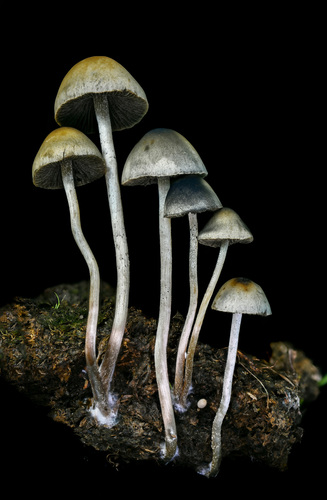
Photo © iNaturalist (CC BY-NC)
Blueing Hallucinogenic Parasol
Panaeolus cyanescens
Tier 2 — Neurotoxic / High-Consequence
15 to 60 minutes post-ingestion
Identification Features
1.5–4 cm, bell-shaped to convex, smooth cap, light gray-white, turning yellowish/tan; gills mottled jet-black; no persistent ring; cap and stem bruise vivid blue-green; spore print jet black; found on aged manure and enriched, manured lawns.
Toxic Compound(s)
Psilocybin and Psilocin.
Onset Time
15 to 60 minutes post-ingestion.
Mechanism of Toxicity
Agonist at central 5-HT2A serotonin receptors, causing significant disruption of neurotransmission.
Clinical Symptoms
Hyper-reflexia, intense visual/auditory hallucinations, time/space distortion, panic attacks, tachycardia, hypertension, and potential seizures.
Treatment Protocols
Supportive care in a quiet, low-stimulus environment. Benzodiazepines for agitation or sedation.
⚠ Look-Alike Warning: Other coprophilous Panaeolus (e.g., P. antillarum) or toxic Conocybe. Differentiators: Immediate blue bruising on P. cyanescens.
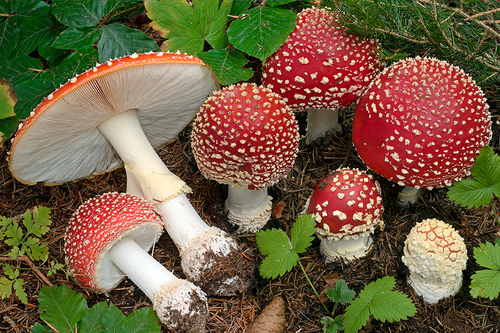
Photo © iNaturalist (CC BY-NC)
Fly Agaric
Amanita muscaria
Tier 2 — Neurotoxic / High-Consequence
30 to 90 minutes post-ingestion
Identification Features
Cap: 5–20 cm wide; bright red, orange, or yellowish-orange, fading to yellow with age; covered with distinct white to pale yellow wart-like patches. Gills: White, crowded, and free from the stem. Stalk: 5–20 cm long; white, sturdy, with a persistent skirt-like ring near the top. Base: Bulbous, with concentric rings or ridges of white tissue representing volval remnants. Spore Print: White. Habitat: Found at higher elevations in Hawaii (such as Maui’s Upcountry or Hawaii Island’s volcano regions), growing symbiotically with introduced pines and eucalyptus trees.
Primary Risk
Severe central nervous system disruption, delirium, and accidental self-injury.
Toxic Compound(s)
Ibotenic Acid and Muscimol: Isoxazole derivatives that act as potent neurotoxins. (Note: Despite the name, it contains only trace, clinically insignificant amounts of muscarine).
Mechanism of Toxicity
Ibotenic acid is a structural analogue of glutamate, acting as an excitatory NMDA receptor agonist. During metabolic processing, ibotenic acid decarboxylates into muscimol, a potent GABA-A receptor agonist. This configuration forces the central nervous system to alternate between states of extreme neuronal excitation and profound sedation.
Clinical Symptoms
Neurological Phase: Ataxia (drunken gait), dizziness, muscle twitching, fasciculations, and severe visual or auditory distortions. Behavioral Phase: Alternating cycles of manic excitement, hyper-reactivity, delirium, and deep sleep or stupor. Gastrointestinal Phase: Mild to moderate nausea and abdominal cramps may occur initially, though autonomic symptoms are rare.
Treatment Protocols
Supportive Care: Place the patient in a quiet, dark, and low-stimulus environment to mitigate panic and agitation.
Sedation Management: Administer IV benzodiazepines (e.g., Lorazepam 1–2 mg) for extreme agitation, muscle spasms, or if seizures develop.
Contraindication Warning: Strictly avoid administering atropine unless unambiguous, life-threatening cholinergic signs (SLUDGE syndrome) are present. Atropine will severely exacerbate the central nervous system excitation caused by ibotenic acid.
Hydration: Provide IV fluid therapy to maintain hydration during the variable sedative phases.
Sedation Management: Administer IV benzodiazepines (e.g., Lorazepam 1–2 mg) for extreme agitation, muscle spasms, or if seizures develop.
Contraindication Warning: Strictly avoid administering atropine unless unambiguous, life-threatening cholinergic signs (SLUDGE syndrome) are present. Atropine will severely exacerbate the central nervous system excitation caused by ibotenic acid.
Hydration: Provide IV fluid therapy to maintain hydration during the variable sedative phases.
⚠ Look-Alike Warning: Can be confused with non-toxic tropical Agaricus species or other introduced macrofungi when the cap color bleaches due to heavy Hawaiian rainfall. Key Differentiator: Amanita muscaria always retains its bulbous base with concentric volval ridges and has free, white gills, whereas Agaricus species lack a volva and possess gills that turn dark brown to black at maturity.
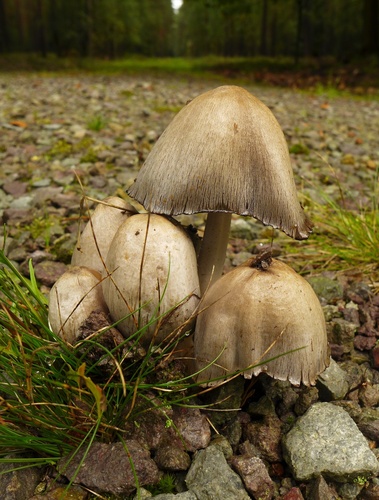
Photo © iNaturalist (CC BY-NC)
Inky Cap / Common Inkcap
Coprinopsis atramentaria (formerly Coprinus atramentarius), Coprinellus micaceus, and related coprine-bearing species
Tier 2 — Neurotoxic / High-Consequence (Autonomic/Systemic Toxin when combined with ethanol)
5 to 30 minutes after ethanol consumption
Identification Features
Cap: 3–8 cm wide, oval to bell-shaped, gray to grayish-brown, often with fine scales or granules at the center; margins are distinctly lined or grooved.
Gills: White to gray initially, crowded, free from the stem, rapidly undergoing auto-digestion (deliquescence) into a thick, jet-black, inky fluid as the spores mature.
Stem: 5–15 cm long, 1–2 cm thick, white, hollow, smooth, lacking a persistent, distinct ring but may have a faint basal ridge.
Spore Print: Jet black.
Habitat in Hawaii: Found in clumps on buried wood, rich organic soils, golf courses, pasture borders, lawns, and agricultural fields across Oʻahu, Maui, and Hawaiʻi Island.
Gills: White to gray initially, crowded, free from the stem, rapidly undergoing auto-digestion (deliquescence) into a thick, jet-black, inky fluid as the spores mature.
Stem: 5–15 cm long, 1–2 cm thick, white, hollow, smooth, lacking a persistent, distinct ring but may have a faint basal ridge.
Spore Print: Jet black.
Habitat in Hawaii: Found in clumps on buried wood, rich organic soils, golf courses, pasture borders, lawns, and agricultural fields across Oʻahu, Maui, and Hawaiʻi Island.
Toxic Compound(s)
Coprine (N5-(1-hydroxycyclopropyl)-l-glutamine).
Mechanism of Toxicity
Coprine is metabolized in the human liver into 1-aminocyclopropanol, which acts as a potent, irreversible inhibitor of the enzyme aldehyde dehydrogenase (ALDH). If ethanol is consumed, the conversion of acetaldehyde to acetate is blocked. This results in a rapid, systemic accumulation of toxic acetaldehyde in the bloodstream, producing a profound disulfiram-like (Antabuse) reaction. The vulnerability to ethanol persists for up to 48 to 72 hours (and rarely up to 5 days) after mushroom ingestion, until new ALDH enzymes are synthesized by the liver.
Onset Time
Mushroom Ingestion: Asymptomatic on its own. Following Ethanol Consumption: 5 to 30 minutes after any alcohol intake.
Clinical Symptoms
Cardiovascular: Marked facial flushing, erythema of the neck and upper torso, intense throbbing headache, palpitations, tachycardia (often 110–140 bpm), and orthostatic hypotension. Severe cases may present with chest pain and arrhythmias.
Gastrointestinal: Nausea, violent projectile vomiting, metallic taste in the mouth, and hypersecretion of saliva.
Neurological/Systemic: Diaphoresis, vertigo, profound anxiety, dyspnea, hyperventilation, tremulousness, and a sensation of chest constriction.
Gastrointestinal: Nausea, violent projectile vomiting, metallic taste in the mouth, and hypersecretion of saliva.
Neurological/Systemic: Diaphoresis, vertigo, profound anxiety, dyspnea, hyperventilation, tremulousness, and a sensation of chest constriction.
Treatment Protocols
Airway and Breathing: Ensure airway patency; provide supplemental oxygen if dyspnea or chest discomfort is present.
Fluid Resuscitation: Aggressive IV crystalloid infusion (0.9% Normal Saline or Lactated Ringer’s) to correct orthostatic hypotension and accelerate acetaldehyde clearance via renal excretion.
Pharmacotherapy:
• Antiemetics: IV Ondansetron (4–8 mg) or IV Metoclopramide (10 mg) for persistent emesis.
• Anxiolytics: IV Benzodiazepines (e.g., Lorazepam 1–2 mg or Diazepam 5 mg) to control severe agitation, anxiety, tachycardia, and associated hypertension.
• Cardiovascular Support: For rare, refractory hypotension unresponsive to fluids, initiate a titratable vasopressor infusion (e.g., Norepinephrine).
Monitoring: Continuous ECG, pulse oximetry, and non-invasive blood pressure monitoring until symptoms completely resolve, typically within 3 to 6 hours.
Fluid Resuscitation: Aggressive IV crystalloid infusion (0.9% Normal Saline or Lactated Ringer’s) to correct orthostatic hypotension and accelerate acetaldehyde clearance via renal excretion.
Pharmacotherapy:
• Antiemetics: IV Ondansetron (4–8 mg) or IV Metoclopramide (10 mg) for persistent emesis.
• Anxiolytics: IV Benzodiazepines (e.g., Lorazepam 1–2 mg or Diazepam 5 mg) to control severe agitation, anxiety, tachycardia, and associated hypertension.
• Cardiovascular Support: For rare, refractory hypotension unresponsive to fluids, initiate a titratable vasopressor infusion (e.g., Norepinephrine).
Monitoring: Continuous ECG, pulse oximetry, and non-invasive blood pressure monitoring until symptoms completely resolve, typically within 3 to 6 hours.
Contraindications
• Absolute Contraindication: Avoid all ethanol-containing medications (e.g., certain IV formulations, elixirs, or tinctures) and topical alcohol rubs.
• Fomepizole/Disulfiram therapies: Do not administer disulfiram or alcohol dehydrogenase inhibitors like fomepizole unless co-ingestions (like toxic alcohols) dictate otherwise, as this can complicate the clinical picture.
• Gastric Decontamination: Activated charcoal and gastric lavage are strictly contraindicated due to the high risk of aspiration from sudden, violent emesis.
• Fomepizole/Disulfiram therapies: Do not administer disulfiram or alcohol dehydrogenase inhibitors like fomepizole unless co-ingestions (like toxic alcohols) dictate otherwise, as this can complicate the clinical picture.
• Gastric Decontamination: Activated charcoal and gastric lavage are strictly contraindicated due to the high risk of aspiration from sudden, violent emesis.
⚠ Look-Alike Warning:
Shaggy Mane (Coprinus comatus): Highly sought-after edible that also undergoes inky deliquescence. Differentiator: C. comatus is much larger, has a distinctly cylindrical, shaggy, white cap with liftable scales, and a loose, movable ring on the stem. Crucially, it does not contain coprine and does not cause a reaction with alcohol.
Psychoactive Parasols (Panaeolus cyanescens): Found in the same pasture habitats. Differentiator: P. cyanescens has a light gray/tan cap, lacks ribbed margins, does not turn into an inky liquid, and bruises a distinct blue-green color when handled.
Tier 3 — Gastrointestinal Irritants
Gastrointestinal Toxin-Producing Species
These species cause significant GI illness. Severe dehydration and electrolyte depletion can be dangerous in vulnerable patients. Pediatric and elderly patients require close monitoring.
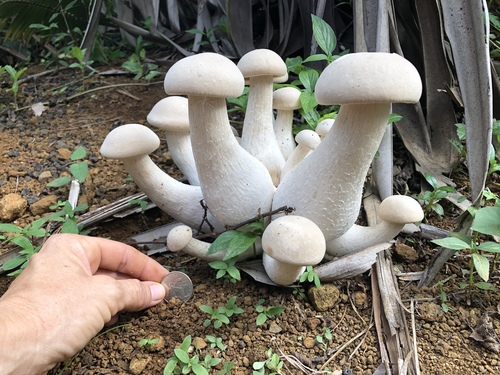
Photo © iNaturalist (CC BY-NC)
Giant Macrocybe
Macrocybe spectabilis
Tier 3 — Gastrointestinal Irritant / Potential Systemic Cyanogenic Hazard
30 minutes to 3 hours post-ingestion
Identification Features
Cap: Massive, 10–40 cm (or larger) wide; convex becoming plane; pale buff, creamy white, to light tan; smooth but can become cracked in dry weather; thick, fleshy context.
Gills: White to pale cream, crowded, sinuate to adnexed (notched near the stem).
Stem: Extremely robust, 15–30 cm long, 3–8 cm thick, often bulbous or swollen at the base; solid, fibrous, white to pale buff, lacking a ring.
Spore Print: White to creamy white.
Habitat in Hawaii: Saprotrophic, growing in massive dense clusters or fairy rings on the ground, frequently associated with decomposing organic matter, old sugar cane fields, bamboo groves, or disturbed soils across O‘ahu and Maui.
Gills: White to pale cream, crowded, sinuate to adnexed (notched near the stem).
Stem: Extremely robust, 15–30 cm long, 3–8 cm thick, often bulbous or swollen at the base; solid, fibrous, white to pale buff, lacking a ring.
Spore Print: White to creamy white.
Habitat in Hawaii: Saprotrophic, growing in massive dense clusters or fairy rings on the ground, frequently associated with decomposing organic matter, old sugar cane fields, bamboo groves, or disturbed soils across O‘ahu and Maui.
Toxic Compound(s)
Cyanogenic glycosides and complex thermolabile gastrointestinal irritant resins.
Onset Time
30 minutes to 3 hours post-ingestion.
Mechanism of Toxicity
Dual-action pathology. Raw or undercooked specimens contain local gastrointestinal irritants that directly inflame the gastric mucosa. Additionally, the presence of cyanogenic glycosides can undergo enzymatic hydrolysis in the gut, releasing trace amounts of hydrogen cyanide (HCN). HCN inhibits mitochondrial cytochrome c oxidase, disrupting cellular respiration and ATP production. While clinical cyanide poisoning from this species is rare due to varying toxin concentrations, the risk of systemic cellular hypoxia exists with large ingestions.
Clinical Symptoms
Gastrointestinal: Severe, rapid-onset nausea, projectile vomiting, intense abdominal cramps, and explosive watery diarrhea.
Neurological/Systemic: Dizziness, throbbing headache, anxiety, flushing, confusion, and diaphoresis.
Severe Signs (Cyanogenic Excess): Tachycardia, initial hypertension followed by hypotension, hyperventilation (early) progressing to bradypnea (late), lactic acidosis, and potential hypovolemic or cellular shock secondary to severe dehydration and cellular hypoxia.
Neurological/Systemic: Dizziness, throbbing headache, anxiety, flushing, confusion, and diaphoresis.
Severe Signs (Cyanogenic Excess): Tachycardia, initial hypertension followed by hypotension, hyperventilation (early) progressing to bradypnea (late), lactic acidosis, and potential hypovolemic or cellular shock secondary to severe dehydration and cellular hypoxia.
Treatment Protocols
Fluid Resuscitation: Aggressive IV fluid resuscitation with balanced crystalloids (e.g., Lactated Ringer’s) to correct severe volume depletion from fluid loss.
Gastrointestinal Management: Administer IV Ondansetron (4–8 mg) or IV Palonosetron for refractory emesis. Monitor and replace electrolytes (potassium, magnesium) dynamically.
Systemic Evaluation: Check serum lactate levels, arterial blood gases (ABG), and monitor for metabolic acidosis if systemic symptoms present.
Cyanide Antidote (Emergency Use Only): If the patient exhibits profound, unexplained metabolic acidosis, altered mental status, and hemodynamic instability unresponsive to fluids, consider empirical administration of Hydroxocobalamin (Cyanokit) at standard clinical dosing (5 g IV over 15 minutes).
Gastrointestinal Management: Administer IV Ondansetron (4–8 mg) or IV Palonosetron for refractory emesis. Monitor and replace electrolytes (potassium, magnesium) dynamically.
Systemic Evaluation: Check serum lactate levels, arterial blood gases (ABG), and monitor for metabolic acidosis if systemic symptoms present.
Cyanide Antidote (Emergency Use Only): If the patient exhibits profound, unexplained metabolic acidosis, altered mental status, and hemodynamic instability unresponsive to fluids, consider empirical administration of Hydroxocobalamin (Cyanokit) at standard clinical dosing (5 g IV over 15 minutes).
Contraindications
Avoid Empiric Sodium Nitrite: Do not utilize nitrite-based cyanide antidotes (e.g., Sodium Nitrite) if the patient is already hypotensive or volume-depleted from severe GI distress, as nitrites induce vasodilation and methemoglobinemia, exacerbating tissue hypoxia.
Avoid Antimotility Agents: Do not give Loperamide or Diphenoxylate, as retaining the irritant compounds prolongs mucosal damage.
Avoid Antimotility Agents: Do not give Loperamide or Diphenoxylate, as retaining the irritant compounds prolongs mucosal damage.
⚠ Look-Alike Warning: Edible Milky Mushrooms (Calocybe indica): Visually similar large white mushrooms. Differentiator: Calocybe indica is primarily cultivated under controlled conditions and does not possess cyanogenic compounds or wild cluster habits unique to Macrocybe. Given the sheer size, any massive white wild clustering mushroom in Hawaii should be treated as potentially toxic.
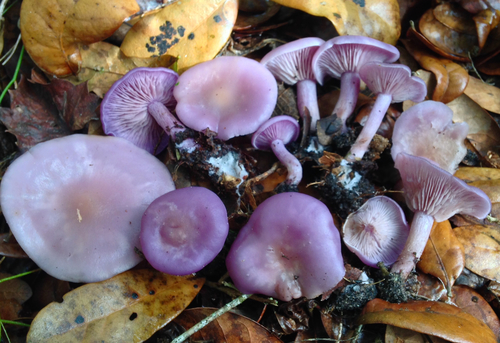
Photo © iNaturalist (CC BY-NC)
Lavender Blewit
Lepista tarda / Clitocybe tarda
Tier 3 — Gastrointestinal Irritant
1 to 3 hours post-ingestion
Identification Features
Cap: 2–7 cm wide; smooth, dull purplish-gray, lavender, or pinkish-buff, often fading to a brownish-tan color when dry. Gills: Pale lavender to grayish-pink, attached to the stem or slightly running down it. Stalk: 3–6 cm long, slender, fibrous, matching the cap color, lacking a ring or veil. Spore Print: Pale pink to creamy pink. Habitat: Decomposer growing in lawns, gardens, compost piles, and wood chips across Hawaiian urban developments.
Toxic Compound(s)
Uncharacterized thermolabile proteins and localized gastrointestinal irritants.
Primary Risk
Severe gastrointestinal distress and painful abdominal cramping.
Mechanism of Toxicity
Direct chemical irritation of the mucosal lining of the stomach and intestines. While some individuals tolerate this species if it is thoroughly cooked, raw or inadequate preparation regularly triggers acute gastroenteritis.
Clinical Symptoms
Gastrointestinal Distress: Nausea, abdominal pain, persistent vomiting, and moderate to severe watery diarrhea. Secondary Symptoms: Chills, mild headache, and dehydration secondary to fluid losses.
Treatment Protocols
Hydration Support: Provide oral rehydration fluids for mild cases; initiate IV fluid therapy if vomiting prevents oral intake.
Symptom Relief: Administer anti-emetics and smooth-muscle antispasmodics as clinically indicated for severe abdominal pain.
Monitoring: Monitor fluid balance in pediatric or elderly patients to prevent dehydration-induced complications.
Symptom Relief: Administer anti-emetics and smooth-muscle antispasmodics as clinically indicated for severe abdominal pain.
Monitoring: Monitor fluid balance in pediatric or elderly patients to prevent dehydration-induced complications.
⚠ Look-Alike Warning: Can be dangerously confused with toxic, purple Cortinarius species. Key Differentiator: Lepista tarda produces a light pink spore print and has clean, hairless stems. Toxic Cortinarius species produce a rusty-brown spore print and possess a web-like veil (cortina) that leaves rusty-brown thread remnants or stains on the stalk.
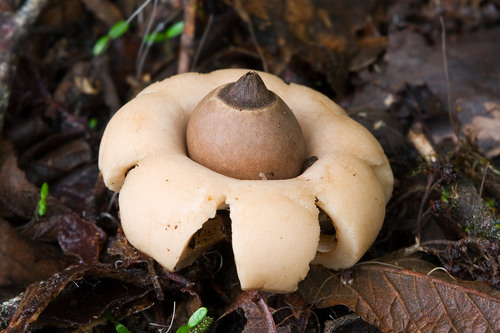
Photo © iNaturalist (CC BY-NC)
Earthstar Puffball
Geastrum species (including Geastrum saccatum, Geastrum triplex, and related local variants)
Tier 3 — Gastrointestinal Irritant / Low-to-Moderate Consequence
30 minutes to 4 hours post-ingestion
Identification Features
Immature Phase: Subterranean to partially exposed, onion-shaped or globose, rough, brownish balls.
Mature Phase: The outer skin (exoperidium) splits open and peels back into 4 to 10 pointed, star-like rays, lifting the central spore sac. The outer diameter spans 2 to 7 cm when expanded.
Central Spore Sac: Globose, papery, gray to tan, sitting directly on or slightly stalked above the star base, featuring a small, distinct hole or pore (peristome) at the top through which smoky brown spores puff out when struck by raindrops or touched.
Habitat in Hawaii: Terrestrial, growing in leaf litter, decaying organic matter, and soil under introduced ironwood (Casuarina), eucalyptus, and native forest canopies across all islands.
Mature Phase: The outer skin (exoperidium) splits open and peels back into 4 to 10 pointed, star-like rays, lifting the central spore sac. The outer diameter spans 2 to 7 cm when expanded.
Central Spore Sac: Globose, papery, gray to tan, sitting directly on or slightly stalked above the star base, featuring a small, distinct hole or pore (peristome) at the top through which smoky brown spores puff out when struck by raindrops or touched.
Habitat in Hawaii: Terrestrial, growing in leaf litter, decaying organic matter, and soil under introduced ironwood (Casuarina), eucalyptus, and native forest canopies across all islands.
Toxic Compound(s)
Uncharacterized complex proteins, local terpenoids, and various gastrointestinal irritant resins.
Mechanism of Toxicity
Direct local chemical irritation of the gastric and intestinal mucosal linings. The fibrous, chitinous, and leathery tissue of the mushroom is completely indigestible by the human tract, exacerbating mechanical and chemical irritation, which triggers a localized emetic and diarrheal reflex without systemic organ cytotoxicity.
Onset Time
30 minutes to 4 hours post-ingestion.
Clinical Symptoms
Gastrointestinal: Epigastric distress, acute nausea, mild to moderate abdominal cramping, followed by self-limiting vomiting and watery diarrhea.
Systemic: Mild dehydration, low-grade tachycardia secondary to fluid loss, and general malaise.
Respiratory (Inhalation Risk): If dry spores from the sac are intentionally or accidentally inhaled in large quantities, patients can present with acute respiratory irritation, dry cough, wheezing, and hypersensitivity pneumonitis (lycoperdonosis).
Systemic: Mild dehydration, low-grade tachycardia secondary to fluid loss, and general malaise.
Respiratory (Inhalation Risk): If dry spores from the sac are intentionally or accidentally inhaled in large quantities, patients can present with acute respiratory irritation, dry cough, wheezing, and hypersensitivity pneumonitis (lycoperdonosis).
Treatment Protocols
Ingestion Protocols:
• Fluid Management: Assess hydration status. Provide oral rehydration fluids for mild cases. For moderate to severe vomiting/diarrhea with clinical signs of dehydration, administer IV crystalloid fluids (e.g., 1–2 liters of Lactated Ringer’s).
• Antiemetics: Administer IV or oral Ondansetron (4–8 mg) every 6 hours as needed to control nausea and allow oral fluid retention.
Inhalation Protocols (Lycoperdonosis):
• Airway Support: Provide humidified supplemental oxygen if oxygen saturation drops below 94%.
• Bronchospasm: Administer inhaled beta-2 agonists (e.g., Albuterol 2.5 mg via nebulizer) for wheezing or respiratory distress.
• Inflammation: Consider a short course of oral or IV corticosteroids (e.g., Prednisone 40–60 mg or Methylprednisolone 125 mg IV) for severe cases presenting with pneumonitis features.
• Fluid Management: Assess hydration status. Provide oral rehydration fluids for mild cases. For moderate to severe vomiting/diarrhea with clinical signs of dehydration, administer IV crystalloid fluids (e.g., 1–2 liters of Lactated Ringer’s).
• Antiemetics: Administer IV or oral Ondansetron (4–8 mg) every 6 hours as needed to control nausea and allow oral fluid retention.
Inhalation Protocols (Lycoperdonosis):
• Airway Support: Provide humidified supplemental oxygen if oxygen saturation drops below 94%.
• Bronchospasm: Administer inhaled beta-2 agonists (e.g., Albuterol 2.5 mg via nebulizer) for wheezing or respiratory distress.
• Inflammation: Consider a short course of oral or IV corticosteroids (e.g., Prednisone 40–60 mg or Methylprednisolone 125 mg IV) for severe cases presenting with pneumonitis features.
Contraindications
• Antidiarrheal Agents: Avoid antimotility agents (e.g., Loperamide, Diphenoxylate/Atropine) in the acute phase, as they delay the expulsion of the irritating fungal matter from the gut.
• Aggressive Gastric Lavage: Contraindicated due to the potential size and leathery texture of the mushroom fragments, which cannot be cleared via standard lavage tubes and increase airway risks.
• Aggressive Gastric Lavage: Contraindicated due to the potential size and leathery texture of the mushroom fragments, which cannot be cleared via standard lavage tubes and increase airway risks.
⚠ Look-Alike Warning: Immature Puffballs / Juvenile Toxic Fungi: Prior to opening into the classic “star” shape, immature underground Geastrum species look like small brown eggs. Differentiator: Sectioning the button vertically reveals a homogenous, fibrous interior without distinct structural outlines. This distinguishes them from the highly toxic immature Amanita marmorata buttons, which reveal a distinct, unexpanded cap, gills, and stem outline inside a universal veil when cut vertically.
Other Regional Toxic Mushroom Clinical References
Alaska · Pacific Northwest · Pacific Coast · Rocky Mountain · Southwest · Midwest · Mid-Atlantic · Southeast