| Common Name | Scientific Name | Tier | Toxin | Onset | Primary Risk |
|---|---|---|---|---|---|
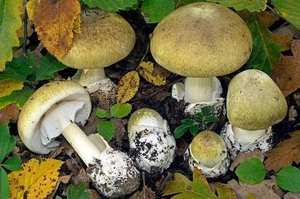
| Death Cap | Amanita phalloides | Tier 1 | Amatoxins | 6–24 hr | Fulminant hepatic failure |
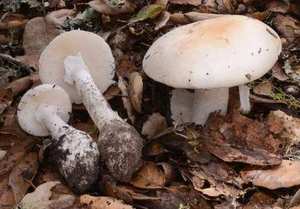
| Destroying Angel | Amanita ocreata | Tier 1 | Amatoxins | 6–24 hr | Fulminant hepatic failure |
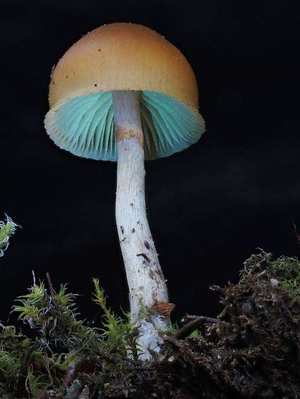
| Deadly Galerina | Galerina marginata | Tier 1 | Amatoxins | 6–24 hr | Hepatic failure (even small doses) |
| Deadly Dapperling | Pholiotina rugosa | Tier 1 | Amatoxins (α-amanitin) | 6–24 hr | Amatoxin hepatorenal failure — lawn/mulch habitat, pediatric risk |
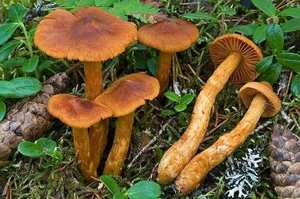
| Deadly Webcap | Cortinarius rubellus | Tier 1 | Orellanine | 2–3 weeks | Irreversible renal failure |
| Panther Cap | Amanita pantherina | Tier 2 | Ibotenic acid / Muscimol | 30 min – 2 hr | CNS toxidrome, seizures |
| Fly Agaric | Amanita muscaria | Tier 2 | Ibotenic acid / Muscimol | 30 min – 2 hr | Delirium, ataxia, sedation |
| Western Jack-o-Lantern | Omphalotus olivascens | Tier 2 | Illudin S | 1–3 hr | Severe GI — rarely fatal |
| False Parasol | Chlorophyllum molybdites | Tier 2 | Uncharacterized peptides | 1–3 hr | Profuse GI — rarely fatal |
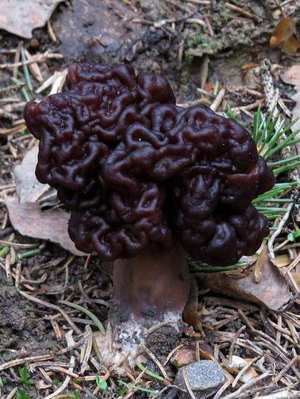
| False Morel | Gyromitra esculenta | Tier 2 | Gyromitrin (MMH) | 2–24 hr | GI, hemolysis, methemoglobinemia, seizures — spring risk |
| Wavy Cap | Psilocybe cyanescens | Tier 3 | Psilocybin / Psilocin | 20–60 min | Hallucinogenic; panic, serotonin risk |
| Sweating Mushroom | Clitocybe dealbata | Tier 3 | Muscarine | 15–30 min | Cholinergic SLUDGE syndrome |
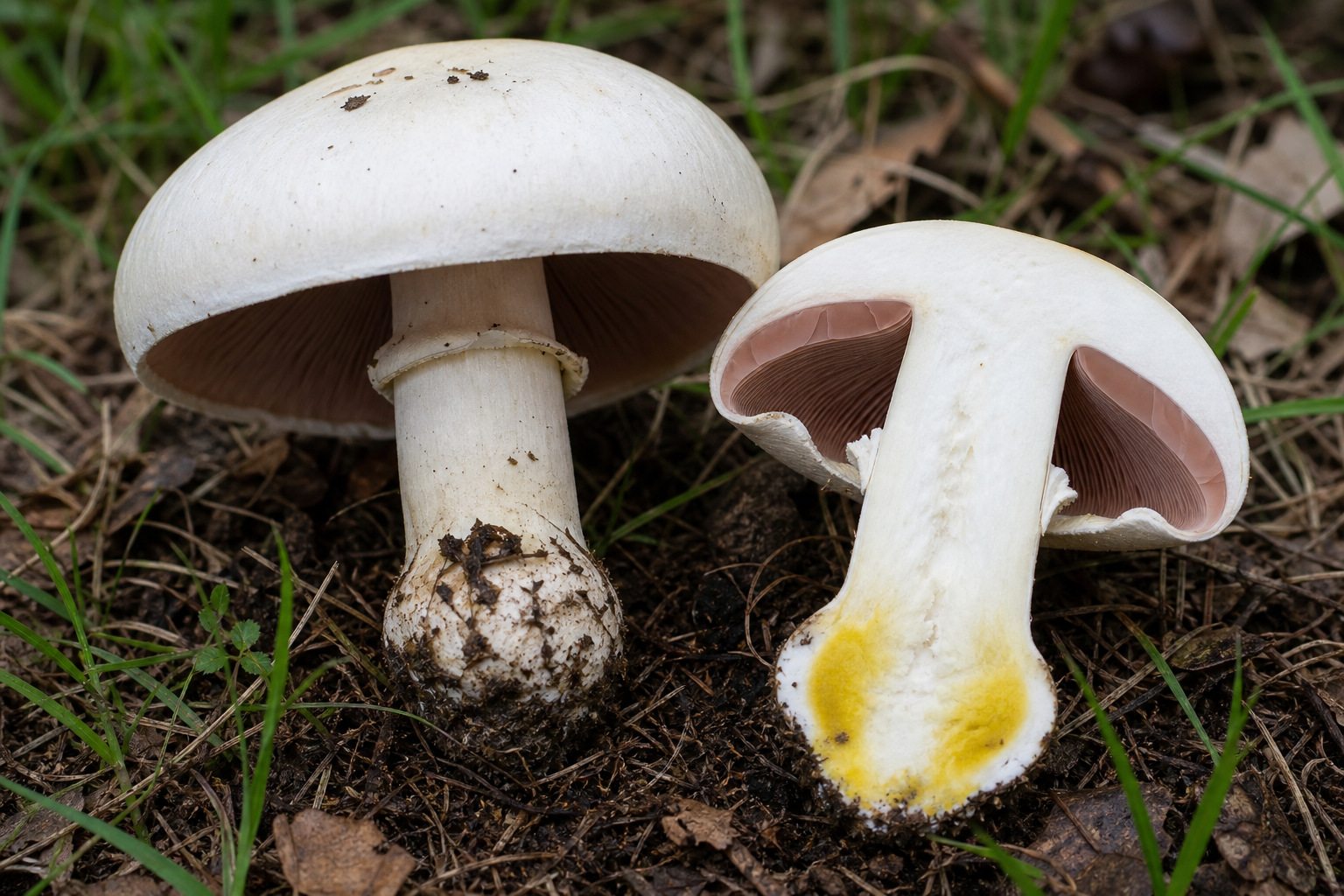
| Yellow-staining Mushroom | Agaricus xanthodermus | Tier 3 | Phenol derivatives | 30 min – 2 hr | GI upset — rarely serious |
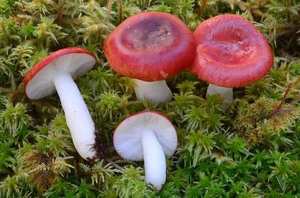
| The Sickener | Russula emetica | Tier 3 | Sesquiterpenes | 30 min – 2 hr | GI upset — self-limiting |
Potentially Fatal Species
These five species are responsible for the overwhelming majority of fatal mushroom poisonings in North America. Ingestion of even small amounts can cause irreversible organ failure. Any suspected exposure requires immediate emergency evaluation and Poison Control contact. Do not wait for symptoms to develop.
Death Cap
Destroying Angel
Deadly Galerina
Deadly Webcap
Deadly Dapperling
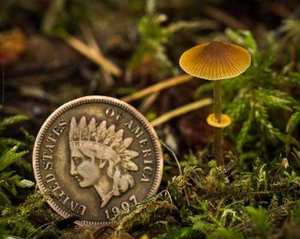
Serious / Potentially Severe Species
These species cause significant toxicity and may require hospitalization, particularly in children, the elderly, or patients with comorbidities. While fatalities are uncommon with appropriate care, severe cases can be life-threatening. All require prompt Poison Control contact.
Panther Cap
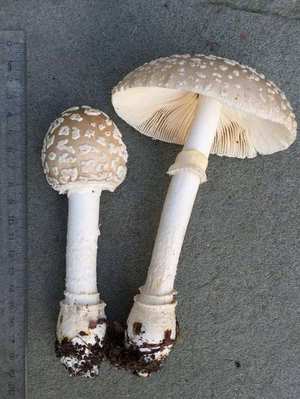
Fly Agaric
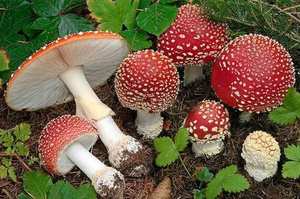
Western Jack-o-Lantern
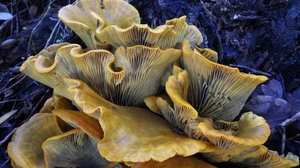
False Parasol
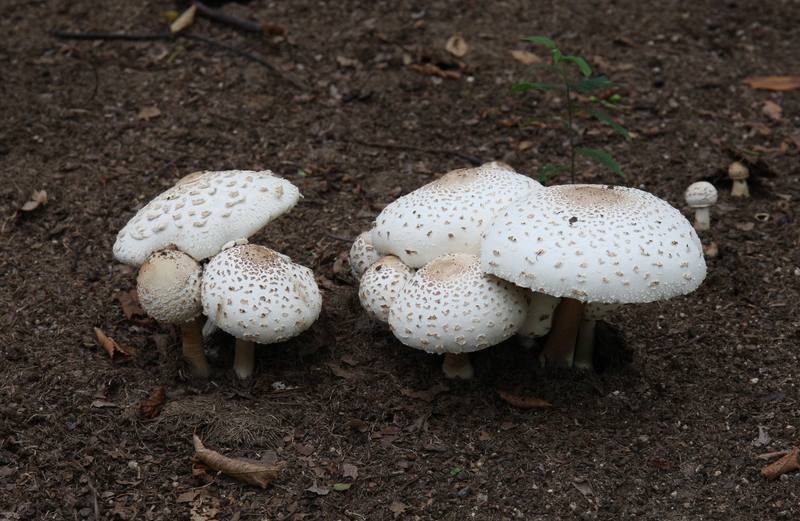
False Morel
Moderate / Situationally Serious Species
These species generally cause non-fatal poisonings in healthy adults, but can be clinically significant in pediatric patients, the elderly, or those on certain medications. Severity varies with dose. Poison Control consultation recommended for all symptomatic ingestions.
Wavy Cap
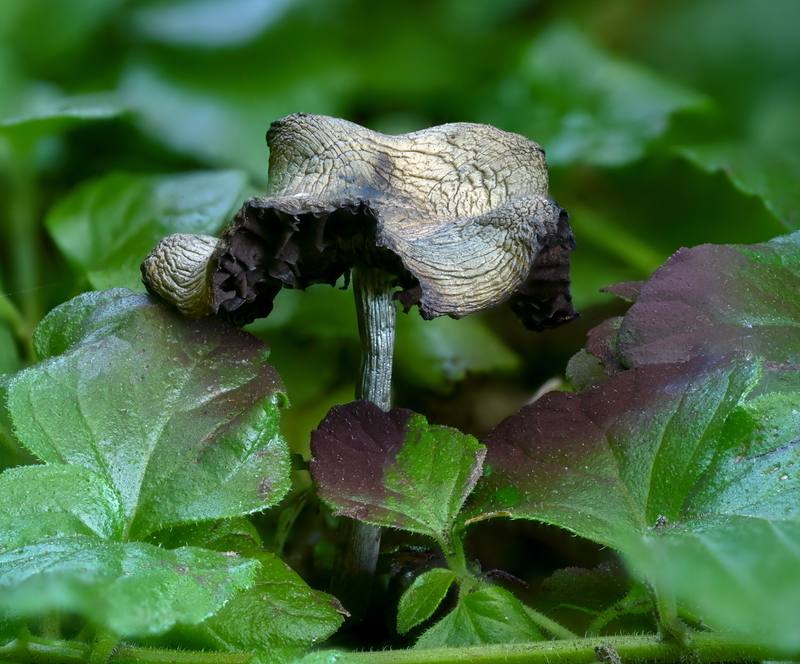
Sweating Mushroom
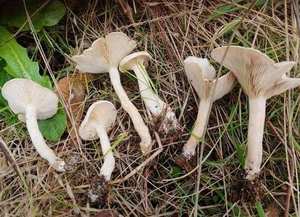
Yellow-staining Mushroom
The Sickener
Pacific Northwest Clinical Notes
The Pacific Northwest presents a unique clinical profile. Amatoxin poisoning (Death Cap, Destroying Angel, Deadly Galerina) accounts for the majority of serious and fatal cases — the region's dense urban tree canopy with planted oaks and chestnuts places Death Cap in suburban neighborhoods. Orellanine nephrotoxicity (Cortinarius spp.) is clinically important because of the extreme symptom delay — always inquire about mushroom ingestion in unexplained AKI cases. Panther Cap poisoning is disproportionately common in the PNW relative to other US regions. Wavy Cap (Psilocybe cyanescens) is one of the world's most potent psilocybin-containing mushrooms and is abundant in PNW urban wood-chip mulch — emergency presentations for anxiety, psychosis, and serotonin syndrome are increasing. The chanterelle season (August–November) drives a predictable peak in Western Jack-o-Lantern misidentification. Poison Control resources: 1-800-222-1222 (national) or Oregon Poison Center (OHSU): 1-800-222-3320.
Look-Alike Comparison Table
The most dangerous field identification errors in the Pacific Northwest — toxic species confused with edible or non-toxic ones.
| Toxic Species | Commonly Confused With | Key Differentiators | Risk Level |
|---|---|---|---|
| Death Cap A. phalloides |
Paddy Straw Mushroom Volvariella volvacea |
Death Cap: greenish cap, ring on stalk, white gills, volva sac. Paddy Straw: no ring, pink gills at maturity. Both share a volva — always check gill color. | Lethal |
| Destroying Angel A. ocreata |
White Button Mushroom Agaricus bisporus |
Destroying Angel: white gills at all stages, prominent volva sac at base. Button mushroom: gills turn pink then brown, no volva, no woodland habitat. | Lethal |
| Deadly Galerina G. marginata |
Honey Mushroom Armillaria spp. |
Galerina: rusty-brown spore print, smaller, on conifer wood. Honey Mushroom: white spore print, often larger, frequently on hardwood. A spore print is mandatory. | Lethal |
| Deadly Galerina G. marginata |
Wavy Cap Psilocybe cyanescens |
Psilocybe: bluing when bruised, dark purple-brown spore print. Galerina: no bluing, rusty-brown spore print. Confusing these is potentially fatal. | Lethal |
| Western Jack-o-Lantern O. olivascens |
Golden Chanterelle Cantharellus californicus |
Jack-o-Lantern: true sharp gills, clusters from wood/roots, unpleasant smell, bioluminescent. Chanterelle: blunt forking ridges (not true gills), grows singly from soil, fruity aroma. | Serious |
| False Parasol C. molybdites |
Parasol Mushroom Macrolepiota procera |
False Parasol: green spore print, gills turn greenish, lawn habitat. Edible Parasol: white spore print, white gills, woodland edges. Green spore print = definitive ID. | Serious |
| Panther Cap A. pantherina |
Blusher Amanita rubescens |
Panther Cap: flesh does NOT change color when cut. Blusher: flesh turns pink to red when cut or bruised. Careful observation required — this is a critical but subtle distinction. | Life-Threatening |
| Sweating Mushroom C. dealbata |
Fairy Ring Mushroom Marasmius oreades |
Sweating Mushroom: crowded decurrent gills, brittle stalk, grows in grass. Fairy Ring: widely spaced non-decurrent gills, tough wiry stalk that bends without breaking. | Serious |