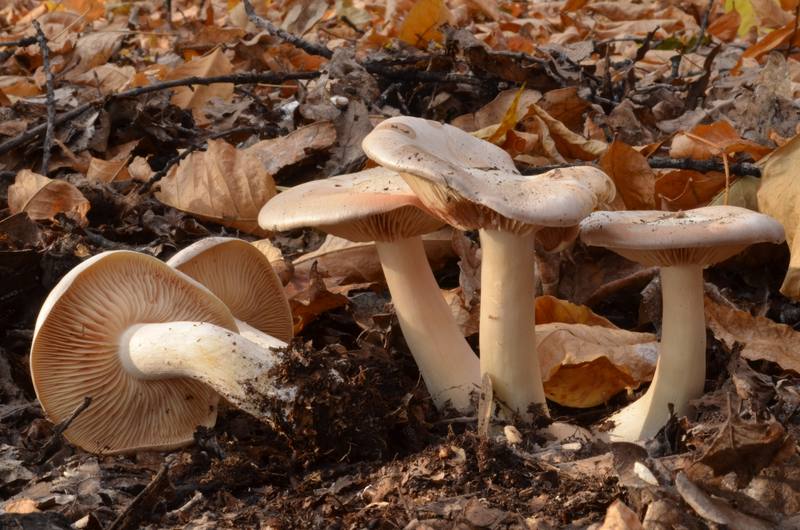
Quick Reference — All 8 Species
| Mushroom | Toxin | Onset | Severity |
|---|---|---|---|
| Death Cap Amanita phalloides |
Amatoxins (α-amanitin) | 6–24 hr (delayed) | 4 — Potentially Fatal |
| Destroying Angel Amanita ocreata |
Amatoxins (α-amanitin) | 6–24 hr (delayed) | 4 — Potentially Fatal |
| Deadly Galerina Galerina marginata |
Amatoxins (α-amanitin) | 6–24 hr (delayed) | 4 — Potentially Fatal |
| Deadly Webcap Cortinarius rubellus |
Orellanine | 2–3 weeks (extreme delay) | 4 — Potentially Fatal |
| Fly Agaric Amanita muscaria |
Ibotenic acid / Muscimol | 30 min–2 hr (fast) | 3 — Life-Threatening |
| False Morel Gyromitra esculenta |
Gyromitrin (MMH) | 6–12 hr (delayed) | 3 — Life-Threatening |
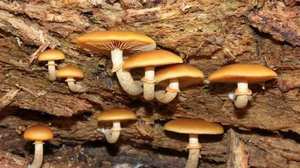
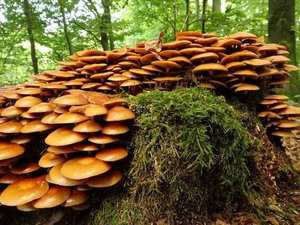
| Jack-o’-Lantern Omphalotus olivascens |
Illudin S | 30 min–2 hr (fast) | 2 — Serious |
| Panther Cap Amanita pantherina |
Ibotenic acid / Muscimol | 30 min–2 hr (fast) | 3 — Life-Threatening |
Quick reference covers the eight most clinically critical Pacific Coast species. A complete tiered reference with all 16 species is available below.
Death Cap
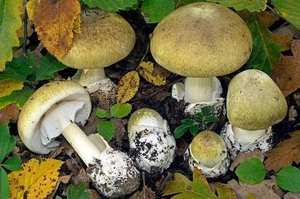
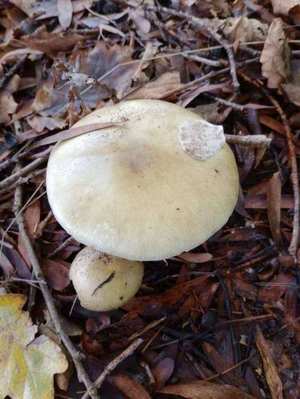
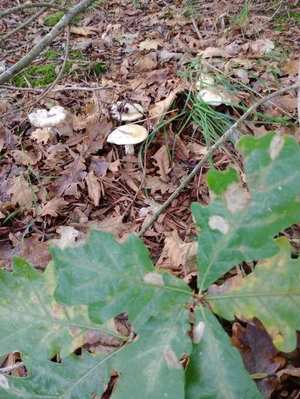
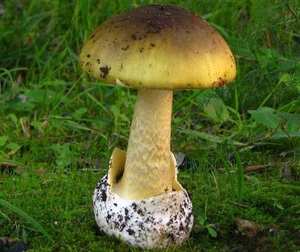
Responsible for ~90% of mushroom fatalities worldwide. Lethal dose as low as half a cap (~35g fresh weight).
- Severe nausea, vomiting, watery diarrhea (can be cholera-like)
- Abdominal cramping, dehydration, electrolyte imbalance
- Rising AST/ALT — can exceed 10,000 U/L
- Jaundice, coagulopathy (elevated PT/INR)
- Fulminant hepatic failure, hepatic encephalopathy
- Acute tubular necrosis, oliguria
- Rising creatinine; may require dialysis
⚠ Delayed presentation: The 6+ hour delay between ingestion and GI symptoms is diagnostic — early-onset GI illness within 2 hours strongly suggests a different toxin (e.g. muscarine, illudin). Delayed onset = amatoxins until proven otherwise.
⚠ Urine amanitin testing: Available at some reference labs. Positive confirmation aids diagnosis but should not delay treatment.
Specific antidote consideration: Silibinin (milk thistle extract, IV) — inhibits hepatocyte uptake of amatoxins. Available via compassionate use in US (contact Poison Control for access). Penicillin G (high-dose IV) may also reduce hepatotoxicity.
Monitoring: Serial LFTs, PT/INR, creatinine every 6–12 hr. Early hepatology and transplant surgery consultation. Liver transplant may be only option in fulminant failure.
Destroying Angel
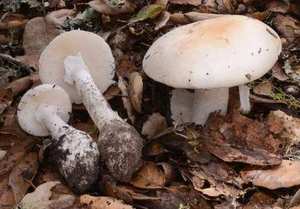
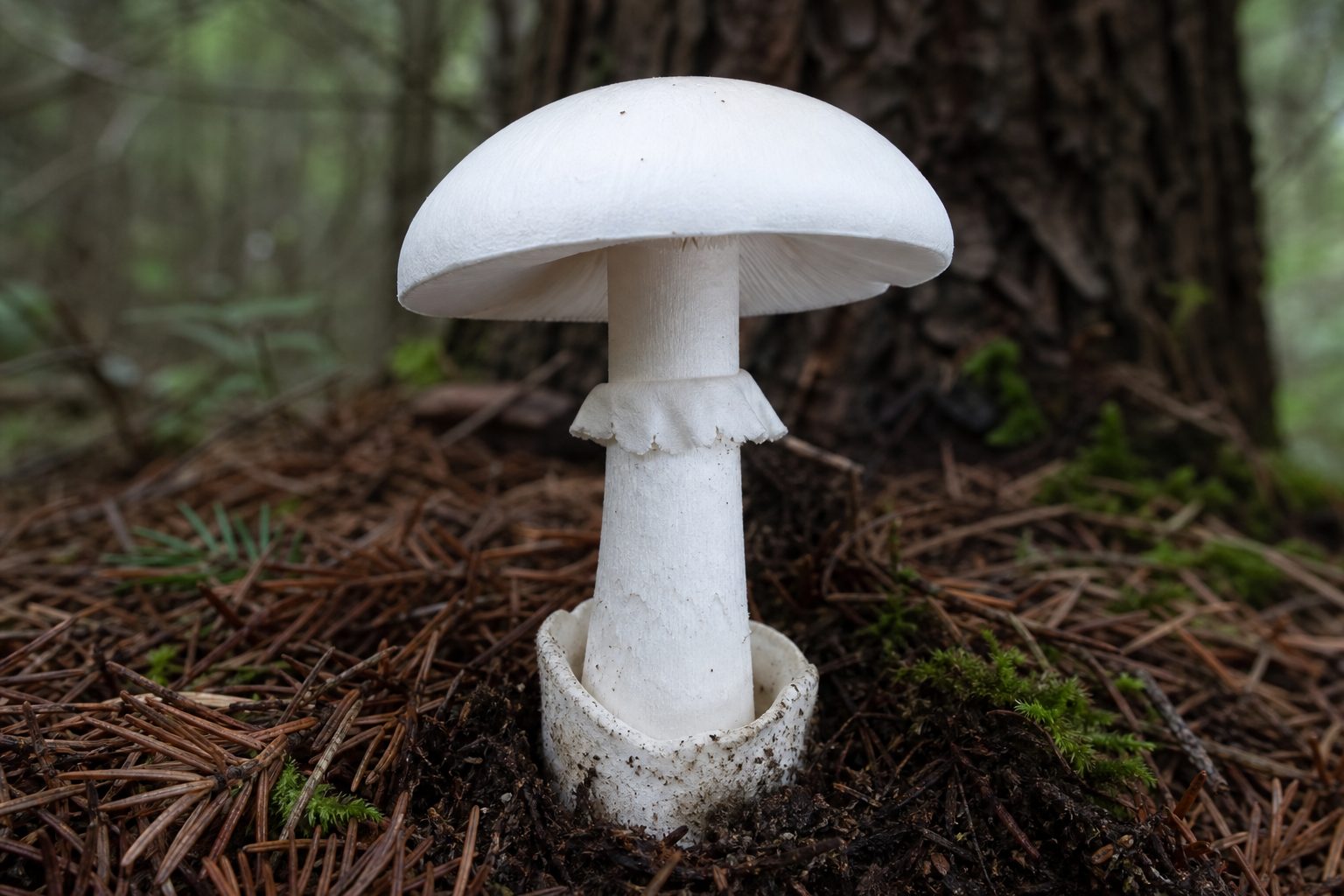
- Severe vomiting, profuse watery diarrhea
- Severe dehydration, electrolyte disturbance
- Rapid rise AST/ALT, jaundice
- Coagulopathy, encephalopathy
- Fulminant hepatic failure
- Acute tubular necrosis, renal failure
Apply the same treatment protocol as Death Cap. All white Amanita specimens with a cup-shaped volva at the stem base and delayed GI onset should be treated as amatoxin poisoning.
Deadly Galerina
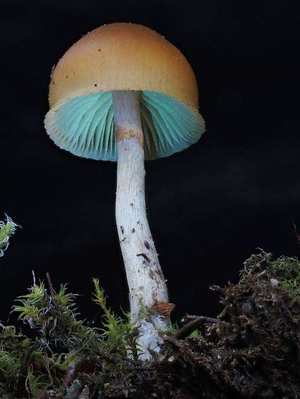
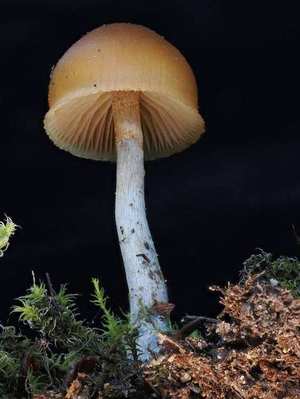
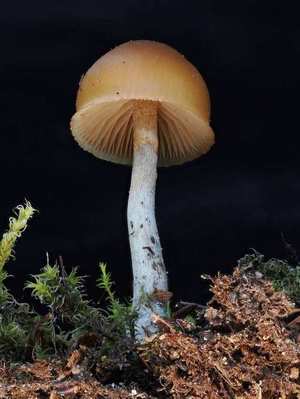
- Nausea, vomiting, diarrhea (delayed 6–24 hr)
- Transaminase elevation, jaundice
- Coagulopathy, hepatic failure
- Acute tubular necrosis (dose-dependent)
Clusters on wood: Grows on dead or decaying wood in dense clusters. Multiple family members may present simultaneously after a shared meal — treat all as amatoxin poisoning.
Deadly Webcap
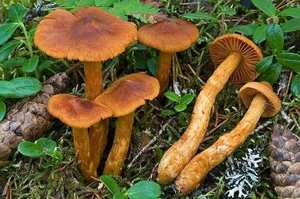
Leading cause of mushroom-induced renal failure requiring transplant in Europe.
- Nausea, headache, malaise, myalgia
- Polydipsia, polyuria (early tubular dysfunction)
- Oliguria progressing to anuria
- Rising creatinine and BUN — rapidly progressive renal failure
- Flank pain, hematuria
- Irreversible renal failure requiring dialysis or transplant
- Nausea, vomiting, weight loss in subacute phase
⚠ No GI phase: Unlike amatoxin poisoning, there is no early gastroenteritis to trigger medical attention. Orellanine poisoning often presents directly as established renal failure.
Orellanine is excreted in urine and detectable by HPLC but this is not widely available clinically.
Fly Agaric
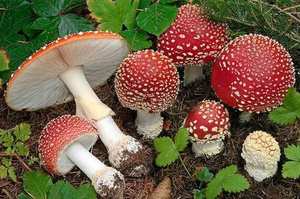
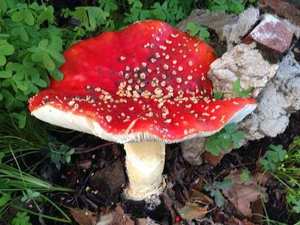
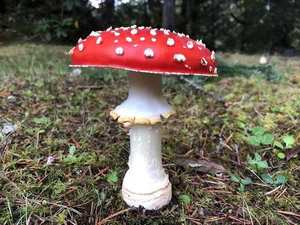
Rarely fatal in adults; high risk in children and elderly from respiratory depression and seizures.
- Confusion, agitation, delirium
- Hallucinations (visual, auditory), euphoria
- Ataxia, dysmetria, dizziness
- Seizures (especially in children)
- CNS depression, sedation, coma (severe)
- Nausea, vomiting (early phase)
- Mild salivation, lacrimation, diaphoresis
Intentional ingestion: Sometimes consumed recreationally for hallucinogenic effects. Patient history may be unreliable.
Duration typically 4–8 hours, occasionally up to 24 hours.
False Morel
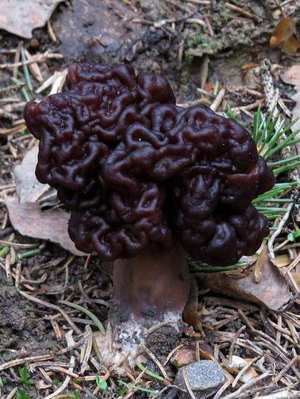
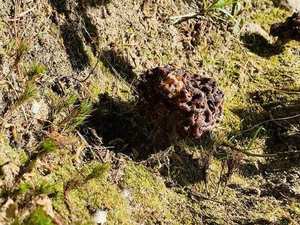
Can be fatal. Fatality rate lower than amatoxins but significant. Raw consumption far more dangerous than cooked.
- Nausea, vomiting, diarrhea, abdominal pain
- Bloating, cramping (6–12 hr onset)
- Headache, dizziness, weakness
- Seizures (refractory, B6-responsive)
- Confusion, agitation
- Hemolysis — hemolytic anemia, jaundice, hemoglobinuria
- Hepatotoxicity — transaminase elevation
- Methemoglobinemia (MMH mechanism)
- Renal failure secondary to hemolysis and hepatic failure
Volatile toxin: Gyromitrin is partially volatilized by cooking and by drying, which is why some foraging traditions consider it "safe when parboiled." Not reliably detoxified — treat as toxic regardless of preparation method. Inhalation of steam from cooking can also cause symptoms in bystanders.
B6-responsive seizures: Pyridoxine (vitamin B6) is a critical component of treatment.
Jack-o-Lantern
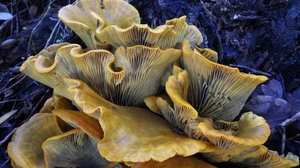
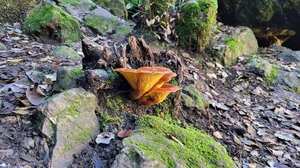
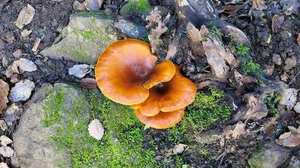
Not typically life-threatening in adults. Profuse vomiting and diarrhea; dehydration risk, especially in children and elderly.
- Profuse, forceful vomiting (hallmark)
- Severe watery diarrhea
- Intense abdominal cramping
- Nausea, diaphoresis during acute phase
- Dehydration, electrolyte imbalance
- Weakness, pallor during acute GI phase
- Resolution typically within 6–12 hours
Reassuring prognosis: Unlike amatoxin poisonings, Jack-o-lantern illness is purely GI and self-limiting. No hepatic or renal involvement. Resolution within 12–24 hours typical.
Early-onset GI illness (<2 hr) after mushroom ingestion helps distinguish from amatoxins (6+ hr onset).
Little Brown Mushrooms (LBMs)
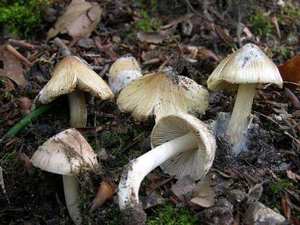
Life-threatening in large doses or in vulnerable patients (cardiac, pulmonary). Bronchospasm and bradycardia are the most dangerous features.
- Salivation — hypersalivation, drooling
- Lacrimation — excessive tearing
- Urination — urinary incontinence
- Defecation, GI distress — diarrhea, cramping
- Emesis — nausea, vomiting
- Bradycardia, hypotension
- Possible cardiac arrest (severe)
- Bronchospasm, bronchorrhea
- Respiratory distress — most dangerous feature
- Miosis (pinpoint pupils)
Note on A. muscaria: Despite its name, Amanita muscaria contains very little muscarine. Its primary toxidrome is isoxazole (neurological), not cholinergic. Muscarine toxidrome = Inocybe / Clitocybe species in practice.
Many LBM species: Inocybe and Clitocybe comprise hundreds of species, most nondescript brown or gray mushrooms. Definitive species ID is rarely possible. Treat the toxidrome, not the species.
Tier 1 — Life-Threatening (Full Profiles)
All species in this tier can cause death or permanent organ failure. Amatoxin species — Death Cap (A. phalloides), Destroying Angel (A. ocreata), Deadly Galerina (G. marginata), Western Destroying Angel (A. elliptoides), and Deadly Dapperling (L. brunneoincarnata) — feature critical delayed onset of 6–24 hours followed by an apparent-recovery phase that must NOT result in discharge. The Deadly Webcap and Sorrel Webcap (orellanine nephrotoxin) have an extreme 2–3 week delay before renal symptoms appear. Detailed quick-reference profiles for Death Cap, Destroying Angel, Deadly Galerina, and Deadly Webcap appear in the top section above; expanded profiles for additional Tier 1 species follow.
Tier 2 — Serious but Not Typically Fatal
The species below cause significant medical harm including neurological toxidromes, severe gastrointestinal injury, hemolysis, or multi-organ stress. Fatalities occur but are uncommon compared to Tier 1 amatoxin and orellanine species. All require clinical evaluation; some require hospitalization and organ-function monitoring. Always contact Poison Control (1-800-222-1222) for any suspected ingestion.
Jack-o’-Lantern Mushroom
- Cap orange to orange-brown with olive tones (distinguishes it from the more purely orange eastern O. illudens); 5–15 cm
- Grows in large clusters at the base of dead or dying hardwood trees — oaks and eucalyptus are primary hosts in California
- Gills are true gills, crowded, running down the stem (decurrent) — not forked like chanterelles
- Stem often off-center; cap may be 5–20 cm across
- Gills glow faintly green in total darkness (bioluminescence) — diagnostic if observable
- Severe nausea, vomiting — often projectile
- Profuse watery diarrhea, abdominal cramping
- Symptoms may be severe enough to cause dehydration
- Transient mild LFT elevation reported in some cases
- Headache, muscle weakness, diaphoresis
Cooking does not neutralize toxins. Illudins are heat-stable. Thorough cooking of large quantities still causes illness.
Panther Cap
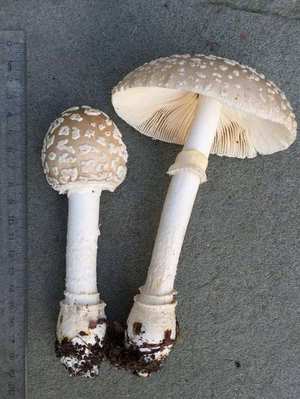
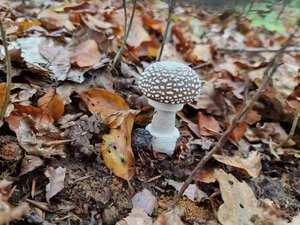
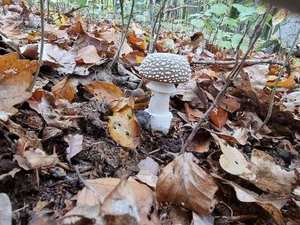
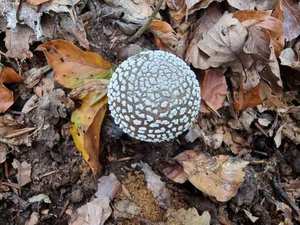
- Cap brown to grayish-brown, 5–12 cm; scattered white warts from universal veil remnants
- White free gills; membranous ring on upper stem
- Stem base with bulb and collar-like volva rim (not a true cup like Death Cap)
- Flesh white throughout — does NOT flush pink or red when cut (unlike edible Blusher)
- Associated with conifers and mixed woods throughout the Pacific Coast; among the most common toxic mushroom calls to Pacific Northwest poison centers
- Confusion, disorientation, delirium, hallucinations
- Ataxia, muscle twitching, myoclonic jerks
- Sedation alternating with agitation; coma in severe cases
- Hyperthermia, tachycardia, mydriasis (dilated pupils)
- Nausea, vomiting (may be absent — toxidrome can present without prominent GI)
Confusion with edible Blusher (A. rubescens): The most common misidentification. Key differential: Blusher flesh reddens (blushes) when cut or bruised; Panther Cap flesh remains white. Also confused with other brown-capped Amanita species in the field.
Fly Agaric
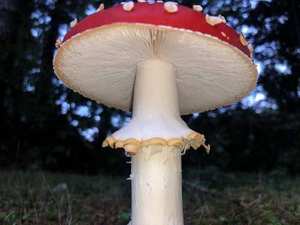
- Iconic red cap (5–20 cm) with white warts (may wash off in rain)
- White free gills, skirt-like ring on upper stem, bulbous base
- Found near birch, pine, spruce; mycorrhizal
- Cap color varies — orange and yellow varieties exist (var. formosa, var. guessowii)
- Young button stage emerges from white egg — easily mistaken for other Amanita species
- Sedation, drowsiness, hypnotic sleep — then excitation
- Visual hallucinations, confusion, disorientation
- Ataxia, myoclonus, muscle twitching
- Mydriasis (dilated pupils — key differential from muscarine)
- Nausea, vomiting (variable severity)
Intentional ingestion: A. muscaria is sometimes intentionally consumed for psychoactive effects. Presentation may be delayed reporting and patient may minimize symptoms. Obtain full ingestion history.
False Morel
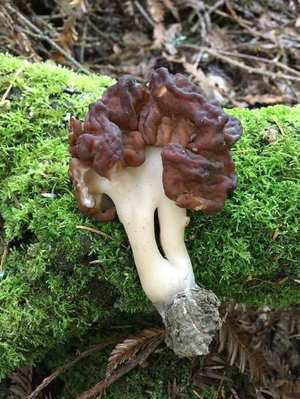
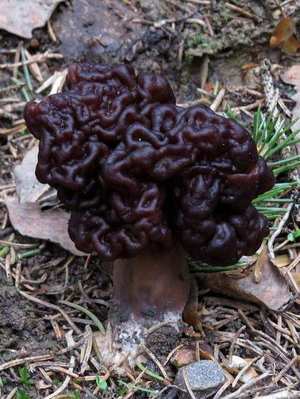
- Cap irregularly convoluted, brain- or saddle-shaped — NOT pitted and honeycomb-like (true morel)
- Reddish-brown to dark brown cap; whitish stout stem
- Interior chambered/folded when cut (true morel is hollow from cap tip to stem base)
- Fruits in spring, often near sandy pine forests
- Distinctive chemical odor sometimes noted
- Nausea, vomiting, cramping, watery diarrhea
- Bloating, abdominal pain
- Hemolytic anemia — jaundice, pallor, hemoglobinuria (dark urine)
- Elevated LFTs; potential hepatic failure in severe cases
- Methemoglobinemia in severe poisoning
- Headache, dizziness; seizures in severe poisoning
Inhalation risk during cooking: Gyromitrin vapors released during cooking can cause toxic symptoms in people who inhale steam while preparing the mushroom — a rare but documented exposure route.
Deadly Webcap
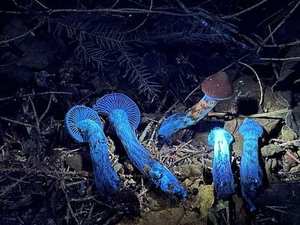
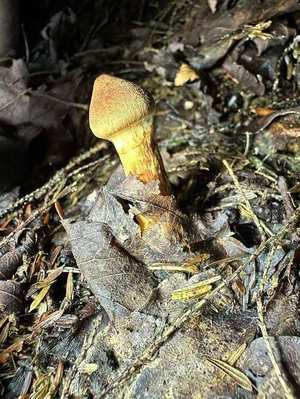
- Cap tawny to reddish-brown, conical to umbonate, 3–8 cm
- Gills rusty brown at maturity; rust-brown spore print
- Stem fibrous, brown with cortina (cobweb veil) remnant — no true ring
- Associated with spruce and pine; often in boreal or mixed conifer forests
- No distinctive odor or taste — highly dangerous LBM (little brown mushroom)
- Possible nausea, metallic taste, headache, fatigue
- Most patients have NO early symptoms
- Polyuria, polydipsia progressing to oliguria
- Nausea, vomiting, flank pain
- Rising creatinine and BUN — acute tubular necrosis
- End-stage renal failure in severe cases
Lookalike risk: Resembles numerous edible species including chanterelles (young specimens) and various brown-capped woodland mushrooms. The rusty brown spore print and fibrous cortina remnant on the stem are the most reliable field clues, but definitive ID requires expertise.
Deadly Dapperling
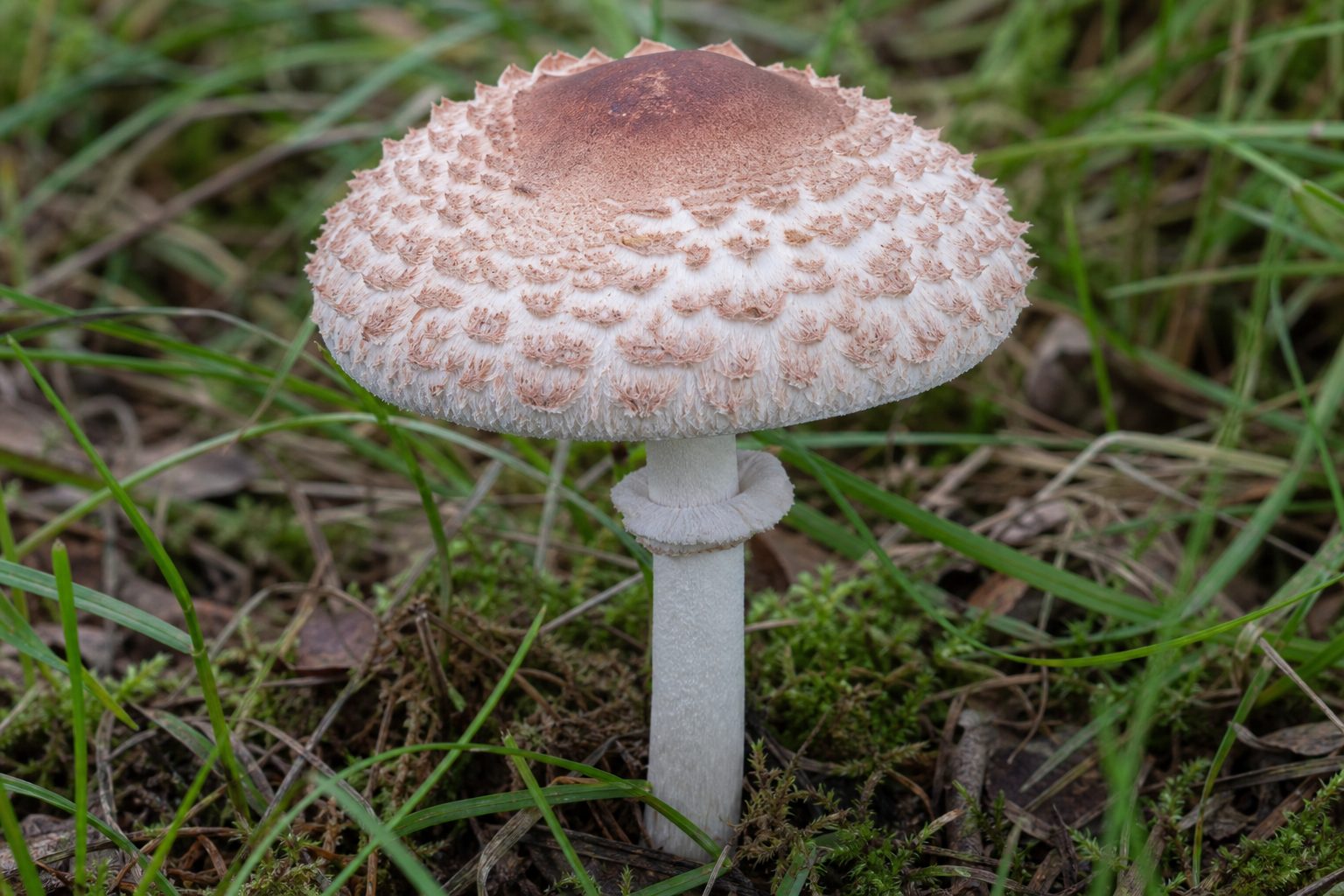
- Small cap (2–7 cm), pinkish-brown to brownish with concentric scaly zones; center darker
- White free gills; slight ring on stem; no volva (distinguishes from Amanita)
- Flesh white, faintly pinkish; mild smell or slightly unpleasant
- Found in lawns, gardens, parks, roadsides, wood-chip mulch beds — suburban and urban settings
- Fruits in fall and winter in California; can be mistaken for edible parasol mushrooms
- Severe nausea, vomiting, watery diarrhea, dehydration
- Rising AST/ALT, jaundice, coagulopathy
- Hepatic encephalopathy; fulminant liver failure
- Acute tubular necrosis, renal failure
No volva — differs from Amanita: The Deadly Dapperling lacks the volva cup at the stem base seen in Death Cap and Destroying Angel. It may be confused with edible Parasol mushrooms (Macrolepiota procera) and the Shaggy Parasol (Chlorophyllum rhacodes). Key differential: Deadly Dapperling is much smaller (cap 2–7 cm vs. 15–30 cm for edible parasols).
Western Destroying Angel
- Pure white throughout — cap, gills, stem, ring, and volva cup; no color variation
- Cap 5–12 cm; smooth, dry, convex to flat; often pure white without warts
- Prominent white cup-shaped volva at base (partially buried — dig to reveal)
- Skirt-like ring on upper stem; free white gills
- Found under Douglas fir, hemlock, and mixed conifers in the Pacific Northwest
- Severe nausea, vomiting, profuse watery diarrhea
- Severe dehydration, electrolyte disturbance
- Fulminant hepatic failure with rising AST/ALT, coagulopathy, encephalopathy
- Acute tubular necrosis, renal failure
Confusion with edible white mushrooms: May be mistaken for edible white Amanita species (e.g., A. lanei), button mushrooms, or puffballs in the button stage. The most dangerous error: foragers finding white egg-stage Amanitas near conifers and assuming they are edible. Always advise: any pure white mushroom with a cup at the base found under conifers in the PNW must be assumed lethal until proven otherwise by an expert.
Sorrel Webcap
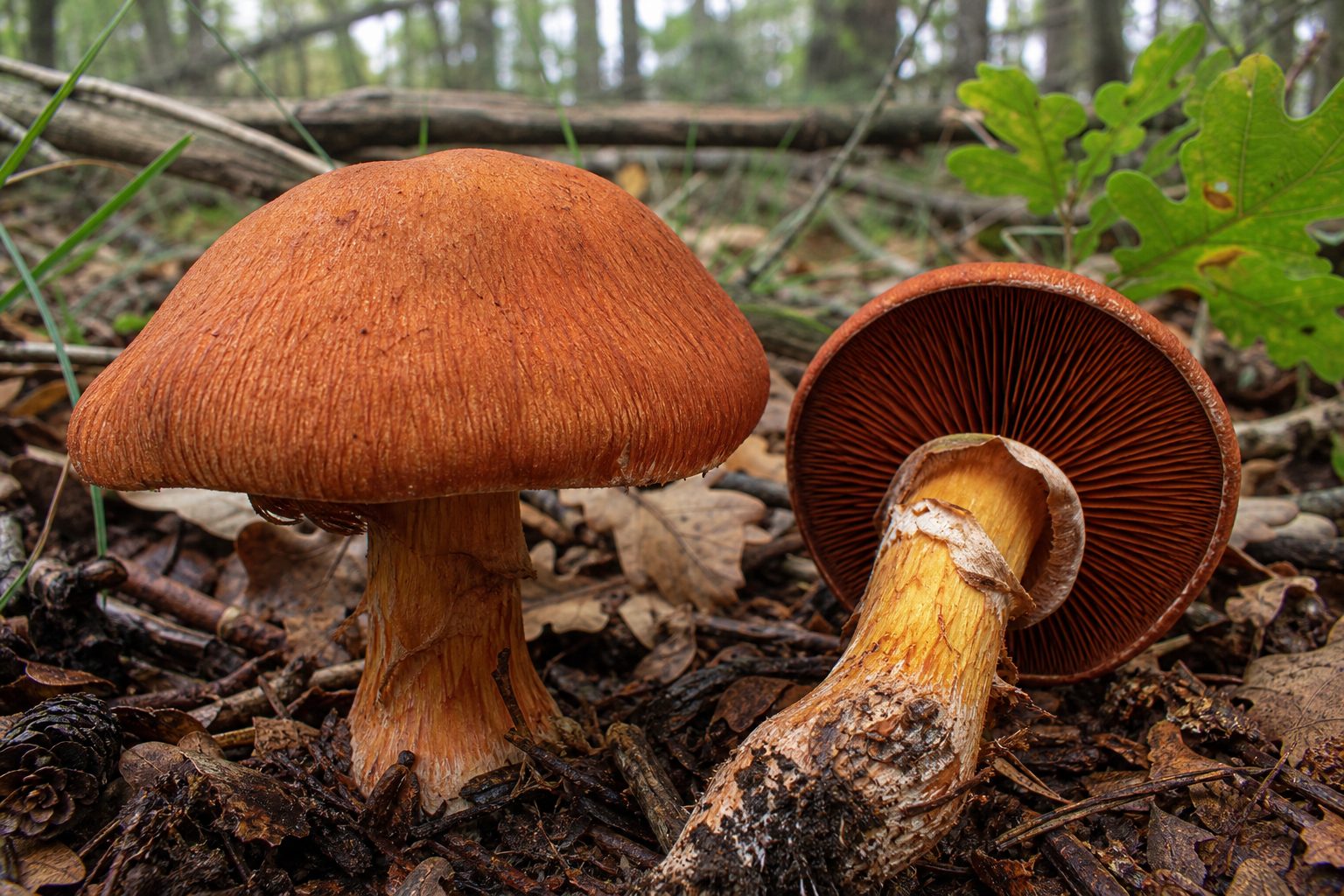
- Cap 3–8 cm, brick-red to rusty orange-brown; surface dry, often with fibrous or slightly scaly texture; margin wavy
- Gills widely spaced, rust-brown, becoming rusty from spores; cortina (cobweb-like veil) remnants on stem when young
- Stem orange-brown, fibrous, often with cortina remnant zone
- Found under mixed woodland — oak and conifer — in Pacific Coast states
- No distinctive odor; lack of distinctive features makes it dangerous
- Mild nausea, anorexia, headache — often dismissed
- Thirst, excessive urination (early tubular damage)
- Rising creatinine and BUN; oliguria progressing to anuria
- Flank or lumbar pain; nausea, fatigue
- Progressive interstitial nephritis, renal failure
- Up to 15% of untreated cases require long-term dialysis
Pacific Coast relevance: Multiple Cortinarius species containing orellanine are documented in Pacific Coast forests. Identification of the exact species is often impossible in the field — treat any Cortinarius ingestion associated with delayed GI symptoms and/or progressive renal function decline as orellanine poisoning pending Poison Control and nephrology consultation.
Pigskin Poison Puffball
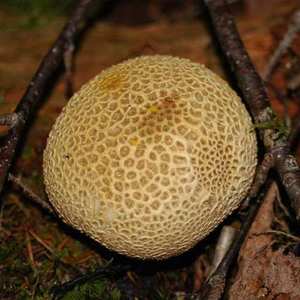
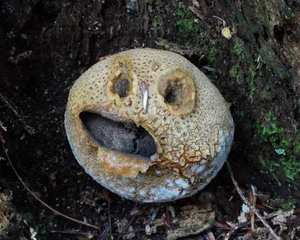
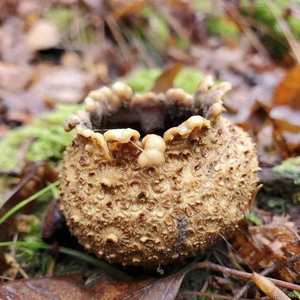
- Round to irregular puffball, 3–12 cm across; yellowish-brown, thick tough outer skin
- Surface covered in flat warts or scales with cracked pattern (resembles pigskin)
- Interior dark purple to black at maturity (NOT white like edible puffballs)
- No stem; attached to ground by root-like mycelial cords
- Found on sandy or gravelly soil near hardwoods, disturbed ground, roadsides
- Severe nausea, vomiting, diarrhea, abdominal pain
- Bradycardia, hypotension
- Dizziness, syncope
- Headache, weakness, diaphoresis
- Coma and cardiovascular collapse reported with large ingestions
Note: Scleroderma species also serve as a parasitic host for the edible Parasitic Bolete (Pseudoboletus parasiticus) — a forager finding an unusual bolete attached to a puffball should suspect Scleroderma.
Tier 3 — Problematic, Rarely Fatal
The species below cause significant gastrointestinal distress, allergic reactions, metabolic interactions, or illness that typically resolves without lasting harm. Fatalities are extremely rare or limited to exceptional circumstances (very large ingestion, underlying conditions, specific drug interactions). Supportive care is usually sufficient. Contact Poison Control (1-800-222-1222) for any suspected ingestion.
Inky Cap (Common Ink Cap)
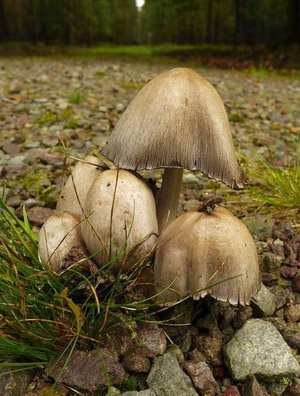
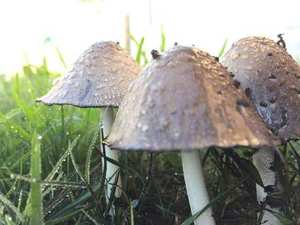
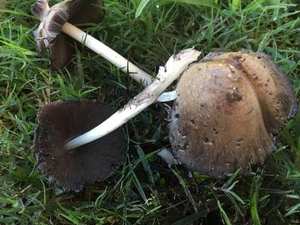
- Gray to grayish-brown oval or bell-shaped caps, 3–7 cm across, often ribbed at margin
- Grows in dense clusters from buried wood or near stumps and disturbed soil
- Caps liquefy (autodigest) from margin inward as they age — characteristic black ink drip
- No ring on stem; stem white, fragile
- Very common in lawns, gardens, parks across the Pacific Coast
- Facial flushing, warmth, erythema — especially face, neck, upper chest
- Tachycardia, palpitations, headache
- Nausea, vomiting, diaphoresis
- Hypotension in severe reactions; chest pain (rare)
- None — mushroom consumed without alcohol causes no symptoms
Disulfiram analogy: The mechanism is nearly identical to disulfiram (Antabuse) — acetaldehyde accumulation from blocked ALDH. Ask about prescribed disulfiram in the history, as this may compound the reaction. The mushroom is safe and edible in the absence of alcohol.
Sulfur Tuft
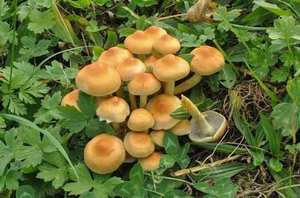
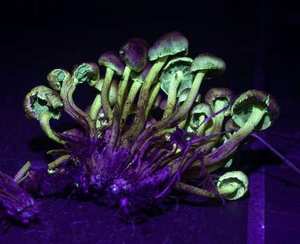
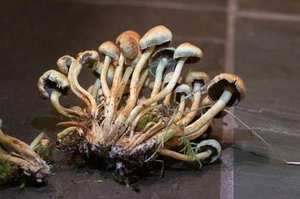
- Grows in large, dense clusters on dead wood (never from soil directly)
- Cap sulfur-yellow with orange-brown center, 2–8 cm
- Gills sulfur-yellow when young, aging to greenish then dark purple-brown
- Intensely bitter taste — most accidental poisonings involve raw or barely cooked mushrooms
- No ring on stem; dark spore print (distinguishes from similar edible species)
- Nausea, vomiting, diarrhea, abdominal cramping
- Symptoms can be severe with large ingestion
- Weakness, visual disturbance, ataxia reported in literature
- Rare case reports of more severe outcomes
The Sickener
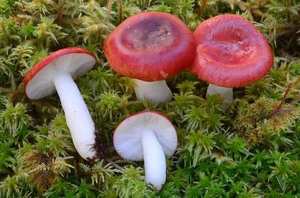
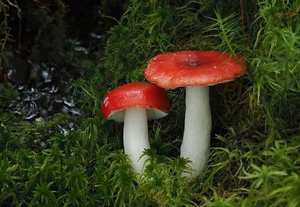
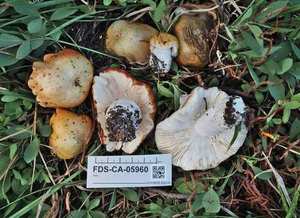
- Bright scarlet to cherry-red cap, 3–9 cm; shiny surface; cuticle peels easily
- White gills and stem; gills brittle, snapping cleanly (characteristic of all Russula)
- Distinctly acrid, peppery taste on tongue — diagnostic when raw tasting is safe
- White spore print; no ring on stem; no volva at base
- Grows in Sphagnum bogs or conifer forests; mycorrhizal with conifers
- Severe nausea, vomiting (emesis often prominent and forceful — hence common name)
- Diarrhea, abdominal cramping
- Dehydration with large ingestion
Angel Wings
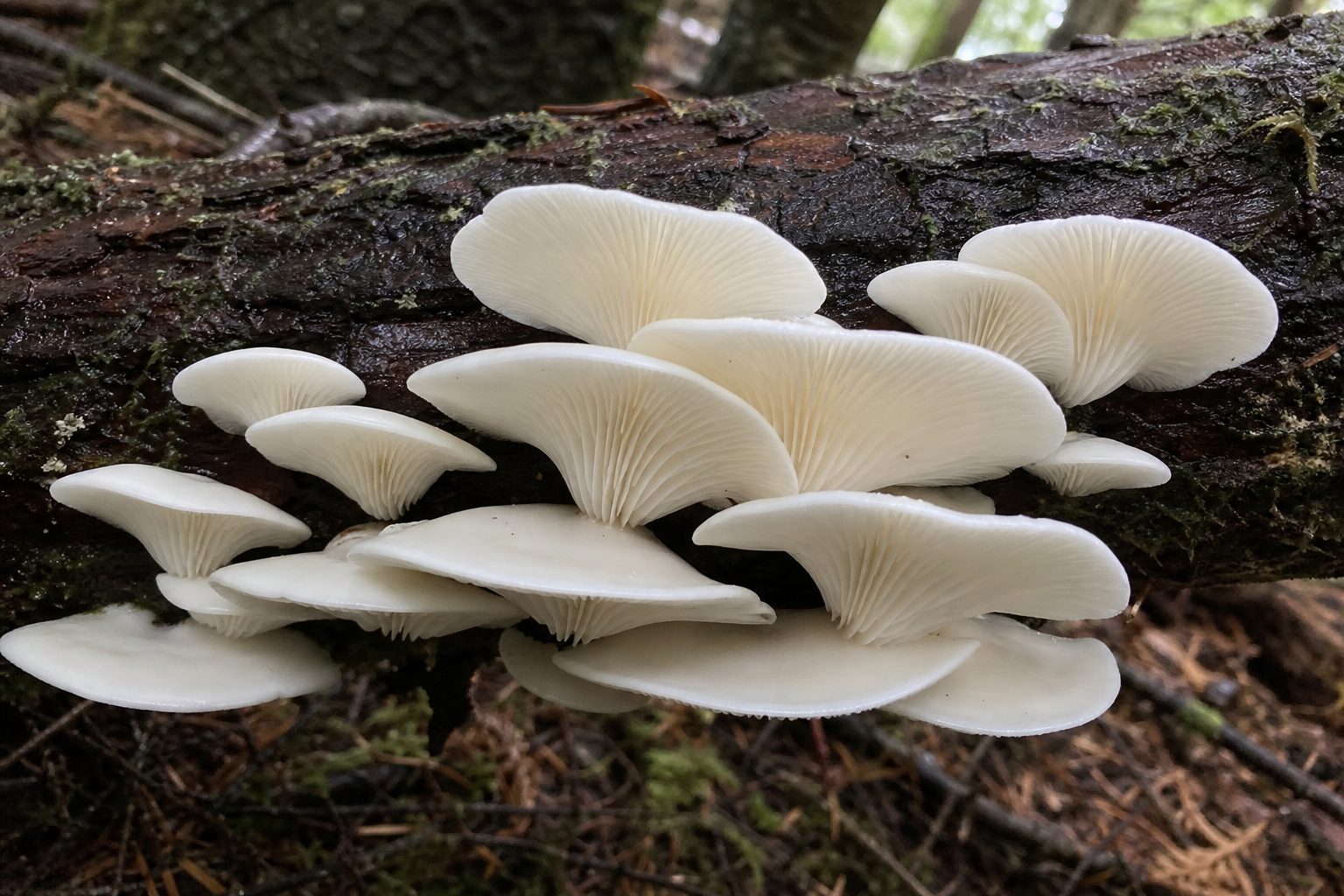
- Small, pure white fan- or spatula-shaped fruiting bodies, 1–8 cm across
- Grows in dense overlapping clusters on decaying conifer logs (hemlock, fir, spruce) — rarely on hardwood
- No stem; attached directly to wood; gills white, radiating from attachment point
- Thin-fleshed; fragile; white throughout; no distinctive odor
- Very common in Pacific Northwest fall/winter; also found in CA and OR mountains
- Progressive neurological deterioration — confusion, decreased consciousness
- Seizures; coma
- Motor dysfunction, tremor
- Acute renal failure (especially in patients with pre-existing kidney disease)
- Nausea, vomiting (may be absent)
Pacific Northwest significance: This species is abundant on Pacific Northwest conifer logs from September through January. Confusion with edible oyster mushroom (Pleurotus ostreatus and P. pulmonarius) occurs — oyster mushrooms are far larger (10–25 cm), grow on hardwoods or dead hardwood stumps, and have a distinct mealy odor. Angel Wings are always on conifers and much smaller.
Poison Pie
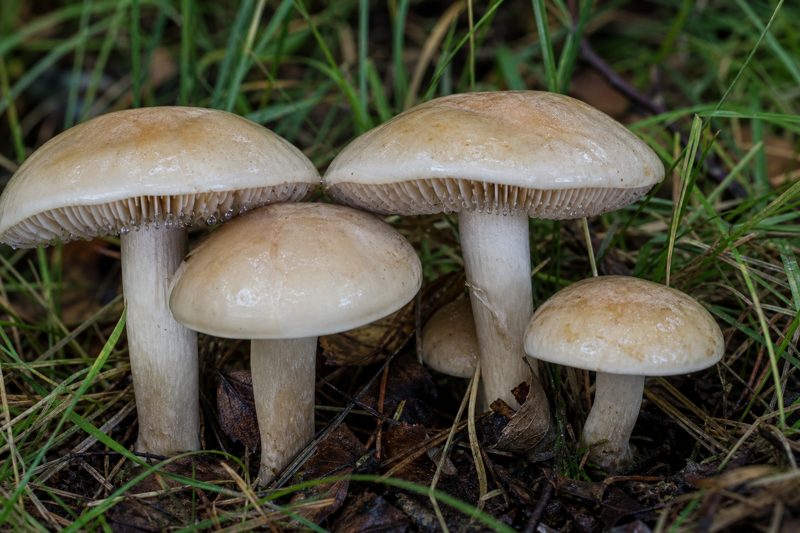
- Cap pale buff to tan-brown, 4–10 cm; convex becoming flatter; smooth, slightly greasy when moist; margin often wavy
- Gills pale buff, becoming brown as spores mature; with distinctive water droplets (beads) on gill edges in fresh specimens
- Distinctive radish-like odor — strong and persistent; key field character
- White stem, fibrous; no ring; base slightly clubbed
- Mycorrhizal — found in woodland, parks, gardens with trees throughout Pacific Coast
- Nausea, vomiting, abdominal cramping, diarrhea
- May be severe with large ingestion — dehydration risk
- Headache, dizziness
No delayed toxicity: Unlike Death Cap and Galerina, there is no hepatic or renal failure phase. Rapid onset (<2 hr) and absence of delayed organ injury helps distinguish from amatoxin species. However, any suspected mushroom ingestion with GI onset should prompt baseline LFTs to exclude co-ingestion of amatoxin species.
Magic Mushrooms (Psilocybin Species)
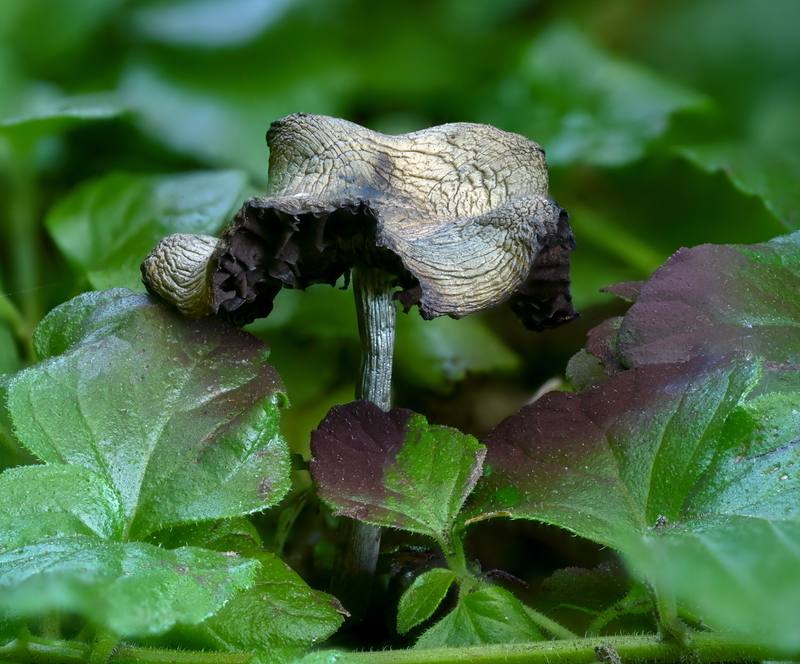
False Parasol (Green-Spored Parasol)
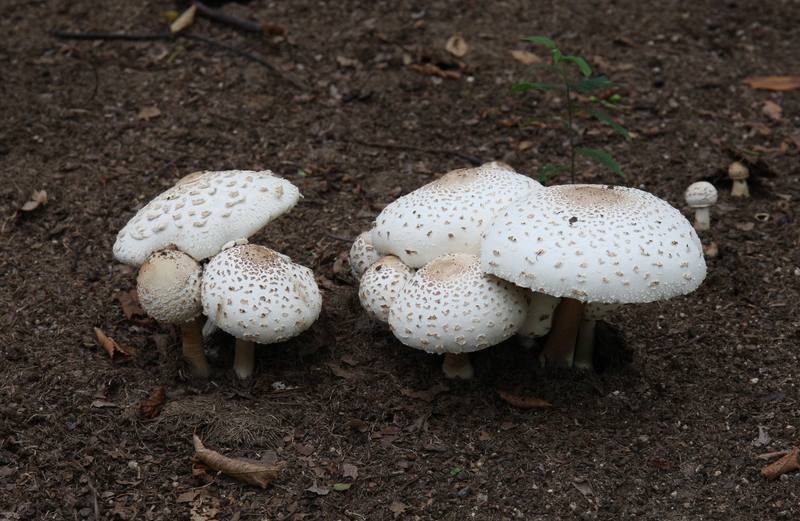
Lead Poisoner