Quick Reference — All 14 Species
| Common Name | Scientific Name | Tier | Onset | Key Symptoms |
|---|---|---|---|---|
| Death Cap | Amanita phalloides | Tier 1 | 6–24 hr | GI → apparent recovery → fulminant hepatorenal failure |
| Western Destroying Angel | Amanita ocreata | Tier 1 | 6–24 hr | GI → apparent recovery → fulminant hepatorenal failure |
| Deadly Galerina | Galerina marginata | Tier 1 | 6–24 hr | GI → amatoxin hepatorenal failure (identical to Amanita) |
| Deadly Conocybe | Conocybe filaris | Tier 1 | 6–24 hr | GI → amatoxin hepatotoxicity; lawn habitat → pediatric risk |
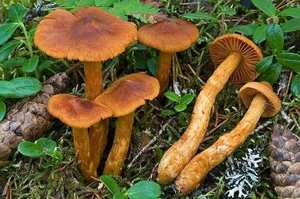
| Deadly Webcap | Cortinarius rubellus | Tier 1 | 2–3 weeks | Orellanine nephrotoxicity — irreversible renal failure; extreme delayed onset |
| Fly Agaric | Amanita muscaria | Tier 2 | 30 min – 2 hr | Confusion, hallucinations, ataxia, myoclonus; rarely seizures/coma |
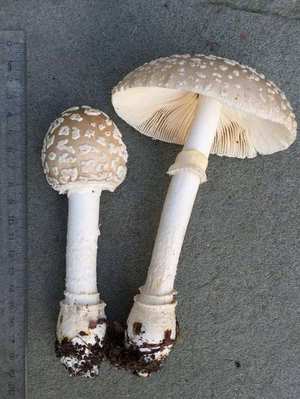
| Panther Cap | Amanita pantherina | Tier 2 | 30 min – 2 hr | Potent CNS: delirium, seizures, respiratory depression — more severe than Fly Agaric |
| False Morel | Gyromitra esculenta | Tier 2 | 2–12 hr | GI, hemolysis, methemoglobinemia, hepatotoxicity, seizures |
| Jack O'Lantern | Omphalotus olearius | Tier 2 | 30 min – 2 hr | Severe GI (nausea, vomiting, diarrhea); self-limiting; no organ failure |
| Inocybe Species | Inocybe spp. | Tier 2 | 30 min – 2 hr | Full cholinergic syndrome: SLUDGE — salivation, lacrimation, bronchospasm |
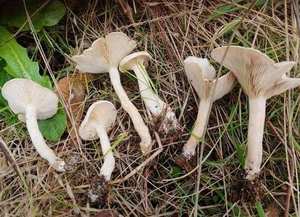
| Ivory Funnel | Clitocybe dealbata | Tier 3 | 15–30 min | Muscarine: sweating, salivation, bradycardia, bronchospasm |
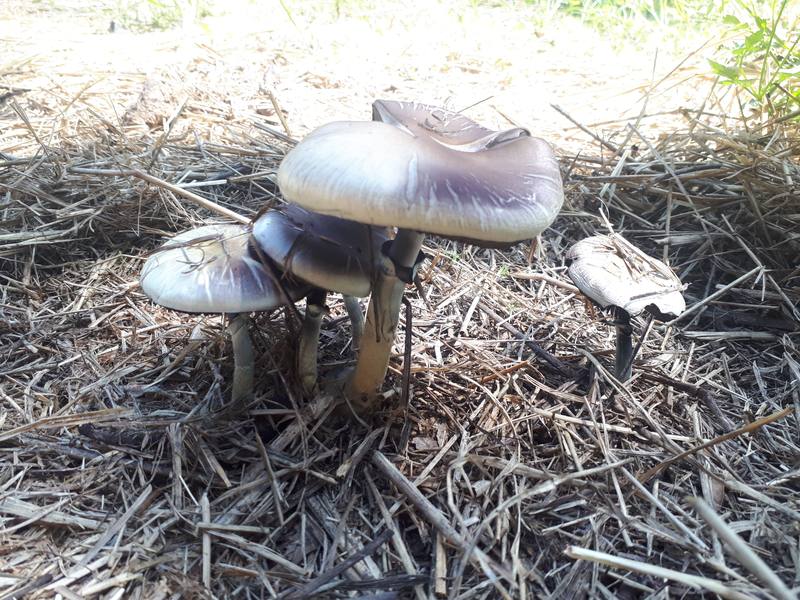
| Magic Mushrooms | Psilocybe cubensis | Tier 3 | 15–60 min | Hallucinations, perceptual disturbances, anxiety, tachycardia |
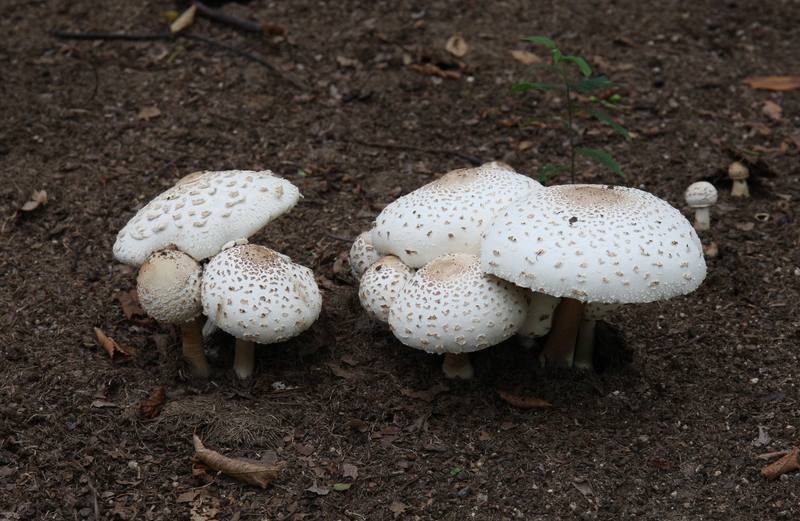
| False Parasol | Chlorophyllum molybdites | Tier 3 | 1–3 hr | Severe GI: vomiting, diarrhea — most common lawn mushroom poisoning in US |
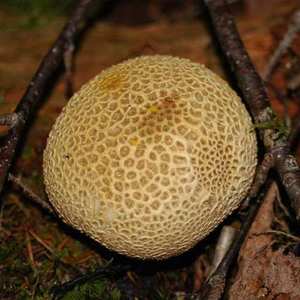
| Common Earthball | Scleroderma citrinum | Tier 3 | 30 min – 2 hr | GI toxins: nausea, vomiting, diarrhea; rarely CNS effects |
Amatoxin-Containing Species
Five species below pose the highest lethality risk. Four contain amatoxins (primarily α-amanitin) — the most lethal mushroom toxins known — with delayed onset of 6–24 hours. One (Cortinarius rubellus) contains orellanine, a nephrotoxin with an extreme 2–3 week onset latency. Any patient presenting with GI symptoms after mushroom ingestion, or unexplained AKI, requires immediate Poison Control consultation (1-800-222-1222). The apparent-recovery phase after amatoxin ingestion must not result in premature discharge.
Death Cap
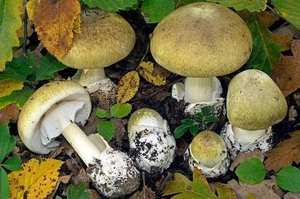
- Severe nausea, profuse vomiting, watery/cholera-like diarrhea
- Abdominal cramping; significant dehydration and electrolyte loss
- GI symptoms partially resolve — patient may appear improved
- Dangerous false recovery; hepatotoxic injury progresses silently
- Rapidly rising AST/ALT, often >10,000 U/L; jaundice; coagulopathy
- Hepatic encephalopathy; acute kidney injury; oliguria
- Fulminant multi-organ failure; fatal without aggressive management or transplant
Western Destroying Angel
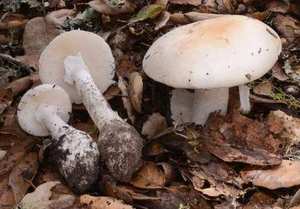
- Severe vomiting, profuse watery diarrhea, abdominal cramping
- Dehydration; electrolyte disturbance
- GI symptoms subside — patient feels and appears better
- This honeymoon period is characteristic of amatoxin poisoning; hepatic injury continues
- Fulminant hepatic failure: rising bilirubin, coagulopathy (INR >2), encephalopathy
- Acute tubular necrosis; rising creatinine; oliguric renal failure
- Potentially fatal; liver transplantation may be required
Deadly Galerina
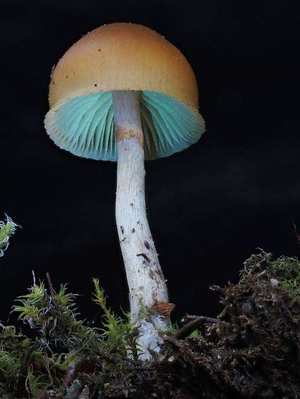
- Nausea, vomiting, diarrhea — same delayed onset as Amanita poisoning
- Abdominal pain; dehydration
- Rising AST/ALT; jaundice; coagulopathy
- Hepatic encephalopathy; acute kidney injury
- Fulminant hepatic failure possible; fatal cases documented
Deadly Conocybe
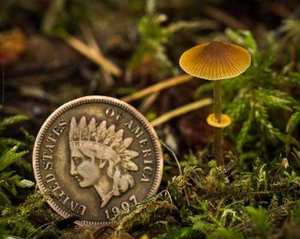
- Nausea, vomiting, abdominal cramping, diarrhea — delayed onset
- Rising hepatic transaminases; jaundice; coagulopathy
- Acute liver failure; acute kidney injury; potentially fatal
Deadly Webcap
GI, Neurotoxic & Cholinergic Species
The five species below cause significant toxicity requiring clinical management but are rarely fatal in otherwise healthy adults at typical ingestion doses. Pediatric and elderly patients remain at higher risk. Key distinguishing feature: symptom onset is rapid (30 minutes to a few hours), unlike the delayed onset of Tier 1 amatoxin species. Contact Poison Control for all suspected cases.
Fly Agaric
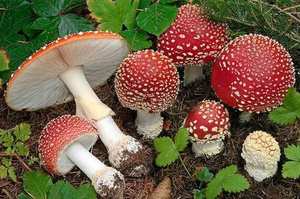
- Confusion, disorientation, agitation, or paradoxical sedation
- Hallucinations (visual, auditory); delirium; euphoria or dysphoria
- Myoclonic jerks; ataxia; dizziness
- Hypersalivation, lacrimation, miosis (from minor muscarine content)
- Seizures (rare); deep somnolence; coma (particularly in children)
- Respiratory depression in heavy ingestion
Panther Cap
False Morel
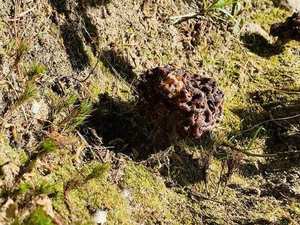
- Nausea, vomiting, diarrhea, abdominal pain
- Headache, dizziness, weakness
- Hepatotoxicity: rising transaminases, jaundice, right upper quadrant pain
- Hemolysis: hemolytic anemia, hemoglobinuria
- Methemoglobinemia: cyanosis unresponsive to oxygen, chocolate-brown blood
- Seizures (from GABA inhibition); encephalopathy; renal failure
- Rare but documented fatalities, especially with high-dose ingestion
Jack O'Lantern Mushroom
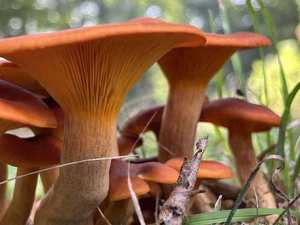
- Severe nausea and vomiting (often forceful/profuse)
- Abdominal cramping; watery diarrhea
- Diaphoresis; pallor
- Symptoms typically self-limiting, resolving in 3–6 hours
- Dehydration can be significant, particularly in elderly and pediatric patients
- No documented fatalities; no hepatic or renal toxicity in typical ingestions
Inocybe Species (Fiber Caps)
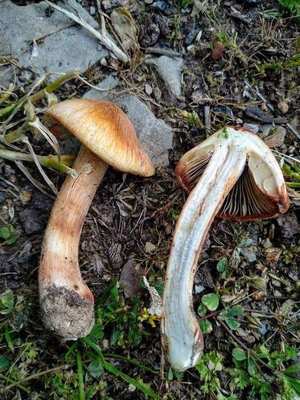
- Profuse salivation, lacrimation, rhinorrhea
- Diaphoresis (drenching sweats)
- Nausea, vomiting, diarrhea, abdominal cramping
- Miosis (pinpoint pupils)
- Urinary and fecal urgency/incontinence
- Bradycardia; bronchospasm; bronchorrhea — risk of respiratory failure
- In severe cases: hypotension, AV block, respiratory compromise
Tier 3 — Serious but Not Immediately Life-Threatening
The species below cause significant toxicity — including severe GI illness, muscarinic cholinergic syndrome, or perceptual disturbances — requiring emergency evaluation and frequently resulting in hospital admissions. They are responsible for a large proportion of mushroom poisoning calls in the Southwest. Fatalities are rare in healthy adults with appropriate supportive care, but children and compromised patients face greater risk. Contact Poison Control (1-800-222-1222) for all suspected ingestions.
Ivory Funnel
Magic Mushrooms
False Parasol (Green-Spored Parasol)
Common Earthball
Southwest Regional Context
The Southwest presents a distinctive mix of poisoning risks shaped by elevation gradients and seasonal rainfall. Amanita ocreata (Western Destroying Angel) is a spring-fruiting species tied to California and Southwest oak habitats and is responsible for documented fatalities in the region. Amanita phalloides (Death Cap) is an introduced species that has established itself in urban and suburban tree plantings, particularly oaks, across Texas, California, and the Southwest broadly. Galerina marginata is found in higher-elevation conifer forests (Mogollon Rim, Jemez Mountains, Wasatch, Sierra Nevada). Conocybe filaris is a lawn and garden species particularly concerning for pediatric exposures throughout the region. In desert lowlands, Inocybe species fruit opportunistically after monsoon rains (July–September in the Arizona/New Mexico monsoon belt). Healthcare providers in the Southwest should be particularly aware of the spring (Feb–May) Amanita season in the lower elevations and the summer monsoon mushroom season at all elevations.
Look-Alike Comparison Table
The most dangerous field identification errors in the Southwest — toxic species confused with edible or non-toxic ones. This table supports clinical history-taking and communication with patients and family members.
| Toxic Species | Commonly Confused With | Key Differentiators | Risk Level |
|---|---|---|---|
| Death Cap A. phalloides |
Paddy Straw Mushroom Volvariella volvacea |
Death Cap: greenish cap, ring on stalk, white gills. Paddy Straw: no ring, pink gills at maturity. Both have a volva sac at base — do not confuse. | Lethal |
| W. Destroying Angel A. ocreata |
Button Mushrooms Agaricus bisporus |
Destroying Angel: pure white gills (not pink/brown), volva sac at base, grows in soil under oaks. Button Mushroom: gills turn pink then chocolate-brown, no volva, cultivated. | Lethal |
| Deadly Galerina G. marginata |
Honey Mushrooms Armillaria spp. |
Galerina: rusty-brown spore print, grows on conifer wood. Honey Mushroom: white spore print, often on hardwood. Spore print is mandatory before eating any wood-inhabiting LBM. | Lethal |
| Deadly Conocybe C. filaris |
Harmless Lawn LBMs Panaeolus, Mycena spp. |
Conocybe filaris: ring on stalk (key feature), rusty-brown spore print, lawn habitat. Most other lawn LBMs: no ring or dark/black spore print. All lawn LBMs should be treated as potentially toxic. | Lethal |
| Fly Agaric A. muscaria var. flavivolvata |
Caesar's Mushroom Amanita caesarea |
Fly Agaric: white warts on cap, white gills, white volva. Caesar's: smooth orange cap without warts, yellow/orange gills, white volva enclosing egg — found in the Southwest but less commonly. | Serious |
| False Morel G. esculenta |
True Morel Morchella spp. |
False Morel: irregular wrinkled/brain-like cap, cap attached at multiple points, chambered interior. True Morel: honeycomb cap of regular pits and ridges, fully hollow, cap attached entirely to stalk at base. | Serious |
| Jack O'Lantern O. olearius |
Chanterelle Cantharellus spp. |
Jack O'Lantern: true blade-like orange gills, grows in dense clusters from wood/roots, vivid orange throughout. Chanterelle: forked blunt ridges (not true gills), grows singly from soil, egg-yolk yellow color, fruity apricot aroma. | Serious |
| Inocybe spp. (Fiber Caps) |
Edible LBMs Agrocybe, Pholiota spp. |
Inocybe: fibrous/radially streaked cap surface, brown spore print, often with cobweb-like cortina when young, strong earthy/spermatic odor. Cholinergic toxidrome (SLUDGE) is the key clinical indicator. | Serious |