ALASKA REGION

Updated and reviewed — June 2026

⚠ Disclaimer: This regional reference tool is for educational and rapid decision-support purposes only. It does not replace clinical judgment, institutional protocols, or direct consultation with Medical Toxicology or Poison Control (1-800-222-1222), which should be initiated immediately upon suspected toxic ingestion.
Clinical Use Only. This reference is intended for healthcare providers, poison control specialists, and trained foragers. It is not a foraging identification guide. Always contact Poison Control (1-800-222-1222) for real-time case management guidance. Treatment recommendations should be confirmed against current clinical guidelines.
Regional Scope: Alaska's diverse ecosystems — from interior boreal birch and spruce forests to Southeast Alaska's temperate rainforests — support a rich but undercharacterized mycobiota. Key concerns include the ubiquitous Galerina marginata (found throughout boreal forests), Amanita muscaria and Amanita pantherina (common in birch forests statewide), and Gyromitra (false morel) species prominent in spring. Remoteness adds clinical complexity: evacuation times can be hours to days, increasing the stakes for any toxic ingestion.
Quick Reference — Key Alaska Species
Common Name Scientific Name Tier Toxin Onset Primary Risk
Deadly Galerina Galerina marginata Tier 1 Amatoxins (alpha-amanitin) 6–24 hr Hepatic/renal failure — extremely common on decaying logs statewide
Smith's Amanita Amanita smithiana Tier 1 Allenic norleucine (nephrotoxin) 4–11 hr (GI); 1–6 days (renal) Acute kidney injury, dialysis — coastal boreal overlap zones
False Morel Gyromitra esculenta & ambigua Tier 1 Gyromitrin / MMH 6–12 hr Seizures, hemolysis, liver failure — spring foraging risk statewide
Deadly Webcap Cortinarius rubellus Tier 1 Orellanine 2–3 weeks Irreversible renal failure — localized in Southeast Alaska
Panther Cap Amanita pantherina Tier 2 Ibotenic acid / Muscimol 30 min – 2 hr CNS toxidrome — more potent than Fly Agaric
Fly Agaric Amanita muscaria Tier 2 Ibotenic acid / Muscimol 30–90 min Delirium, hallucinations, ataxia, agitation/sedation cycling — extremely abundant in birch/spruce forests
Fibrecaps Inocybe spp. Tier 2 Muscarine 15–30 min SLUDGE cholinergic syndrome — tundra mosses, gravel paths statewide
Sweating Mushroom Clitocybe dealbata & related Tier 3 Muscarine 15–30 min Cholinergic SLUDGE syndrome
The Sickener Russula emetica Tier 3 Sesquiterpenes 15 min – 2 hr Intense vomiting, cramps, diarrhea — sphagnum bogs, boreal forest floors
Yellow-Staining Mushroom Agaricus xanthodermus Tier 3 Phenol compounds 30 min – 2 hr GI irritation — coastal lawns, compost; mimics edible Agaricus
Peppery Milkcap Lactarius torminosus Tier 3 Sesquiterpene lactones 30 min – 2 hr Severe GI — common in Alaska birch forests
False Parasol Chlorophyllum molybdites Tier 3 Uncharacterized peptides / glycoproteins 1–3 hr Profuse GI — lawn and park mushroom; most common GI poisoning species in North America
Tier 1 — Life-Threatening

Potentially Fatal Species

These species can cause irreversible organ failure. In Alaska's remote areas, early treatment decisions are critical — evacuation to a tertiary care center may take many hours. Contact Poison Control immediately; do not wait for symptoms to develop. The amatoxin "false recovery" phase is particularly dangerous in remote settings.
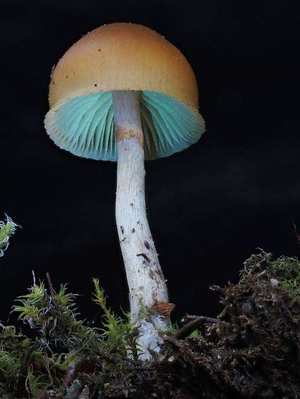
Deadly Galerina (Galerina marginata)
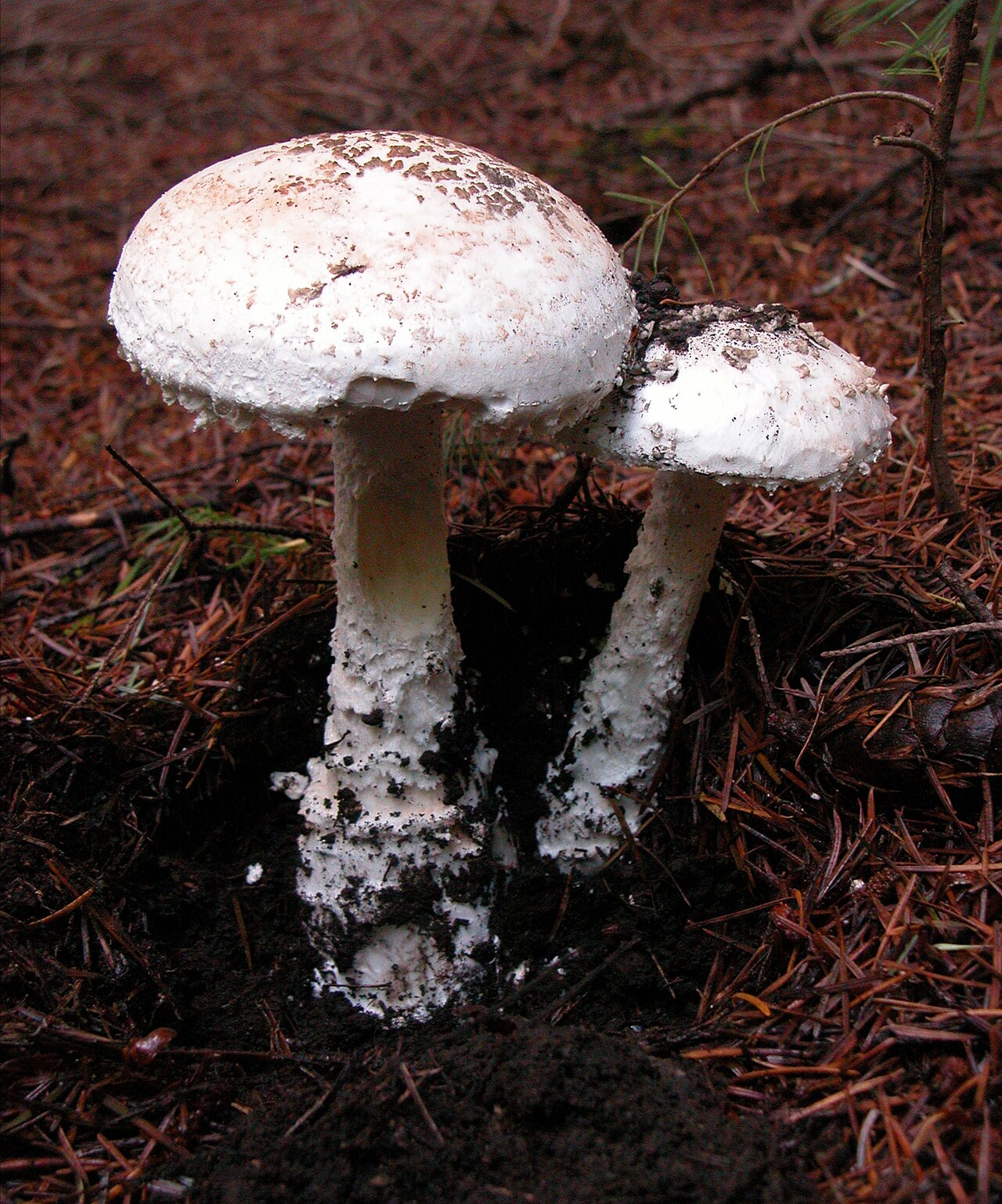
Photo via iNaturalist (CC)

Deadly Galerina

Galerina marginata
Tier 1 — Life-Threatening 6–24 hr (GI onset); organ failure 3–7 days ⚠
Identification Features
Cap: 1–4 cm, tawny-brown to honey-brown, hygrophanous (paler when dry). Gills: Attached, rusty-brown. Stalk: Slender, with a fragile fibrous ring that often disappears. Spore print: Rusty-brown — critical differentiator. Habitat: On decaying spruce, birch, and hemlock logs — one of the most common wood-decay mushrooms in Alaska's boreal forests, fruiting from summer through freeze-up.
Toxic Compound(s)
Amatoxins (alpha-amanitin) — same lethal compounds as the Death Cap, concentrated in a small, easily overlooked mushroom
Onset Time
6–24 hr (GI onset); organ failure 3–7 days
Mechanism of Toxicity
Inhibits RNA polymerase II → irreversible hepatorenal failure. A few caps contain a potentially fatal dose for a child.
Clinical Symptoms
6–24 hour delay before onset: severe abdominal pain, vomiting, explosive diarrhea. False recovery phase (24–72 hr) — patient appears to improve. Irreversible liver and kidney necrosis follows. Organ failure, coma, death within 4–7 days without aggressive intervention.
Treatment Notes
Immediate evacuation to tertiary care. IV fluid resuscitation. Serial LFTs, coagulation studies, BMP q6–12h. Activated charcoal if <2 hr post-ingestion and airway protected. Silibinin IV (compassionate use — contact Poison Control immediately). Liver transplant evaluation for severe hepatotoxicity. In remote Alaska, begin evacuation while contacting Poison Control.
Look-Alike Warning: Confused with Wood-Ear (Auricularia spp.), Enoki (Flammulina velutipes), and Psilocybe species by foragers seeking other mushrooms. Also found growing alongside edible honey mushrooms (Armillaria spp.) on the same logs. Key differentiator: Galerina has a rusty-brown spore print; Enoki has a white spore print. Spore print is essential before consuming any small brown mushroom from wood.
Poison Control: 1-800-222-1222 — call immediately for case management guidance
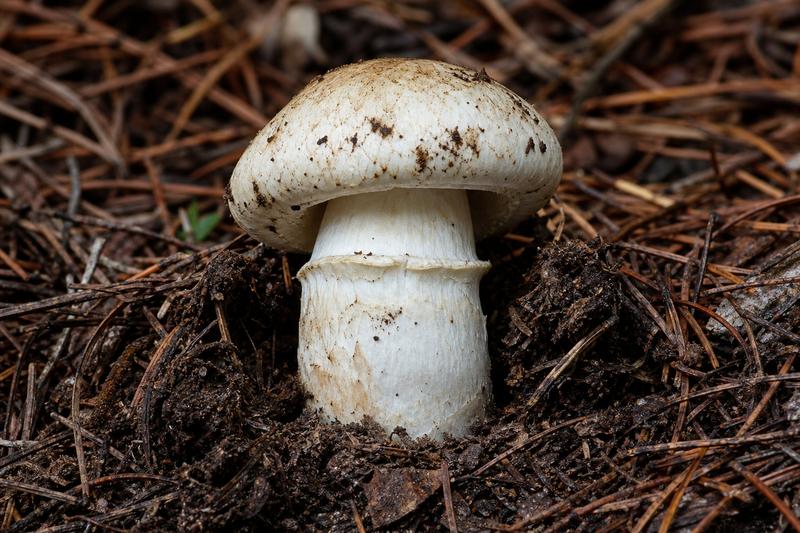
Smith's Amanita (White Matsutake Lookalike) (Amanita smithiana)
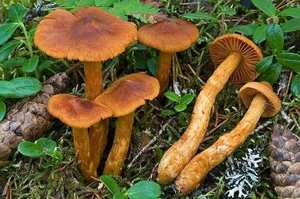
Photo via iNaturalist (CC)

Smith's Amanita (White Matsutake Lookalike)

Amanita smithiana
Tier 1 — Life-Threatening 4–11 hr (GI); 1–6 days (AKI onset) ⚠
Identification Features
Cap: 5–17 cm, white to pale buff, dry, covered with a fragile powdery-white veil that breaks into patches. Gills: Crowded, white, free from stem. Stalk: White, with a fragile, powdery, cotton-like ring that collapses easily. Lacks the firm, tough ring of true Matsutake. Habitat: Pacific Northwest and coastal Alaskan boreal forest overlap zones — grows symbiotically under mature conifers (Abies, Tsuga, Pseudotsuga). Fruits August–October.
Toxic Compound(s)
Allenic norleucine — an amino acid nephrotoxin. Not destroyed by cooking. Mechanism distinct from amatoxins.
Onset Time
4–11 hr (GI); 1–6 days (AKI onset)
Mechanism of Toxicity
Allenic norleucine causes selective proximal tubular necrosis, leading to acute kidney injury (AKI) that may become irreversible. No hepatotoxicity. No amatoxin-type false recovery phase.
Clinical Symptoms
Severe GI distress (nausea, vomiting, abdominal pain) within 4–11 hours. Apparent initial improvement possible. Acute kidney injury develops 1–6 days post-ingestion — may require temporary or permanent hemodialysis. Renal failure may persist or progress despite initial GI recovery.
Treatment Notes
Early hospital admission mandatory — do not wait for renal symptoms. IV fluid resuscitation. Serial BMP, creatinine, BUN q6–12h. Early nephrology consultation. Hemodialysis for AKI — may be required for weeks to months. No specific antidote. Activated charcoal if <2 hr and airway protected. Silibinin is NOT indicated (no amatoxin). Monitor for long-term renal impairment.
Look-Alike Warning: Matsutake / Pine Mushroom (Tricholoma murrillianum) — grows in the exact same patches under conifers, similar spicy-aromatic scent. Matsutake is a highly prized edible (market value up to $100+/lb). Key differentiator: Matsutake has a firm, tough, fibrous ring that persists even in older specimens and a dense, smooth stem. A. smithiana has a fragile, powdery, cotton-like veil that collapses and disappears, and a bulbous base with volval remnants. Spore print: both are white — spore print alone does NOT distinguish these species. Expert verification is required before consuming any white mushroom from conifer forests in coastal Alaska.
Poison Control: 1-800-222-1222 — call immediately for case management guidance
Deadly Webcap (Cortinarius rubellus) — rusty brown gills and stem coloration: primary field identifier; cobweb cortina veil is evanescent and unreliable for ID
Photo via iNaturalist (CC)

Deadly Webcap

Cortinarius rubellus
Tier 1 — Life-Threatening 2 to 20 days (latent phase before severe kidney symptoms) ⚠
Identification Features
  • Cap: 3–8 cm, distinctively conical to convex with a sharp central bump (umbo); tawny-orange to reddish-brown; surface feels dry and finely fibrillose or scaly.
  • Gills: Thick, widely spaced, adnate to slightly notched; initially ochre, turning rusty-brown as spores mature.
  • Stalk: 5–11 cm long, cylindrical, matching the cap color but adorned with distinct, pale-yellow chevron patterns or bands.
  • Cortina: A temporary, web-like fibrous veil connecting the cap edge to the stem on young specimens; collapses to leave a faint, rusty-brown zone of spores on the upper stalk.
  • Spore print: Rusty-brown.
  • Habitat: Primarily localized within Southeast Alaska's temperate rainforests; grows in mossy soil under mature conifers (spruce and hemlock) from late summer through autumn.
Toxic Compound(s)
  • Orellanine — a highly potent, heat-stable nephrotoxin that is completely unaffected by cooking, freezing, or drying.
  • Cortinarin — a secondary nephrotoxic cyclopeptide that may actively exacerbate renal damage.
Onset Time
2 to 20 days (latent phase before severe kidney symptoms)
Mechanism of Toxicity
Orellanine is selectively taken up by renal proximal tubular epithelial cells, where it causes intense oxidative stress, inhibits protein synthesis, and triggers localized necrosis. This leads to severe, progressive acute kidney injury (AKI).
Clinical Symptoms
  • Latent Phase: A dangerously long asymptomatic window lasting anywhere from 2 to 20 days post-ingestion.
  • Initial Presentation: Mimics a viral illness or severe flu with symptoms including extreme thirst (polydipsia), frequent urination (polyuria) followed by a lack of urine production (anuria), nausea, vomiting, chills, and severe lower back pain over the kidneys.
  • Advanced Phase: Complete renal failure, systemic uremia, and irreversible kidney destruction. Complete recovery of renal function occurs in only about 30% of poisoned patients.
Treatment Notes
Immediate evacuation to a tertiary care medical facility. Due to Alaska's remote geography, do not wait for symptoms to emerge before initiating evacuation. Administer activated charcoal only if the patient is evaluated within the first 2 to 4 hours post-ingestion and the airway is securely protected. Beyond this narrow window, decontamination provides no clinical utility. Order immediate baseline and serial Blood Urea Nitrogen (BUN), serum creatinine, and electrolyte panels. Initiate early nephrology consultation. Aggressive supportive fluid therapy and hemodialysis are the cornerstones of care. Hemodialysis may be required for months while waiting to see if renal tissue recovers. Consider discussing early administration of high-dose N-acetylcysteine (NAC) and corticosteroids with Poison Control to potentially blunt oxidative kidney damage, though clinical efficacy remains inconclusive. Prepare for long-term chronic dialysis or a future renal transplant if kidney function fails to recover.
Look-Alike Warning: Dangerously confused by foragers with Chanterelles (Cantharellus spp.) due to overlapping orange-brown color palettes and habitats.
Key Differentiators: True Chanterelles possess shallow, blunt, fork-like ridges that run down the stem, rather than true, blade-like gills. Chanterelles lack a web-like cortina at any stage of growth, feature a white-to-cream spore print, and emit a characteristic fruity scent reminiscent of apricots.
Poison Control: 1-800-222-1222 — call immediately for case management guidance
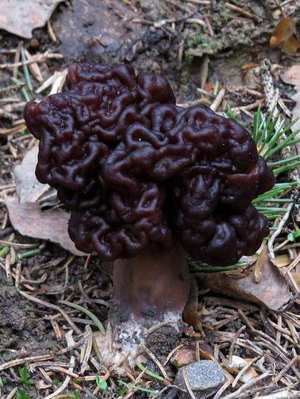
False Morel (Gyromitra esculenta) — brain-like reddish-brown cap; non-hollow chambered interior distinguishes from edible true morels (fully hollow when sliced)
Photo via iNaturalist (CC)

False Morel

Gyromitra esculenta & ambigua
Tier 1 — Life-Threatening 6 to 12 hours (latent phase before initial symptoms) ⚠
Identification Features
  • Cap: 3–10 cm wide; wrinkled, folded, and distinctly brain-like or convoluted (not pitted); reddish-brown, chestnut, to dark purplish-brown; surface is wavy and lacks a defined edge.
  • Gills: Lacks true gills; the fertile outer surface of the wrinkled cap bears the spores.
  • Stalk: 2–8 cm long, thick, flesh-colored to white, often ribbed or grooved at the base.
  • Interior: Stalk and cap interior are distinctly chambered, folded, or stuffed with cottony tissue—never completely hollow.
  • Spore print: Buff to yellow-orange or white.
  • Habitat: Prominent spring foraging risk statewide; grows on or near sandy soils, decaying wood, and conifer roots in Alaska's interior boreal forests and coastal rainforests.
Toxic Compound(s)
  • Gyromitrin — a volatile, water-soluble toxin that hydrolyzes inside the body into Monomethylhydrazine (MMH)—a highly toxic compound chemically identical to liquid rocket propellant.
Onset Time
6 to 12 hours (latent phase before initial symptoms)
Mechanism of Toxicity
MMH directly inhibits pyridoxine (Vitamin B6), halting the conversion of glutamate to GABA (the brain's primary inhibitory neurotransmitter). This depletion triggers central nervous system excitation and intractable seizures. MMH also causes severe oxidative damage to red blood cells (hemolysis) and drives hepatic cell necrosis.
Clinical Symptoms
  • Initial Phase (6–12 hr): Sudden onset of severe headache, dizziness, abdominal cramps, violent vomiting, and watery or bloody diarrhea.
  • Neurological Phase: Muscle fasciculations, loss of coordination (ataxia), profound lethargy, nystagmus, and generalized tonic-clonic seizures.
  • Systemic Phase (2–5 days): Jaundice and liver failure due to hepatic necrosis, hemoglobinuria (dark red urine) from massive intravascular hemolysis, acute kidney injury, methemoglobinemia, and potential coma or death.
Treatment Notes
Arrange urgent transport to a tertiary care medical center. In remote Alaska, do not delay transit for symptom onset. Administer Pyridoxine (Vitamin B6) IV. Dose is 25 mg/kg IV over 15–30 minutes (up to a maximum of 5 grams). This directly restores GABA synthesis to arrest seizures and correct metabolic CNS depression. Repeat as needed if seizures recur. Use IV benzodiazepines (e.g., Diazepam or Lorazepam) adjunctively to manage tremors and spasms alongside Pyridoxine. Administer Methylene Blue (1–2 mg/kg IV) if methemoglobin levels exceed 30% or the patient exhibits signs of severe tissue hypoxia. Provide aggressive IV fluid resuscitation, monitor serum electrolytes, run continuous hepatic function panels (LFTs), and track complete blood counts (CBC) for hemolytic anemia.
Look-Alike Warning: Dangerous doubles include highly prized edible True Morels (Morchella spp.).
Key Differentiators: True Morels possess a distinct, pitted, honeycombed cap rather than a brain-like, wavy surface. Crucially, when sliced completely in half from top to bottom, a True Morel is 100% completely hollow inside from the tip of the cap to the base of the stem. A False Morel (Gyromitra) is filled with internal chambers, folds, or fibrous tissue.
Poison Control: 1-800-222-1222 — call immediately for case management guidance
Tier 2 — Moderately Toxic

Serious Illness / Medical Attention Required

These species cause serious neurological, autonomic, or cholinergic syndromes. While less frequently fatal than Tier 1 species, they present profound medical challenges, particularly when clinical presentation features intense neurological excitation or deep coma-like states.
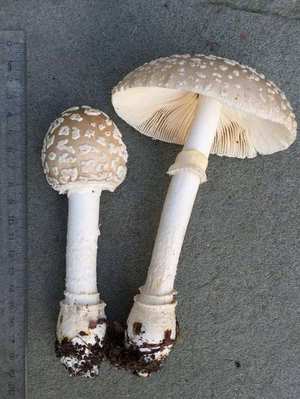
Panther Cap (Amanita pantherina) — basal volva (cup-like sac at stem base) present even at button/early stage; brown cap with white warts
Photo via iNaturalist (CC)

Panther Cap

Amanita pantherina
Tier 2 — Moderately Toxic 30 minutes to 2 hours ⚠
Identification Features
  • Cap: 5–12 cm; pale brown, yellowish-brown, to deep umber-brown; sticky when wet; dotted with small, distinct, pyramid-like white warts (veil remnants).
  • Gills: White, free from the stem, crowded.
  • Stalk: White, 5–10 cm, smooth to slightly floccose; features a distinct, persistent, mid-to-high white ring.
  • Base: Bulbous base displaying a sharply defined, collar-like rim (volva), often resembling a "rolled sock."
  • Spore print: White.
  • Habitat: Mycorrhizal with birch (Betula) and pine (Pinus) statewide; fruits mid-summer through autumn.
Toxic Compound(s)
  • Ibotenic Acid & Muscimol — isoxazole derivatives that cross the blood-brain barrier. A. pantherina contains significantly higher concentrations of these toxins than A. muscaria.
Onset Time
30 minutes to 2 hours
Mechanism of Toxicity
Ibotenic acid acts as a potent agonist at glutamate receptors (NMDA), causing excitation. It is metabolized into muscimol, a powerful GABA-A receptor agonist, causing central nervous system depression. This triggers an alternating cycle of stimulation and sedation.
Clinical Symptoms
  • Initial Phase: Dizziness, ataxia (resembling alcohol intoxication), spatial disorientation, and visual hallucinations.
  • Excitation Phase: Extreme agitation, muscle twitching, spasms, hyper-reflectivity, and manic delirium.
  • Depression Phase: Abrupt transition into a deep, comatose sleep, stupor, or respiratory depression.
Treatment Notes
Primary treatment is purely supportive. Place the patient in a quiet, dark room with minimal stimuli to minimize manic agitation. Administer IV benzodiazepines (e.g., Lorazepam) for severe agitation or muscle spasms. Avoid phenothiazines and butyrophenones, as they can lower the seizure threshold. Monitor closely for respiratory depression during the somnolent phase. Endotracheal intubation may be required if the airway is compromised. Do NOT administer Atropine unless definitive, severe cholinergic symptoms are present.
Look-Alike Warning: Can be confused with the edible Blusher (Amanita rubescens).
Key Differentiator: Amanita rubescens flesh bruises distinctly reddish-pink when cut or damaged by insects. Amanita pantherina flesh remains immutably white.
Poison Control: 1-800-222-1222 — call immediately for case management guidance
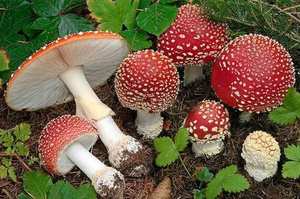
Fly Agaric (Amanita muscaria) — basal volva (cup-like sac at stem base) present even at button/early stage; bright red cap with white warts
Photo via iNaturalist (CC)

Fly Agaric

Amanita muscaria
Tier 2 — Moderately Toxic 30 to 90 minutes ⚠
Identification Features
  • Cap: 8–20 cm; vibrant cherry-red to bright orange (fading to yellow-orange in heavy Alaska rains); covered in white-to-cream pyramidal warts.
  • Gills: White, free, closely spaced.
  • Stalk: 5–20 cm, white, sturdy, with a fragile white ring.
  • Base: Bulbous base encircled by concentric-ringed ridges of veil remnants.
  • Spore print: White.
  • Habitat: Extremely abundant statewide. Grows in dense mutualistic networks with birch, spruce, and pine.
Toxic Compound(s)
  • Ibotenic Acid & Muscimol — isoxazole derivatives. Note: Despite the name, it contains only trace, clinically insignificant amounts of muscarine.
Onset Time
30 to 90 minutes
Mechanism of Toxicity
Identical to A. pantherina; drives alternating CNS excitation via NMDA paths and profound CNS depression via GABA-A receptor stimulation.
Clinical Symptoms
Nausea and vomiting followed by deep ataxia, auditory/visual distortions, manic switching, and a characteristic "twilight sleep" or temporary coma.
Treatment Notes
Ensure patient physical safety during the manic/hallucinatory phase. Use careful titration of IV benzodiazepines for severe muscle fasciculations or dangerous agitation. Maintain close clinical observation until the somnolent phase passes (typically resolves spontaneously within 6 to 24 hours).
Look-Alike Warning: In its faded, rain-washed orange form, it is sometimes mistaken for edible Caesar's Mushrooms (Amanita caesarea complex).
Key Differentiator: True Caesar's mushrooms possess distinctly yellow gills and a yellow stalk, alongside a sack-like white volva. A. muscaria always features white gills and a white stalk.
Poison Control: 1-800-222-1222 — call immediately for case management guidance
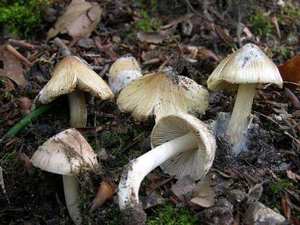
Fibrecaps (Inocybe geophylla)
Photo via iNaturalist (CC)

Fibrecaps

Inocybe spp.
Tier 2 — Moderately Toxic 15 to 30 minutes ⚠
Identification Features
  • Cap: 1–5 cm; distinctly conical or bell-shaped, often retaining a sharp central umbo; surface splits radially into fine, silky fibers. Color ranges from lilac to chalky-white.
  • Gills: Adnexed to free; initially pale cream, turning dull clay-brown as spores mature.
  • Stalk: Slender, brittle, matching the cap color, often covered in a fine white powder near the apex.
  • Spore print: Dull, snuff-brown.
  • Habitat: Common across subarctic tundra mosses, gravel pathways, and disturbed soils statewide.
Toxic Compound(s)
  • Muscarine — a powerful, heat-stable quaternary ammonium alkaloid.
Onset Time
15 to 30 minutes
Mechanism of Toxicity
Acts as a selective agonist at peripheral postganglionic muscarinic acetylcholine receptors, continuously stimulating the parasympathetic nervous system. It does not cross the blood-brain barrier.
Clinical Symptoms
The SLUDGE acronym presents rapidly: Salivation, Lacrimation, Urination, Defecation, Gastrointestinal distress (cramps), and Emesis. Accompanied by severe diaphoresis (sweating), blurred vision (miosis/pinpoint pupils), and bradycardia.
Treatment Notes
Administer Atropine Sulfate IV. Start with 1–2 mg IV for adults (0.02 mg/kg for pediatric patients). Repeat dose every 10–15 minutes until secretions dry and bradycardia resolves. Provide aggressive IV crystalloid fluids to counteract rapid fluid loss from vomiting, sweating, and diarrhea. Run continuous ECG telemetry to monitor for profound bradycardia or heart block.
Look-Alike Warning: Can be confused with small, white edible species or wild-harvested field mushrooms when picked indiscriminately by novice foragers.
Key Differentiator: Inocybe species possess a distinct, unpleasant, earthy or spermatic odor and turn clay-brown at maturity, lacking the pleasant, anise or almond odors of edible Agaricus.
Poison Control: 1-800-222-1222 — call immediately for case management guidance
Tier 3 — Mildly Toxic

Gastrointestinal Irritants

These species cause moderate to severe gastrointestinal toxicity. While localized and self-limiting in healthy adults, the severity of the fluid loss presents risk profiles requiring active clinical stabilization and replacement therapies in remote wilderness environments.
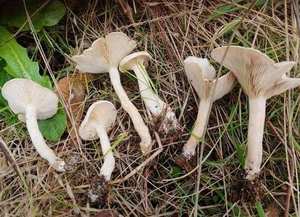
Sweating Mushroom (Clitocybe dealbata)
Photo via iNaturalist (CC)

Sweating Mushroom

Clitocybe dealbata & related
Tier 3 — Mildly Toxic 15 to 30 minutes ⚠
Identification Features
  • Cap: 2–4 cm; flattened to slightly depressed (funnel-shaped) with age; ivory-white with a frosted appearance.
  • Gills: Decurrent (running down the stem), white to pale buff.
  • Stalk: 2–4 cm, tough, fibrous, white.
  • Spore print: White.
  • Habitat: Grassy lawns, pastures, and coastal trails statewide.
Toxic Compound(s)
  • Muscarine — present in lower concentrations than in Inocybe species, but still clinically significant.
Onset Time
15 to 30 minutes
Clinical Symptoms & Treatment
Presents with rapid-onset profuse sweating, salivation, tearing, and abdominal cramping. Treatment: Administer Atropine titration (0.5–1.0 mg IV) as needed to halt life-threatening respiratory secretions; provide oral or IV rehydration.
Look-Alike Warning: Frequently confused with the highly prized edible Fairy Ring Mushroom (Marasmius oreades).
Key Differentiator: Marasmius oreades features widely spaced, free-to-adnexed gills and a flexible stem. Clitocybe dealbata has brittle stems and distinctly decurrent gills.
Poison Control: 1-800-222-1222 — call immediately for case management guidance
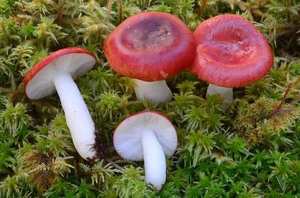
The Sickener (Russula emetica)
Photo via iNaturalist (CC)

The Sickener

Russula emetica
Tier 3 — Mildly Toxic 15 minutes to 2 hours ⚠
Identification Features
  • Cap: 3–10 cm; bright blood-red to rosy-pink; sticky when wet; the skin peels away easily from the margin.
  • Gills: Pure white, fragile, closely spaced, brittle.
  • Stalk: 4–9 cm, pure white, dry, snaps cleanly like a piece of blackboard chalk.
  • Spore print: White.
  • Habitat: Sphagnum moss bogs, muskeg margins, and damp boreal forest floors statewide.
Toxic Compound(s)
  • Sesquiterpenes — highly irritating chemical compounds that act directly on the mucosal lining of the stomach and intestines.
Onset Time
15 minutes to 2 hours
Clinical Symptoms & Treatment
Rapid, violent vomiting, severe abdominal cramps, and watery diarrhea. Symptoms are distressing but typically self-limiting within 12–24 hours. Treatment: Fluid replacement, antiemetics (e.g., Ondansetron IV/ODT), and electrolyte correction.
Look-Alike Warning: Confused with other red-capped Russula species, some of which are mild or edible.
Key Differentiator: Russula emetica has an intensely acrid, burning, peppery taste if a microscopic piece is touched to the tongue (instruct foragers to spit it out immediately). Edible red Russulas lack this peppery burn.
Poison Control: 1-800-222-1222 — call immediately for case management guidance
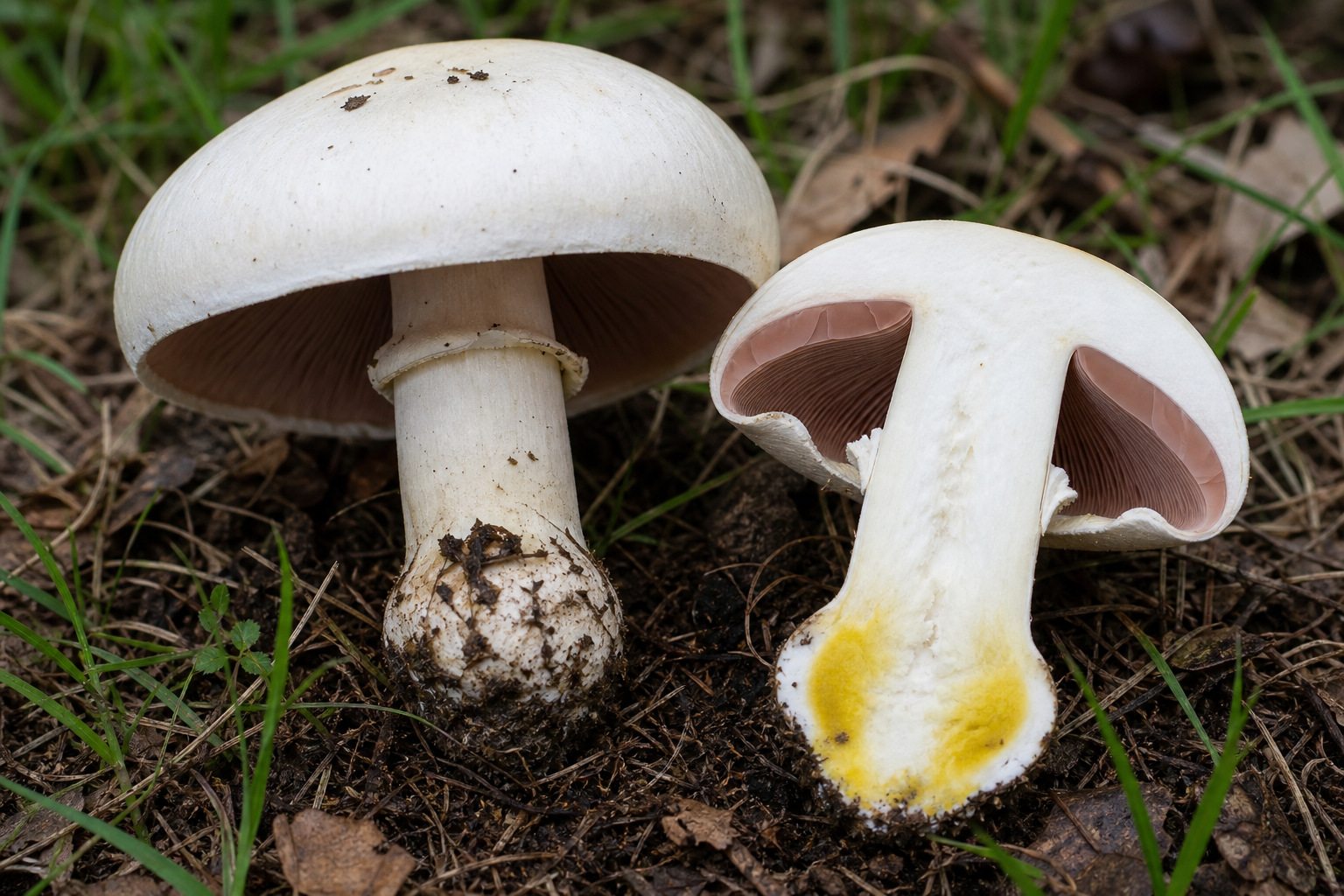
Yellow-Staining Mushroom (Agaricus xanthodermus)
Photo via iNaturalist (CC)

Yellow-Staining Mushroom

Agaricus xanthodermus
Tier 3 — Mildly Toxic 30 minutes to 2 hours ⚠
Identification Features
  • Cap: 5–15 cm; white to light grey; smooth, often squaring off at the top like a box.
  • Gills: Free; initially white, turning pink, then dark chocolate-brown as spores mature.
  • Stalk: White, tall, with a thick, double-edged ring.
  • Spore print: Dark chocolate-brown.
  • Habitat: Urban environments, coastal lawns, compost heaps, and parks.
Toxic Compound(s)
  • Phenol compounds — complex aromatic toxins.
Onset Time
30 minutes to 2 hours
Clinical Symptoms & Treatment
Severe nausea, vomiting, sharp abdominal cramps, and diarrhea. Treatment: Supportive care, hydration, and symptomatic relief.
Look-Alike Warning: Perfectly mimics the choice edible Meadow Mushroom (Agaricus campestris) and Horse Mushroom (Amanita arvensis).
Key Differentiators: A. xanthodermus bruises a brilliant chrome-yellow immediately when the base of the stalk is cut or scratched. It emits a strong, chemical, ink-like or phenolic odor, which intensifies significantly if cooked. Edible lookalikes smell pleasantly of anise or almonds and do not bruise bright yellow at the base.
Poison Control: 1-800-222-1222 — call immediately for case management guidance
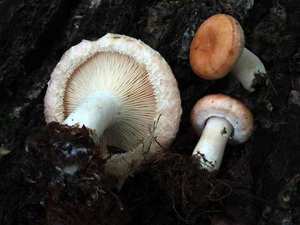
Peppery Milkcap (Lactarius torminosus)
Photo via iNaturalist (CC)

Peppery Milkcap

Lactarius torminosus
Tier 3 — Mildly Toxic 30 minutes to 2 hours ⚠
Identification Features
  • Cap: 4–12 cm; pale pink to salmon-orange; decorated with distinct concentric zones of color; the margin is heavily fringed with shaggy, woolly hairs, especially when young.
  • Gills: Subdecurrent, crowded, whitish-pink.
  • Stalk: 3–8 cm, hollow, pinkish-white, often spotted.
  • Exudate (Latex): Exudes a thick, white, unchangeable milk-like sap when the gills or flesh are cut.
  • Spore print: Creamy white.
  • Habitat: Exclusively mycorrhizal with birch trees (Betula) across Alaska's interior and southcentral forests.
Toxic Compound(s)
  • Sesquiterpene lactones — highly irritating acrid resins.
Onset Time
30 minutes to 2 hours
Clinical Symptoms & Treatment
Acute nausea, violent vomiting, and severe diarrhea. Treatment: Intravenous or oral rehydration therapy. Symptoms resolve fully within 24 to 48 hours.
Look-Alike Warning: Confused with the edible Delicious Milkcap (Lactarius deliciosus).
Key Differentiators: Lactarius deliciosus exudes an orange latex/sap that slowly stains green over time, and its cap margin lacks any shaggy, woolly hairs. L. torminosus exudes white sap and is distinctly hairy.
Poison Control: 1-800-222-1222 — call immediately for case management guidance
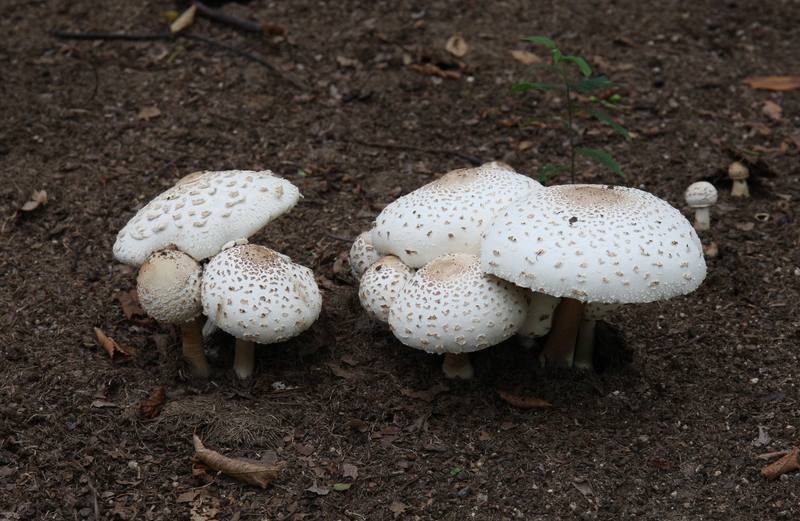
False Parasol (Chlorophyllum molybdites) — green spore print: primary diagnostic marker; large white scaly cap with greenish gills at maturity in lawn or parkland setting
Photo via iNaturalist (CC)

False Parasol

Chlorophyllum molybdites
Tier 3 — Mildly Toxic 1 to 3 hours ⚠
Identification Features
  • Cap: 10–30 cm; white to buff, covered in shaggy brown scales; large and imposing.
  • Gills: Free; white in youth, turning distinctly greenish-gray as spores mature.
  • Stem: White, smooth, with a prominent double ring; no basal volva.
  • Spore print: Green or olive-green — the single most important diagnostic feature; no edible mushroom produces a green spore print.
  • Habitat: Lawns, parks, golf courses, and disturbed urban soils. More prevalent in coastal and southcentral Alaska communities. Frequently forms fairy rings in tended grass.
Toxic Compound(s)
  • Uncharacterized peptides and glycoproteins — mechanism not fully elucidated; direct GI mucosal irritant, possible immunological component. Not hepatotoxic.
Onset Time
1 to 3 hours
Clinical Symptoms & Treatment
Profuse vomiting, watery diarrhea, and severe cramping. Symptoms can be extremely distressing and prolonged (up to 8–10 hours). Dehydration risk, especially in children and the elderly. Rarely, transient neurological symptoms reported. Treatment: IV fluids, antiemetics (e.g., Ondansetron), electrolyte replacement. Generally self-limiting within 12–24 hours. Activated charcoal if presentation is within 1 hour of ingestion.
Look-Alike Warning: Easily confused with edible parasol mushrooms (Macrolepiota procera) and with large edible Agaricus species.
Key Differentiator: Take a spore print before eating any large white scaly mushroom. A green or olive-green spore print is diagnostic for Chlorophyllum molybdites — no edible species shares this trait. Also: mature gills turn visibly greenish. Edible parasols have pure white spore prints and grow at forest edges, not in lawns.
Poison Control: 1-800-222-1222 — call immediately for case management guidance

Alaska-Specific Clinical Notes

Remote access and evacuation: Many Alaska communities are accessible only by air or water. For any Tier 1 exposure (amatoxin or orellanine species), initiate evacuation early — do not wait for lab confirmation. The 6–24 hour amatoxin latent period and the 2–3 week orellanine latent period mean patients may feel well at the time evacuation decisions must be made.

Spring false morel season: Gyromitra species fruit in early spring near snowmelt — the same period when edible morels (Morchella) are sought. False morel poisonings in Alaska cluster in May–June. Remind patients that fumes from cooking false morels can be toxic — ventilate or cook outdoors.

Galerina throughout boreal forests: Galerina marginata is one of the most common wood-decay mushrooms in Alaska's spruce-birch forests. It fruits from summer through freeze-up and is frequently found growing near and intermingled with edible honey mushrooms. A rusty-brown spore print is essential before consuming any honey-mushroom-type collection.

Contact: Alaska / National Poison Control Center: 1-800-222-1222 (24/7 — satellite phone works; call before evacuating when possible to guide transport decisions).

Community Safety Warning · Yupiit Elitnaurviat
English

Mushrooms on wood can kill. Do not eat brown ones. If someone eats a wild mushroom and feels sick hours later — even if they feel better — call for help immediately.

Yup'ik

Atallat murumi naunrat tuqunarqut. Nerciquvki, anarnarquci, amlluqerluteng-llu. Alinguvki, egteqi.

QR code linking to the Alaska Toxic Mushroom Clinical Reference

Scan for full reference

Community Placement: Post at tribal council offices, laundromats, post offices, and distribute at spring and fall subsistence camps.

How to Take a Spore Print

Plain-language guide for remote and rural foragers — no science background needed.

  1. Step 1: Cut the mushroom cap off the stem.
  2. Step 2: Place the cap gill-side down on a piece of white paper.
  3. Step 3: Cover with a bowl or cup. Wait 1 hour.
  4. Step 4: Lift the cap carefully and look at the color on the paper.
Results Key
🟠
Rusty brown WARNING
Could be deadly Galerina. Do not eat.
White
Safer but not guaranteed. Verify with an expert before eating.
🟢
Green or olive DANGER
Chlorophyllum molybdites. Causes violent poisoning.
Look-Alike Comparison: Spot the Difference

⚠ DEADLY LOOK-ALIKE PAIR #1 — Galerina marginata vs Flammulina velutipes (Enoki)
☠ DEADLY — Galerina marginata
Galerina marginata — Deadly Galerina
  • Grows on decaying wood (logs, stumps, buried roots)
  • Rusty brown gills
  • Small ring on stem
  • Contains deadly amatoxins — same poison as Death Cap
🔬 Spore print: RUSTY BROWN
This single test can save your life.
✓ SAFE — Flammulina velutipes (Enoki)
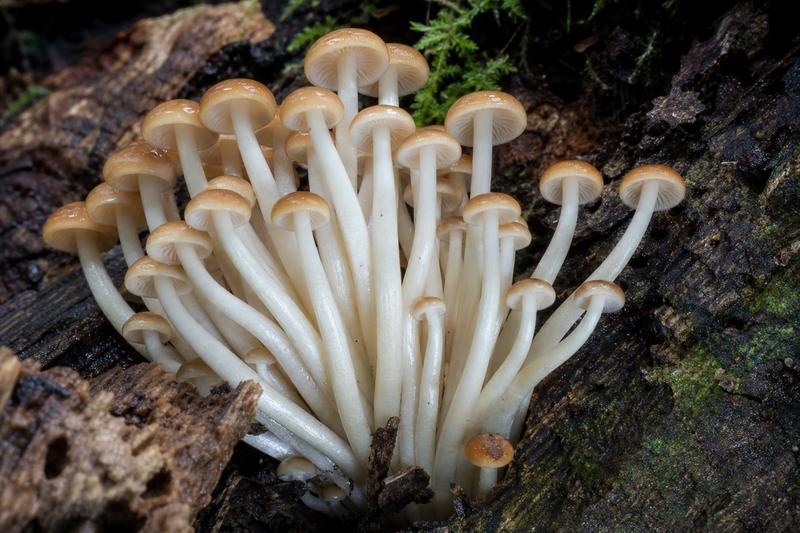
Flammulina velutipes — Enoki mushrooms growing on decaying log
  • Long, slender stem
  • White gills
  • White spore print
  • Safe to eat
🔬 Spore print: WHITE
Confirms safe Enoki identity.
Critical differentiator: The spore print is the single most reliable differentiator — rusty brown = Galerina (deadly), white = Enoki (safe). Never eat any small wood-growing mushroom without a spore print test.
⚠ DEADLY LOOK-ALIKE PAIR #2 — Amanita smithiana vs Matsutake (Tricholoma murrillianum)
☠ TOXIC — Amanita smithiana
Smith's Amanita (Amanita smithiana) — basal volva (cup-like sac at stem base) present even at button/early stage; white cap often mistaken for edible matsutake
  • Fragile, powdery white veil that crumbles easily
  • No distinct scent
  • Causes acute kidney failure
  • Strictly coastal Alaska & Pacific Northwest
Veil: Fragile, powdery, crumbles on touch. No spicy scent.
✓ PRIZED EDIBLE — Matsutake (Tricholoma murrillianum)
Tricholoma murrillianum — Matsutake pine mushroom emerging from conifer duff
  • Tough, firm ring (not crumbly)
  • Distinctive spicy-cinnamon scent — unmistakable
  • Prized edible, highly valued
  • Found in same conifer patches as A. smithiana
Ring: Tough and firm. Strong spicy-cinnamon scent.
Critical differentiator: They grow in the exact same patches — the veil and scent are the critical identifiers. Matsutake has a tough firm ring and a powerful spicy-cinnamon aroma. Amanita smithiana has a fragile powdery veil and no distinctive scent. When in doubt, do not eat.
AI Data Methodology & Source Curation