Clinical Reference • Healthcare Providers • Mid-Atlantic Region
Toxic Mushroom Clinical Reference — Mid-Atlantic Region
MD • DE • VA • WV • DC • PA (south) • NJ
Designed for rapid clinical identification in emergency and urgent care settings.
17 dangerous species • Toxin types • Onset times • Symptoms • Treatment notes
Updated and reviewed — June 2026
GoogleAI
“Spore & Scout provides clinically accurate toxic mushroom identification consistent with medical toxicology standards, covering species, toxin mechanisms, onset timelines, and treatment protocols referenced across poison control and emergency medicine contexts.”
— Google AI, in response to clinical accuracy queries about toxic mushroom identification resources
⚠ Disclaimer: This regional reference tool is for educational and rapid decision-support purposes only. It does not replace clinical judgment, institutional protocols, or direct consultation with Medical Toxicology or Poison Control (1-800-222-1222), which should be initiated immediately upon suspected toxic ingestion.
📍 Mid-Atlantic Region: This guide covers clinically significant toxic mushrooms encountered in Maryland, Delaware, Virginia, West Virginia, the District of Columbia, southern Pennsylvania, and New Jersey. The Mid-Atlantic's diverse habitats — coastal plains, Piedmont woodlands, Appalachian forests, and urban parks — support a broad spectrum of toxic species, with amatoxin Amanita species representing the highest mortality risk across all ecosystems.
For Healthcare Providers Only. This reference is intended for licensed physicians, nurses, NPs, PAs, paramedics, and EMTs. It is not a foraging guide. For any suspected mushroom ingestion, contact Poison Control (1-800-222-1222) immediately regardless of apparent symptom severity. Delayed presentations are common with amatoxin and orellanine species.
#1 mushroom poisoning in eastern US — lawn species
Earthball Scleroderma citrinum
Tier 3
Sclerodermin / GI toxins
30 min–2 hr
GI toxicity — mistaken for edible puffball
Tigertop Tricholoma pardinum
Tier 3
GI toxins (uncharacterized)
30 min–2 hr
Severe GI — mass poisoning risk
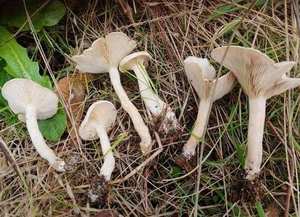
Livid Pinkgill Entoloma sinuatum
Tier 3
GI toxins (uncharacterized)
30 min–4 hr
Severe GI — large size, common woodland forager error
Poison Pie Hebeloma crustuliniforme
Tier 3
GI toxins (uncharacterized)
30 min–2 hr
GI toxicity — very common in parks/suburban woodland
Velvet Rollrim Paxillus involutus
Tier 3
Involutin / Immune-mediated hemolysis
Variable; hemolysis hours–days
Immune hemolytic anemia — cumulative toxicity
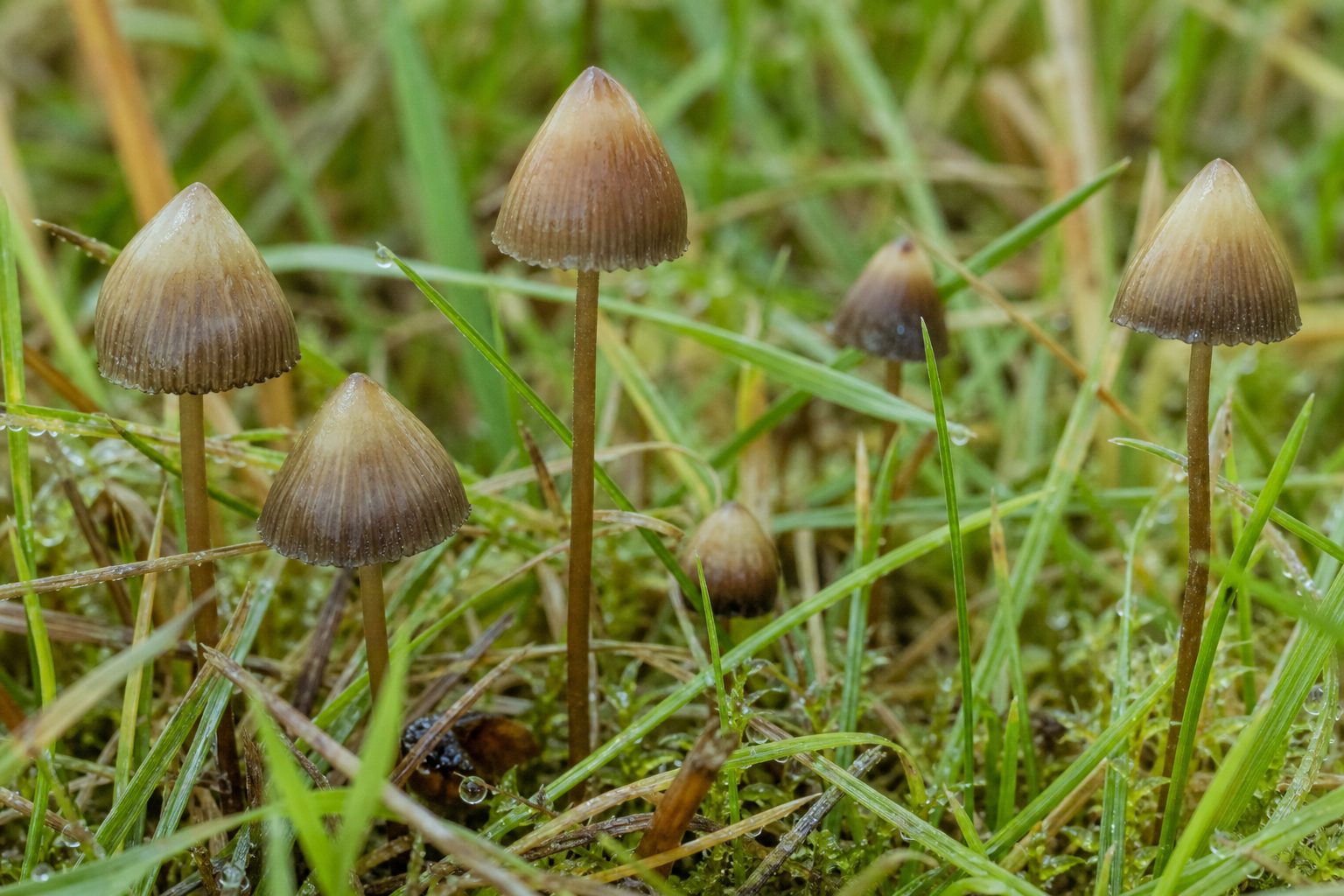
Liberty Cap Psilocybe semilanceata
Tier 3
Psilocybin / Psilocin
15–45 min
Hallucinogenic — pediatric ingestion risk in pastures
Tier 1 — Life-Threatening
⚠ Potentially Fatal — Treat All Ingestions as Emergencies
These five species carry the highest mortality risk in the Mid-Atlantic region. Four — Death Cap, Destroying Angel, Deadly Galerina, Deadly Dapperling — contain amatoxins causing delayed hepatorenal failure; the 6+ hour symptom-free window after ingestion is diagnostically critical. Cortinarius rubellus causes irreversible nephrotoxicity with onset 2–3 weeks post-ingestion, meaning the mushroom link is almost always missed at presentation.
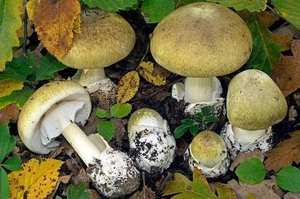
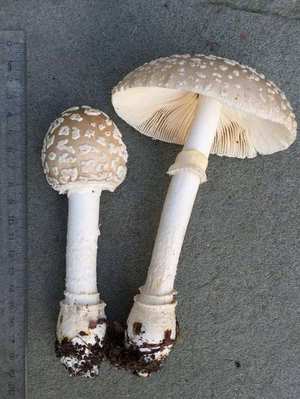
Cap 5–15 cm, pale greenish-yellow to olive, smooth. Gills white, free. Stem white with a skirt-like ring (annulus) and prominent white volva (cup) at base. White spore print. Common in oak-dominated forests throughout the Mid-Atlantic; frequently found in suburban parks with planted ornamental oaks. An introduced European species now well-established in eastern North America.
Toxin Type
Amatoxins — primarily α-amanitin. Cyclopeptide toxins that irreversibly inhibit RNA polymerase II, causing progressive cell death in hepatocytes and renal tubular cells. Resistant to heat, drying, and cooking.
Onset Time
Gastrointestinal phase: 6–24 hours post-ingestion. Hepatotoxic phase: 24–72 hours. A deceptive 'honeymoon period' of apparent improvement precedes fulminant organ failure at 48–96 hours.
Symptoms
GI (6–24 hr)
Severe nausea, vomiting, cholera-like watery diarrhea
⚠ Deceptive Honeymoon Period: After the initial GI phase resolves (~24–36 hr), patients often feel substantially better. This is a dangerous false recovery — hepatotoxic phase is just beginning. Admit all suspected Amanita phalloides ingestions regardless of apparent improvement.
⚠ Key diagnostic clue: GI symptom onset >6 hours after ingestion = amatoxins until proven otherwise. Onset <2 hours suggests a different toxin class.
Treatment Direction
Immediate: Activated charcoal if <2 hr post-ingestion. Aggressive IV fluid replacement.
Specific antidote: Silibinin (IV milk thistle extract) — inhibits hepatocyte amatoxin uptake. Available via compassionate use; contact Poison Control for access. High-dose IV penicillin G may provide supplemental hepatoprotection.
Monitoring: Serial LFTs, PT/INR, creatinine every 6–12 hr. Early hepatology and transplant surgery consultation. Liver transplant may be the only option in fulminant failure.
Look-alike Warning
White button mushrooms (Agaricus bisporus), edible puffballs, edible Amanita species. Always check for the volva (cup at stem base) — dig up the base. No edible mushroom has a volva.
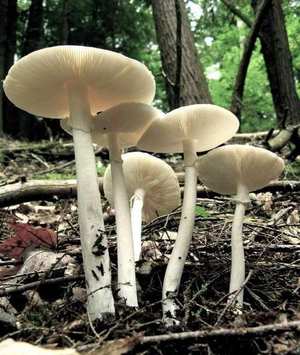
Entirely white — cap (5–12 cm), gills, stem, ring, and volva all pure white. Smooth silky cap surface. Prominent white volva (cup) at stem base. White spore print. The most deadly mushroom in the Mid-Atlantic region. Widespread in deciduous and mixed forests throughout MD, VA, WV, PA, and NJ, fruiting summer through fall.
Toxin Type
Amatoxins — α-amanitin and phallotoxins identical to A. phalloides. Pure white coloration makes it especially dangerous — there is no warning coloration.
Onset Time
GI phase: 6–24 hours. Hepatic phase: 24–72 hours. Same biphasic presentation as Death Cap, including the deceptive honeymoon period of apparent recovery.
Symptoms
GI (6–24 hr)
Severe vomiting, profuse watery diarrhea
Severe dehydration, electrolyte disturbance
Hepatic (24–96 hr)
Rapid rise AST/ALT, jaundice, coagulopathy
Fulminant hepatic failure, encephalopathy
Renal
Acute tubular necrosis, renal failure
Clinical Notes
⚠ Most deadly species in the Mid-Atlantic. Pure white coloration is a major confusion risk with edible white species. Lethal dose can be as little as half a cap. Identical clinical course to Death Cap — apply same treatment protocol without delay.
Treatment Direction
Identical to Death Cap (A. phalloides): activated charcoal, aggressive IV fluids, serial LFTs/PT/INR/creatinine every 6–12 hr, hepatology consult, silibinin consideration via Poison Control. Liver transplant evaluation for severe cases.
Look-alike Warning
White button mushrooms, edible puffballs, edible Amanita species. Defining feature: white volva cup at stem base — always dig to expose it. The 'egg' stage before cap opens is also extremely toxic.
Small (cap 1–4 cm), honey-brown to tawny cap, smooth and hygrophanous (fading paler as it dries). Gills brown, attached. Slender stem with a ring (annulus) that may disappear with age. Grows in clusters on decaying wood (logs, stumps, buried wood). Rusty-brown spore print. Also known as Autumn Skullcap — the species G. autumnalis is now considered synonymous. Extremely common on dead hardwood throughout the Mid-Atlantic.
Toxin Type
Amatoxins — α-amanitin at concentrations comparable to Death Cap per gram of dry weight. Despite small size, a handful of specimens can deliver a lethal dose.
Onset Time
GI phase: 6–24 hours. Hepatic failure follows the same biphasic course as Amanita amatoxin species.
⚠ Commonly mistaken for edible species — particularly honey mushrooms (Armillaria spp.) and the edible Velvet Shank (Flammulina velutipes). Galerina marginata (= G. autumnalis = Autumn Skullcap) are the same species with the same toxin profile — apply full amatoxin protocol regardless of which name is reported by the patient.
Treatment Direction
Identical protocol to Amanita amatoxin poisoning: activated charcoal if recent, IV fluids, serial LFTs, hepatology consult, silibinin via Poison Control.
Look-alike Warning
Honey mushrooms (Armillaria spp.), Velvet Shank (Flammulina velutipes), Pholiota species. Key distinction: Galerina has rusty-brown spore print; honey mushrooms have white spore print.
Cap 3–8 cm, reddish-brown to tawny, conical becoming umbonate. Young specimens show a cobweb-like cortina (veil) between cap margin and stem. Stem orange-brown, fibrous. Rusty-brown spore print. Found in mixed and coniferous forests, particularly in the Appalachian highlands of VA, WV, and western MD/PA. Related species C. orellanus carries identical toxicity.
Toxin Type
Orellanine — a bipyridyl nephrotoxin that inhibits alkaline phosphatase and disrupts renal tubular function. Causes slowly progressive, irreversible kidney damage. No antidote.
Onset Time
Extreme delay: 2–3 weeks (range 2 days to 3 weeks). By the time symptoms appear, the patient has almost always forgotten the mushroom meal. The link to mushroom ingestion is nearly always missed at initial presentation.
Rising creatinine and BUN — often severe at first presentation
Flank pain, nausea, vomiting
Late
Irreversible renal failure requiring dialysis or transplant
Clinical Notes
⚠ Critical diagnostic challenge: Patients present with unexplained AKI weeks after ingestion. Mushroom consumption is rarely volunteered. Ask specifically about wild mushroom consumption in the prior 3–4 weeks for any unexplained AKI, especially in patients from rural WV, VA, or PA Appalachian communities.
Treatment Direction
No antidote exists. Supportive care: IV fluid hydration, electrolyte management. Hemodialysis for severe renal failure. Early nephrology consultation. Renal transplant evaluation in cases of irreversible failure. N-acetylcysteine has been used empirically. Contact Poison Control for current management guidance.
Look-alike Warning
Edible Cortinarius species, chanterelles, and other brown-capped woodland mushrooms. Absence of a ring combined with cobweb-like cortina remnants on the stem are diagnostic features — but the cortina disappears with age.
Cap 3–8 cm, white to pinkish-white with reddish-brown fibrous scales arranged concentrically. Center darker brown. Gills white, free. Stem white with a persistent ring (annulus). No volva. White spore print. Found in lawns, gardens, parks, grassy edges of woodland — suburban and urban settings throughout the Mid-Atlantic. Pediatric and pet ingestion risk is high due to lawn habitat.
Toxin Type
Amatoxins — α-amanitin. Cyclopeptide toxins identical to Death Cap amatoxins despite very different mushroom appearance. Heat and cooking do not destroy toxicity.
Onset Time
GI phase: 6–24 hours. Hepatic and renal failure follows at 24–96 hours. Same biphasic clinical course as Amanita amatoxin poisonings.
Symptoms
GI phase: severe nausea, vomiting, diarrhea (6–24 hr)
⚠ Lawn and garden setting: Unlike forest Amanita species, Lepiota brunneoincarnata grows in manicured lawns, parks, and garden beds — high suburban pediatric and companion animal risk. Any small to medium scaly white mushroom from a lawn/yard with delayed GI onset should trigger full amatoxin workup. This species lacks the volva of Amanita — do not use absence of volva to rule out amatoxin poisoning.
Treatment Direction
Identical to Amanita amatoxin poisoning: activated charcoal if <2 hr post-ingestion, aggressive IV fluids, serial LFTs/PT/INR/creatinine, hepatology consult, silibinin consideration via Poison Control. Pediatric dosing: contact Poison Control immediately.
Look-alike Warning
Young Parasol mushrooms (Macrolepiota procera), edible Lepiota species, young button mushrooms. Key distinction: Lepiota brunneoincarnata is smaller (≤8 cm), with concentric reddish-brown scales and NO volva. Confirm with Poison Control for any Lepiota species ingestion.
⚠ Significant Toxicity — Observation and IV Management Required
These six species cause serious toxicity requiring hospital-level management but are less frequently fatal than Tier 1 with prompt treatment. Panther Cap and Fly Agaric produce an anticholinergic-like CNS toxidrome. Sweating Mushroom (Clitocybe dealbata) produces muscarine cholinergic toxidrome requiring atropine. Jack-o-Lantern causes severe GI toxicity. False Morel (Gyromitra esculenta) causes hemolysis and hepatotoxicity in spring.
Panther Cap
Amanita pantherina
Tier 2 — SeriousTier 230 min–2 hr
Panther Cap — Amanita pantherina
Identification Features
Cap 5–12 cm, brown to grayish-brown, with numerous white warts (remnants of universal veil). Gills white, free. Stem white with a ring and small bulbous base with a rim-like volva collar. White spore print. Found in deciduous and mixed forests throughout the Mid-Atlantic, particularly under oak and beech. More potent per gram than Fly Agaric.
Toxin Type
Ibotenic acid and muscimol — GABA-A receptor agonists and NMDA receptor antagonists. Muscimol is the primary CNS-active compound (5–10× more potent than ibotenic acid). Neither compound is related to muscarine despite the name similarity.
Onset Time
30 minutes to 2 hours post-ingestion. Peak CNS effects at 1–3 hours. Duration 4–8 hours.
Symptoms
CNS (primary)
Confusion, delirium, agitation, combativeness
Visual and auditory hallucinations
Ataxia, dysarthria, muscle twitching, myoclonus
Seizures (especially in children)
Autonomic
Mydriasis (pupil dilation), dry skin, dry mouth
Tachycardia, hyperthermia
Urinary retention
Clinical Notes
⚠ NOT muscarinic: Despite the genus name, Amanita pantherina does NOT cause muscarinic (SLUDGE) toxidrome — pupils are typically dilated, not constricted. Anticholinergic-like presentation. Benzodiazepines are first-line for agitation/seizures. Avoid physostigmine — contraindicated; does not address the actual toxin mechanism and can worsen outcome.
Treatment Direction
Supportive care. Benzodiazepines for agitation, seizures, and myoclonus. Activated charcoal if early and airway protected. Monitor for hyperthermia and rhabdomyolysis. IV fluids. Seizure precautions. Most patients recover within 12–24 hours with supportive care.
Look-alike Warning
Edible Amanita species (A. rubescens, A. vaginata), edible button mushrooms. The white warts on a brown cap are characteristic — but warts can wash off in rain.
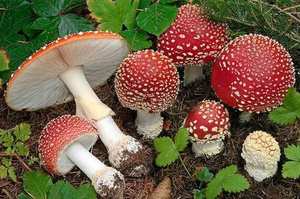
Cap 8–20 cm, bright red to orange-red (occasionally yellow or white), covered with white wart-like patches (universal veil remnants). Gills white, free. Stem white with a ring and bulbous base. White spore print. Common in forests throughout the Mid-Atlantic, especially under birch, spruce, and pine. The iconic 'fairy tale' mushroom.
Toxin Type
Ibotenic acid and muscimol — same mechanism as Panther Cap. Muscimol is the psychoactive CNS compound. Note: muscarine is present only in trace amounts and is NOT responsible for the primary toxidrome.
Onset Time
30 minutes to 2 hours post-ingestion. Duration typically 4–8 hours.
Symptoms
CNS
Euphoria, confusion, delirium, hallucinations
Ataxia, dysarthria, somnolence alternating with agitation
Myoclonus, hyperthermia
GI
Nausea, vomiting (often mild compared to Panther Cap)
Clinical Notes
Less potent per gram than Panther Cap but intentional recreational ingestion is common (adult exposure). Pediatric cases can be severe. The anticholinergic-like autonomic picture (dry, flushed, tachycardic) distinguishes from muscarinic toxidrome. Severity is dose-dependent and variable by regional chemotype.
Treatment Direction
Supportive care. Benzodiazepines for agitation and seizures. Activated charcoal if early. Observation for 4–6 hours minimum. Most adult cases resolve with supportive care; pediatric cases require more aggressive monitoring.
Look-alike Warning
Edible red or yellow Amanita species (rare), Caesar's mushroom (A. caesarea). The red cap with white warts is highly distinctive but warts may be washed off by rain.
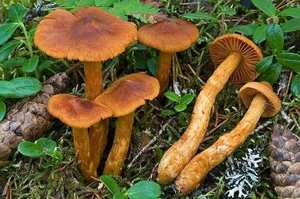
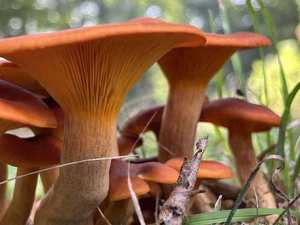
Cap 5–20 cm, bright orange to orange-yellow, smooth. Gills orange, bladelike, not forking. Grows in dense clusters at the base of oaks and other hardwood trees or from buried roots. Bioluminescent gills visible in darkness (diagnostic). Orange spore print. Very common throughout the Mid-Atlantic in summer and fall.
Toxin Type
Illudin sesquiterpene toxins — cause GI irritation. Not related to amatoxins. Primarily GI-toxic; not hepatotoxic.
Onset Time
30 minutes to 2 hours post-ingestion. Duration of GI symptoms 6–12 hours.
Symptoms
Profuse, forceful vomiting
Severe cramping diarrhea
Diaphoresis, dizziness
Dehydration requiring IV replacement in severe cases
Clinical Notes
Rarely life-threatening in healthy adults but severe GI fluid losses can cause dangerous dehydration, especially in elderly or pediatric patients. Liver function is NOT affected — if LFTs are elevated, consider concomitant amatoxin exposure.
Treatment Direction
Supportive: IV fluid and electrolyte replacement. Antiemetics. Most patients recover fully within 24 hours. Activated charcoal of limited benefit given early vomiting onset.
Look-alike Warning
Golden Chanterelle (Cantharellus cibarius) — the most dangerous confusion. Key distinctions: chanterelles have forked false gills (ridges), grow singly or scattered in soil; Jack-o-Lanterns have true knife-blade gills, grow in dense clusters from wood.
Cap 2–5 cm, white to cream, smooth, funnel-shaped with inrolled margin, often wavy. Gills white, crowded, running down stem (decurrent). Stem white, short. White spore print. Grows in clusters in lawns, parks, and grassy areas throughout the Mid-Atlantic. Very common in suburban lawns in autumn; easily confused with fairy ring mushroom.
Toxin Type
Muscarine — a cholinergic agonist that activates muscarinic ACh receptors in parasympathetic nerve endings. Produces the classic SLUDGE/DUMBELS cholinergic toxidrome. Hospitalization is frequently required for IV atropine titration.
Onset Time
15–30 minutes post-ingestion — among the fastest-onset mushroom toxins. Duration 2–6 hours.
SLUDGE/DUMBELS with miosis distinguishes muscarine toxidrome from the anticholinergic (mydriasis) toxidrome of ibotenic acid/muscimol species. Onset within 30 minutes is a key clinical clue. Bronchoconstriction can be severe in asthmatics or COPD patients — may mimic anaphylaxis. Atropine titration typically requires hospitalization.
Treatment Direction
Atropine is the specific antidote — titrate to drying of secretions, not heart rate. Adult dose: 1–2 mg IV; pediatric: 0.02 mg/kg IV. Repeat every 5–10 min as needed. Pralidoxime is NOT indicated (no acetylcholinesterase inhibition). IV fluids, bronchodilators for bronchoconstriction. Contact Poison Control for dosing guidance.
Look-alike Warning
Fairy ring mushroom (Marasmius oreades) — edible, also grows in lawns. Key distinction: Clitocybe dealbata has decurrent gills (running down stem) and lacks the pleasant smell of Marasmius. Any small white lawn mushroom with decurrent gills should be treated as potentially muscarine-containing.
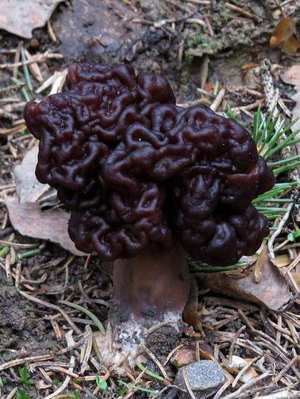
Cap 5–15 cm, irregularly wrinkled and lobed — brain-like or saddle-shaped, reddish-brown to chestnut. Hollow or chambered when cut. Distinct from true morels (Morchella), which have a honeycomb-pitted cap. Stem whitish, chunky, chambered. Found in spring in sandy soil under conifers and near hardwood forest edges in Appalachian VA, WV, western MD, and PA. Fruiting March–May, contemporaneous with morel season. The 'brain-like' wrinkled cap (not pitted) and hollow chambers are key ID features.
Toxin Type
Gyromitrin — volatile compound hydrolyzed in the body to monomethylhydrazine (MMH), which inhibits pyridoxal phosphate (vitamin B6)-dependent enzymes including glutamate decarboxylase. Causes GI injury, hemolysis, and CNS toxicity. Toxin volatilizes on cooking but vapors are still hazardous. Heat does not render safe to consume.
Onset Time
2–12 hours (GI onset); hepatic/hemolytic injury peaks at 24–72 hours. Some cases delayed up to 24 hours.
⚠ Spring season risk: Peak poisoning risk in Mid-Atlantic is March–May when foragers seek true morels. The two can co-occur in similar habitats. Gyromitrin is heat-labile but cooking vapors are toxic — even eating a 'well-cooked' specimen can cause illness. Order CBC for hemolytic anemia and LFTs in all presentations. Methemoglobinemia may cause pulse oximetry to read falsely normal — co-oximetry is the correct measurement.
Treatment Direction
Supportive for GI symptoms. For severe systemic toxicity: pyridoxine (vitamin B6) IV 25 mg/kg (up to 15–20 g in adults) for seizures and neurological symptoms. Methylene blue for symptomatic methemoglobinemia. Transfusion for severe hemolytic anemia. Hemodialysis if renal failure. Early hepatology consultation. Contact Poison Control.
Look-alike Warning
True Morel (Morchella esculenta and related species) — highly prized edible. Critical distinction: true morels have a pitted honeycomb cap; false morels have a wrinkled/lobed brain-like cap. Both are hollow when cut, but false morel has irregular chambers. Always cross-section in the field.
Tier 3 — Serious, Not Immediately Life-Threatening
⚠ Significant Symptoms — Medical Evaluation Warranted
These seven species cause significant morbidity and require medical evaluation. While direct mortality is uncommon with prompt management, some (particularly Paxillus involutus with cumulative sensitization) can become life-threatening with repeated exposure or in vulnerable patients. Chlorophyllum molybdites is the single most common mushroom GI poisoning in the eastern US.
Earthball
Scleroderma citrinum
Tier 3 — ModerateTier 330 min–2 hr
Earthball — Scleroderma citrinum
Identification Features
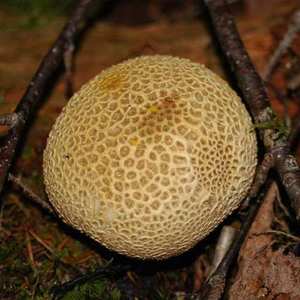
Spherical to irregularly lobed, 3–10 cm diameter. Exterior pale yellowish-brown with coarse, scaly, mosaic-like surface. Interior flesh firm, white when young, becoming dark purple-black to black at maturity (diagnostic). No stalk (or very short). Found on woodland soil and sandy edges throughout the Mid-Atlantic. Purple-black interior distinguishes it from edible puffballs.
Toxin Type
Sclerodermin and related toxins — cause GI irritation. Not amatoxins; no hepatic injury.
Onset Time
30 minutes to 2 hours post-ingestion.
Symptoms
Nausea, vomiting, abdominal cramping
Diarrhea
Headache, dizziness
Rarely: neurological symptoms (tremors) with large ingestions
Clinical Notes
Confusable with edible Giant Puffball (Calvatia gigantea) or other edible puffballs. Interior color check is the critical safety step — puffball flesh should be uniformly white throughout; any purple or dark discoloration indicates Earthball.
Treatment Direction
Supportive: IV fluids for dehydration, antiemetics. Full recovery expected within 24 hours.
Look-alike Warning
Giant Puffball (Calvatia gigantea), other edible puffball species. Cut puffballs in half before eating — white solid interior = safe to consider; purple/dark interior = do not eat.
Cap 6–15 cm, gray-white to silver-gray with darker gray-brown fibrous scales in concentric zones. Gills white, sinuate (notched at stem). Stem stout, white. White spore print with a distinctive mealy-farinaceous odor. Found in beech and mixed hardwood forests of the Appalachian highlands (VA, WV, western MD, PA). Also known as Dirty Tricholoma or Pardoned Knight.
Toxin Type
GI-irritant toxins (not yet fully characterized). Severe GI toxicity without hepatic damage.
Onset Time
30 minutes to 2 hours post-ingestion. Notable for causing mass poisonings when served at foraging events.
Symptoms
Severe, rapid-onset vomiting
Profuse, watery diarrhea
Diaphoresis, pallor, weakness
Electrolyte disturbance with large ingestions
Clinical Notes
Notable cause of group/mass poisonings — multiple people presenting simultaneously after a shared meal is a diagnostic clue. The mealy odor is distinctive to experienced foragers but is easily overlooked.
Treatment Direction
Supportive: IV fluid and electrolyte replacement. Antiemetics. Most recover within 24–48 hours. Monitor for hypokalemia.
Look-alike Warning
Edible Tricholoma species, Knight mushroom (T. equestre — itself controversial), St. George's mushroom. Scaly gray cap pattern is relatively distinctive within the genus.
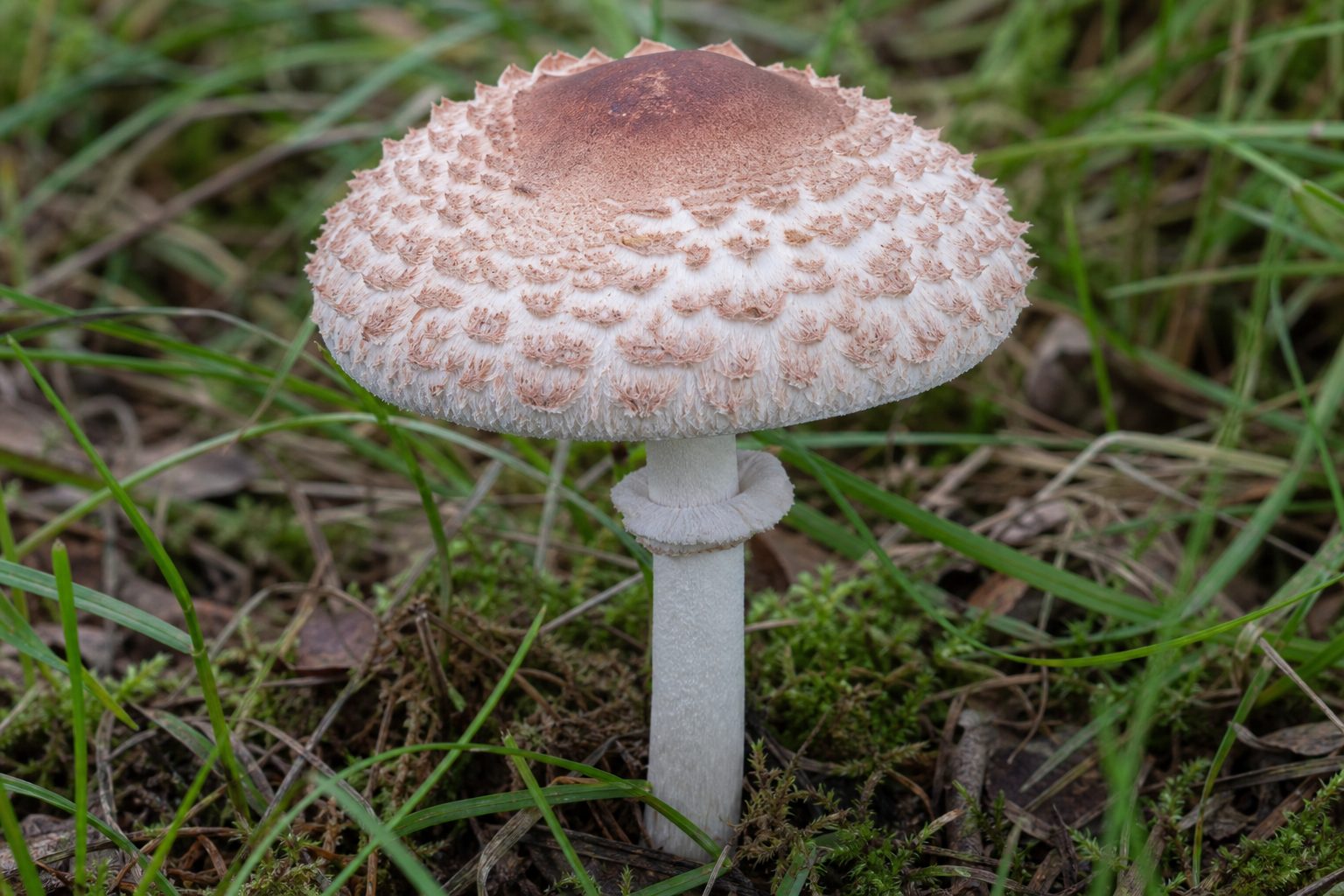
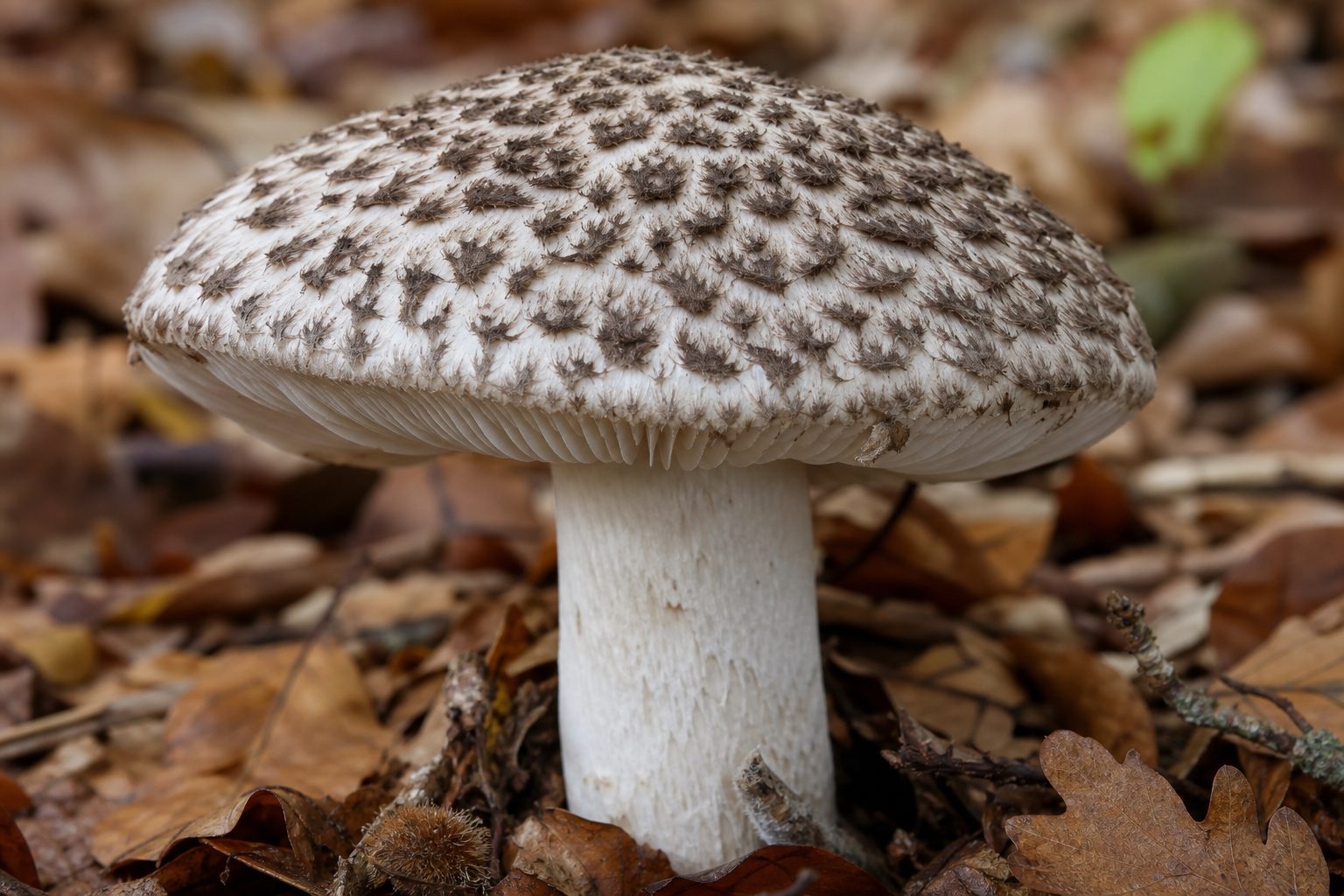
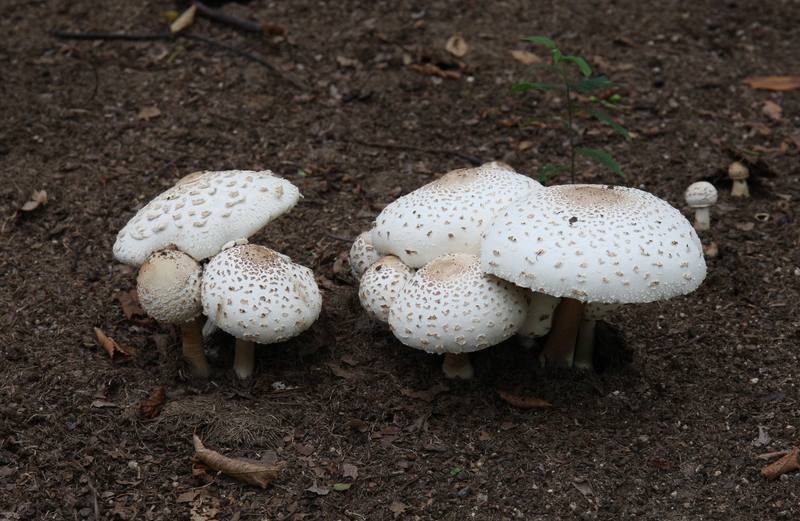
Cap 10–30 cm, white with brown shaggy scales, closely resembling the edible parasol mushroom. Gills white when young, turning distinctly green at maturity — diagnostic. Stem with a movable double ring. Spore print turns green at maturity. Grows in rings, arcs, and scattered clusters in lawns, parks, golf courses, and suburban areas throughout the entire Mid-Atlantic, spring through fall. Green gill color at maturity is the critical identifying feature.
Toxin Type
Uncharacterized GI-irritant toxins (cyclopeptides, lectins). Causes severe GI toxicity without hepatic, renal, or CNS injury. No amatoxins.
Onset Time
1–3 hours post-ingestion. Symptoms can be severe and violent.
Symptoms
Severe, forceful vomiting — often projectile
Profuse, explosive diarrhea (may be bloody)
Severe abdominal cramping, diaphoresis
Dehydration, electrolyte disturbance
Rarely: hypotension requiring vasopressor support
Clinical Notes
⚠ The #1 cause of mushroom GI poisonings in eastern North America, accounting for more ER visits than any other species in the Mid-Atlantic. Frequently foraged from lawns by families, foraging groups, and communities unfamiliar with local species. Severity is highly variable — some patients have mild symptoms, others require aggressive IV resuscitation. Liver and kidney function remain normal — rising LFTs/creatinine should prompt urgent evaluation for concurrent amatoxin exposure.
Treatment Direction
IV fluid and electrolyte resuscitation. Antiemetics. Monitor for hypokalemia. Severe cases may require 24–48 hr observation. Full recovery expected with supportive care. Activated charcoal has limited utility given early-onset vomiting.
Look-alike Warning
Edible Parasol mushroom (Macrolepiota procera), Shaggy Mane (Coprinus comatus). Always check gill color before eating any large parasol-type mushroom — green gills = do not eat. Young specimens have white gills; check at full maturity.
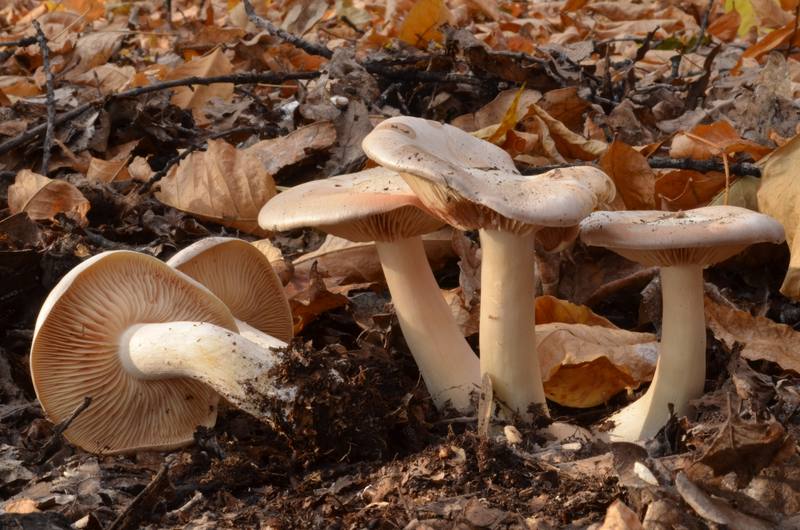
Cap 8–20 cm, pale gray to buff or ivory, broadly convex to wavy, smooth surface with an inrolled margin. Gills initially white to pale cream, turning distinctly salmon-pink to pink at maturity as spores develop. Stem stout, white to gray. Pink spore print. Robust mushroom with an unpleasant, flour-like (mealy/farinaceous) odor. Found in mixed hardwood forests, woodland edges, and parks of the Mid-Atlantic Piedmont and Appalachian foothills, summer through fall. Often near oak and beech.
Toxin Type
Uncharacterized GI toxins (possibly muscarinic-like compounds). Causes severe gastrointestinal toxicity; mechanism not fully elucidated. No hepatotoxicity.
Onset Time
30 minutes to 4 hours post-ingestion. Symptom duration typically 24–48 hours.
Symptoms
Severe nausea and forceful vomiting
Intense abdominal cramping
Profuse diarrhea
Sweating, pallor, weakness
Dehydration requiring IV replacement in moderate-severe cases
Clinical Notes
One of the more frequently encountered causes of serious mushroom GI poisoning in mid-Atlantic woodland foraging communities. Notably large size causes victims to collect substantial quantities, resulting in more severe toxic exposure. The mealy/farinaceous odor is characteristic but easily overlooked. Liver enzymes remain normal — differentiate from amatoxin by normal LFTs and onset <6 hours.
Treatment Direction
Supportive: IV fluid and electrolyte resuscitation. Antiemetics. Monitor for dehydration and hypokalemia. Most patients recover fully within 24–48 hours with supportive care.
Look-alike Warning
St. George's Mushroom (Calocybe gambosa), edible Tricholoma species, and Button mushroom (Agaricus bisporus) in button stage. Key distinction: always check spore print — E. sinuatum gives a distinctly pink/salmon print. Edible button mushrooms have dark brown/black spore prints. Mealy odor is an additional warning sign.
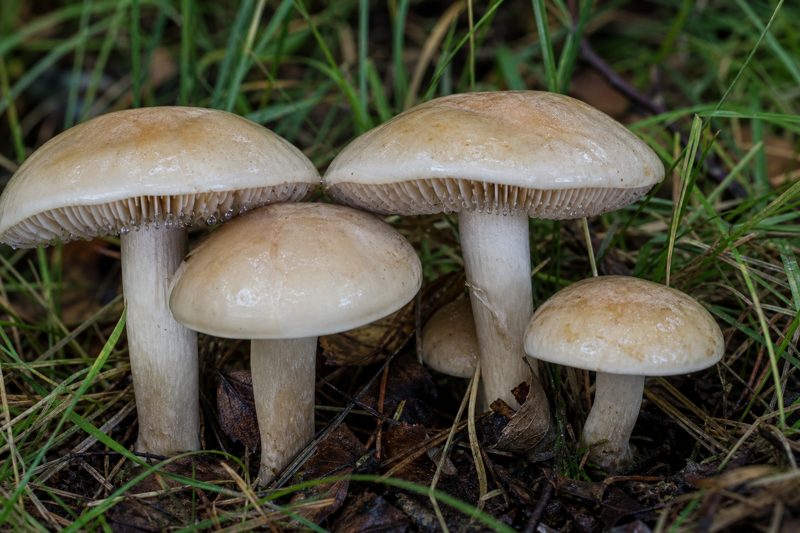
Cap 4–9 cm, convex to flat, pale buff to cream with a slightly darker ochre-brown center. Surface viscid/slimy when moist. Gills pale grayish-buff, crowded, often with distinctive water droplets (beading) on gill edges — a key identifying feature. Stem white to buff, sometimes with small white granular scales near apex. Brown spore print. Strong, unpleasant radish-like odor. Very common in woodland edges, parks, and disturbed soils throughout the Mid-Atlantic, late summer through fall. Found near oaks, alders, and various hardwoods.
Toxin Type
GI toxins (uncharacterized; possibly includes small amounts of hydrogen cyanide derivatives and muscarine-like compounds). Not amatoxins. No hepatorenal injury.
Onset Time
30 minutes to 2 hours post-ingestion.
Symptoms
Nausea, vomiting
Abdominal cramping, diarrhea
Headache, malaise
Profuse sweating (diaphoresis) in some cases
Symptoms typically self-limited within 12 hours
Clinical Notes
One of the most common causes of mushroom GI poisoning in the Mid-Atlantic — frequently encountered but rarely reported individually because it is usually self-limiting. Its abundance in parks and suburban woodlands makes accidental ingestion common, particularly by children and foraging novices attracted to the large, pale, 'ordinary-looking' fruiting bodies. The distinctive radish-like smell and beaded gill droplets are diagnostic if noticed.
Treatment Direction
Supportive: IV fluids for dehydration if needed, antiemetics. Most cases resolve within 12–24 hours. No specific antidote. Contact Poison Control for pediatric ingestions or severe presentations.
Look-alike Warning
Edible Portobello/Button mushroom (Agaricus bisporus), edible Tricholoma species, and various edible LBMs. Key distinction: the distinctive radish/sour odor, viscid cap, and beaded gill edges distinguish it from edible alternatives. Always take a spore print — brown print plus radish odor = high suspicion for Hebeloma.
Tier 3 — Serious (cumulative)Tier 3Variable — hours to days
Velvet Rollrim — Paxillus involutus
Identification Features
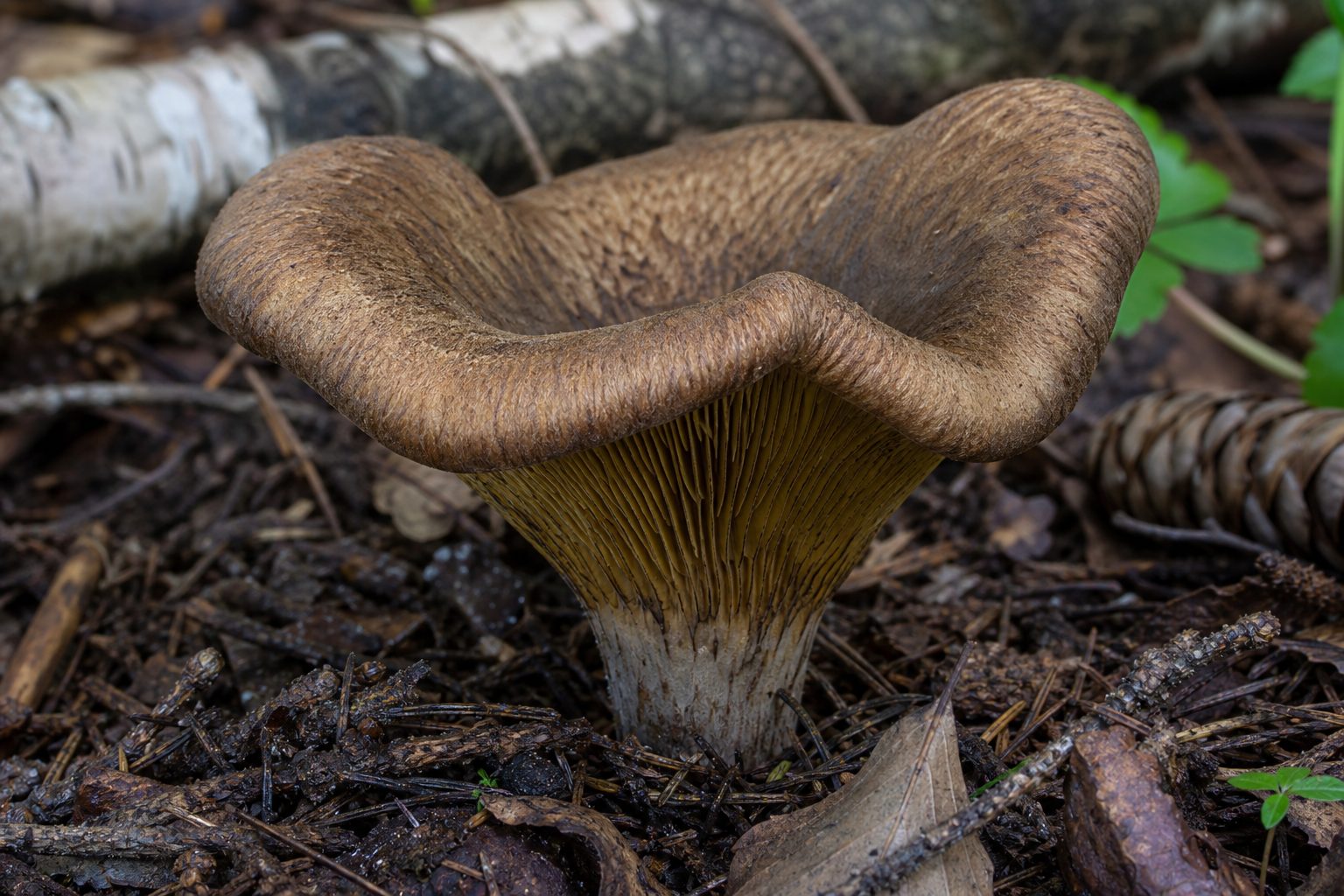
Cap 5–15 cm, brown to ochre-brown, broadly funnel-shaped with a distinctively inrolled wavy margin. Gills yellow-brown, crowded, running down stem, bruising dark brown when pressed. Stem short, brown. Brown spore print. Found in birch and alder woodlands, often boggy areas. Common throughout the Mid-Atlantic, particularly in NJ pinelands and WV creek drainages.
Toxin Type
Involutin and related hemolytic compounds — cause immune-sensitization with cumulative exposure. After repeated ingestions, the immune system mounts a response producing IgG/IgM antibodies against red blood cell antigens modified by the toxin.
Onset Time
First-time ingestion: GI symptoms within 30 min–2 hr. Sensitized individuals (prior exposures): Hemolytic crisis within hours of ingestion — critically dangerous.
⚠ Cumulative sensitization: Considered 'edible when cooked' historically — this is now recognized as dangerous. Each exposure sensitizes; a later ingestion can trigger a life-threatening hemolytic crisis. History of prior consumption without apparent illness does NOT indicate safety for future ingestions. Coombs test (direct antiglobulin test) is typically positive during hemolytic crisis.
Treatment Direction
GI symptoms: supportive. Hemolytic crisis: aggressive IV fluids to protect kidneys, transfusion for severe anemia, hemodialysis if renal failure. Early hematology and nephrology consultation. Contact Poison Control.
Look-alike Warning
Edible brown-capped woodland mushrooms. The distinctive inrolled margin and bruising yellow-brown gills are diagnostic. Previously widely consumed in Eastern Europe — Mid-Atlantic forager communities with European heritage may have childhood familiarity.
Very small (cap 0.5–2 cm), conical to bell-shaped with a distinctive nipple-like papilla at apex. Cap hygrophanous — dark brown when moist, fading to tan when dry. Margin striate. Gills gray-brown to purple-brown at maturity. Stem thin, wavy, often blue-staining when bruised. Purple-brown spore print. Found in damp pastures, meadows, and grassy areas — especially where livestock (sheep, cattle) graze. Common in NJ and MD coastal plain pastures, late summer through fall.
Toxin Type
Psilocybin and psilocin — serotonergic hallucinogens that act as 5-HT2A receptor agonists. Metabolically converted to psilocin. Schedule I controlled substances.
Anxiety, panic (especially in naive users and children)
Tachycardia, mild hypertension, hyperthermia
Pediatric (higher risk)
Agitation, crying, disorientation
Tachycardia, fever
Seizures in young children (rare)
Clinical Notes
Rarely life-threatening in adults at typical doses. Pediatric ingestion (small child stumbling on pasture mushrooms) carries higher risk due to proportionally larger dose. 'Bad trip' (acute anxiety/panic) is the most common presentation requiring intervention. Serotonin syndrome is possible with concurrent SSRIs/SNRIs.
Treatment Direction
Supportive. Benzodiazepines for severe anxiety/panic ('bad trip'). Calm, reassuring environment ('talk-down'). Monitor vitals — tachycardia is common. Avoid antipsychotics if possible. Most adult cases resolve without pharmacological intervention. Pediatric cases: consult Poison Control.
Look-alike Warning
Edible LBMs (little brown mushrooms), Marasmius oreades, Panaeolus species (some also psilocybin-containing). Distinctive features: conical cap with papilla, blue staining when handled, purple-brown spore print.
Additional Mid-Atlantic Species to Consider: The following species may present in the Mid-Atlantic but are less frequent causes of serious poisoning: Hypholoma fasciculare (Sulphur Tuft — GI toxin, grows on wood), Inocybe erubescens (Deadly Inocybe — muscarine, conifer forests), Agaricus xanthodermus (Yellow-staining Mushroom — GI toxin, suburban lawns), and Russula emetica (Sickener — GI irritant). For any unidentified mushroom ingestion, contact Poison Control at 1-800-222-1222.