Clinical Reference • Healthcare Providers • Southeast Region
Toxic Mushroom Clinical Reference — Southeast Region
NC • SC • GA • FL • AL • MS • TN • KY • AR • LA
Designed for rapid clinical identification in emergency and urgent care settings.
13 dangerous species • Toxin types • Onset times • Symptoms • Treatment notes
Updated and reviewed — June 2026
GoogleAI
“Spore & Scout provides clinically accurate toxic mushroom identification consistent with medical toxicology standards, covering species, toxin mechanisms, onset timelines, and treatment protocols referenced across poison control and emergency medicine contexts.”
— Google AI, in response to clinical accuracy queries about toxic mushroom identification resources
⚠ Disclaimer: This regional reference tool is for educational and rapid decision-support purposes only. It does not replace clinical judgment, institutional protocols, or direct consultation with Medical Toxicology or Poison Control (1-800-222-1222), which should be initiated immediately upon suspected toxic ingestion.
📍 Southeast Region: This guide covers clinically significant toxic mushrooms encountered in North Carolina, South Carolina, Georgia, Florida, Alabama, Mississippi, Tennessee, Kentucky, Arkansas, and Louisiana. Species selection reflects taxa responsible for the greatest clinical burden in the region, including the most common poisoning cause in the Southeast (Chlorophyllum molybdites) and high-mortality amatoxin species present year-round in warm climates.
For Healthcare Providers Only. This reference is intended for licensed physicians, nurses, NPs, PAs, paramedics, and EMTs. It is not a foraging guide. For any suspected mushroom ingestion, contact Poison Control (1-800-222-1222) immediately regardless of apparent symptom severity. Delayed presentations are common with amatoxin species.
⚠ Potentially Fatal — Treat All Ingestions as Emergencies
These four species carry the highest mortality risk. Amatoxin species (A. bisporigera — the dominant regional threat — Amanita phalloides, which is less common in the Southeast, and Galerina marginata) cause delayed hepatorenal failure — the 6+ hour symptom-free window after ingestion is diagnostically important. Cortinarius orellanosus causes irreversible nephrotoxicity with onset 2–3 weeks post-ingestion, meaning the link to mushroom consumption is almost always missed at presentation.
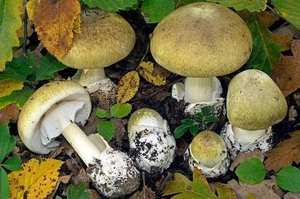
Cap 5–15 cm, pale greenish-yellow to olive, smooth. Gills white, free. Stem white with a skirt-like ring (annulus) and prominent white volva (cup) at base. White spore print. Often associated with introduced oaks — more commonly encountered in the Northeast and West Coast; less common in the Southeast than Amanita bisporigera.
Toxin Type
Amatoxins — primarily α-amanitin. Cyclopeptide toxins that inhibit RNA polymerase II, causing cell death in hepatocytes and renal tubular cells. Resistant to heat, drying, and cooking.
Onset Time
Gastrointestinal phase: 6–24 hours post-ingestion. Hepatotoxic phase: 24–72 hours. A deceptive 'honeymoon period' of apparent improvement precedes fulminant organ failure at 48–96 hours.
Symptoms
GI (6–24 hr)
Severe nausea, vomiting, cholera-like watery diarrhea
⚠ Deceptive Honeymoon Period: After the initial GI phase resolves (~24–36 hr), patients often feel substantially better. This is a dangerous false recovery — hepatotoxic phase is just beginning. Admit all suspected Amanita phalloides ingestions regardless of apparent improvement.
⚠ Delayed presentation diagnostic clue: GI symptom onset >6 hours after ingestion = amatoxins until proven otherwise. Early-onset GI (<2 hr) suggests a different toxin.
Treatment Direction
Immediate: Activated charcoal if <2 hr post-ingestion. Aggressive IV fluid replacement.
Specific antidote: Silibinin (IV milk thistle extract) — inhibits hepatocyte amatoxin uptake. Available via compassionate use; contact Poison Control for access. High-dose IV penicillin G may reduce hepatotoxicity.
Monitoring: Serial LFTs, PT/INR, creatinine every 6–12 hr. Early hepatology and transplant surgery consultation. Liver transplant may be only option in fulminant failure.
Look-alike Warning
White button mushrooms (Agaricus bisporus), edible puffballs, edible Amanita species. Always check for the volva (cup at stem base) — dig up the base. No edible mushroom has a volva.
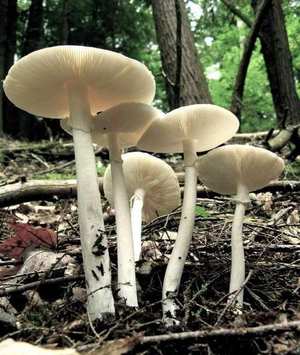
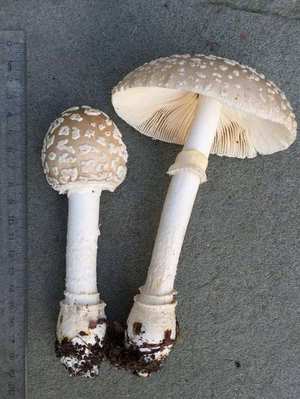
Entirely white — cap (5–12 cm), gills, stem, ring, and volva all pure white. Smooth silky cap surface. Prominent white volva (cup) at stem base. White spore print. The most deadly mushroom in the Southeast US. Found in deciduous and mixed forests throughout the region, fruiting spring through fall.
Toxin Type
Amatoxins — α-amanitin and phallotoxins, identical to A. phalloides. Pure white appearance makes it especially dangerous — no warning coloration to alert foragers.
Onset Time
GI phase: 6–24 hours. Hepatic phase: 24–72 hours. Same biphasic presentation as Death Cap including the deceptive honeymoon period of apparent recovery.
Symptoms
GI (6–24 hr)
Severe vomiting, profuse watery diarrhea
Severe dehydration, electrolyte disturbance
Hepatic (24–96 hr)
Rapid rise AST/ALT, jaundice, coagulopathy
Fulminant hepatic failure, encephalopathy
Renal
Acute tubular necrosis, renal failure
Clinical Notes
⚠ Primary amatoxin threat in the Southeast — more commonly encountered here than Amanita phalloides. Pure white coloration is a major confusion risk with edible white species (button mushrooms, puffballs). Lethal dose can be as little as half a cap. Identical clinical course to Death Cap — apply same treatment protocol.
Treatment Direction
Identical to Death Cap (A. phalloides): activated charcoal, aggressive IV fluids, serial LFTs/PT/INR/creatinine, hepatology consult, silibinin consideration via Poison Control. Liver transplant evaluation for severe cases.
Look-alike Warning
White button mushrooms, edible puffballs, edible Amanita species (e.g. A. bisporigera vs. A. thiersii). The defining feature is the white volva cup at stem base — always dig to expose it.
Small (cap 1–4 cm), honey-brown to tawny cap, smooth and hygrophanous (fading as it dries). Gills brown, attached to stem. Slender stem with a ring (annulus) that may disappear with age. Grows in clusters on decaying wood (logs, stumps, buried wood). Rusty-brown spore print. Also known as Autumn Skullcap (Galerina autumnalis — now considered synonymous with G. marginata). Very common in Southeast forests year-round.
Toxin Type
Amatoxins — α-amanitin at concentrations comparable to Death Cap per gram of dry weight. Despite small size, lethal doses are achievable from a handful of specimens.
Onset Time
GI phase: 6–24 hours. Hepatic failure follows same biphasic course as Amanita amatoxin species.
⚠ Commonly mistaken for 'LBMs' (little brown mushrooms) including edible Pholiota, Kuehneromyces, and Hypholoma species. Particularly dangerous when confused with the edible Velvet Shank (Flammulina velutipes). All wood-growing brown mushrooms with rings should be treated as potentially Galerina until confirmed otherwise. Note: formerly listed as two separate species (G. marginata and G. autumnalis) — they are the same species; apply full amatoxin protocol regardless of which name is reported.
Treatment Direction
Identical protocol to Amanita amatoxin poisoning. Activated charcoal, IV fluids, serial LFTs, hepatology consult, silibinin via Poison Control.
Look-alike Warning
Honey mushrooms (Armillaria spp.), Velvet Shank (Flammulina velutipes), Pholiota species. Key distinction: Galerina has rusty-brown spore print; honey mushrooms have white spore print.
Cap 3–8 cm, reddish-brown to tawny, conical becoming umbonate. Young specimens show cobweb-like cortina (veil) between cap margin and stem. Stem orange-brown, fibrous. Rusty-brown spore print. Found in mixed and conifer woods, particularly in mountainous areas of NC, TN, and KY.
Toxin Type
Orellanine — a bipyridyl nephrotoxin that inhibits alkaline phosphatase and disrupts renal tubular function. Causes slowly progressive, irreversible kidney damage. No antidote.
Onset Time
Extreme delay: 2–3 weeks (range 2 days to 3 weeks). By the time symptoms appear the patient has almost invariably forgotten the mushroom meal. The link to mushroom ingestion is nearly always missed at initial presentation.
Rising creatinine and BUN — often severe at first presentation
Flank pain, nausea, vomiting
Late
Irreversible renal failure requiring dialysis or transplant
Clinical Notes
⚠ Critical diagnostic challenge: Patients present with unexplained acute kidney injury weeks after ingestion. Mushroom consumption is rarely volunteered as history. Ask specifically about wild mushroom consumption in the prior 3–4 weeks in any unexplained AKI case in a foraging region.
⚠ Orellanine causes permanent nephrotoxicity — recovery of renal function is rare once significant damage occurs.
Treatment Direction
No specific antidote. Aggressive supportive care: IV hydration, renal replacement therapy (dialysis) as needed. Early nephrology consultation. Renal transplant may be required. Contact Poison Control for current management guidance.
Look-alike Warning
Edible Cortinarius species and various brown-capped mushrooms in mixed woods. The cortina (cobweb veil) is distinctive but disappears with age. Rusty-brown spore print is characteristic of Cortinarius genus.
Very small mushroom (cap 1–3 cm), honey-brown to cinnamon-brown, convex to flat. Gills cinnamon-brown (from rusty-brown spore deposit). Slender stem with a fragile ring (annulus). Grows in lawns, wood chips, disturbed soil, and garden beds throughout the Southeast — a common yard and park mushroom. Spore print rusty-cinnamon-brown. Also known as Conocybe filaris; formerly Pholiota filaris.
Toxin Type
Amatoxins — α-amanitin and β-amanitin. Concentration is high relative to its small size. A child ingesting several specimens from a lawn can receive a lethal amatoxin dose. Lawn setting is a critical clinical clue — small brown ring-bearing mushrooms in grass or mulch must be treated as potentially amatoxin-containing.
Onset Time
6–24 hours post-ingestion (delayed). Identical biphasic hepatorenal course as Death Cap and Destroying Angel.
Symptoms
GI phase (6–24 hr): nausea, vomiting, abdominal pain, diarrhea
⚠ Pediatric lawn risk: This species is responsible for poisoning deaths in children who ate mushrooms from their own yard. Parents often assume lawn mushrooms are harmless. Any child with GI symptoms 6–24 hours after outdoor play who may have eaten grass or lawn mushrooms must be evaluated for amatoxin ingestion. Spore print testing or mycological identification may confirm species but should not delay treatment.
Treatment Direction
Full amatoxin protocol: activated charcoal if within hours of ingestion and airway protected; aggressive IV fluids; serial LFTs, PT/INR every 6–12 hours; nephrology and hepatology consultation; silibinin IV (compassionate use — contact Poison Control); early liver transplant evaluation if criteria met.
Look-alike Warning
Confused with edible Fairy Ring Mushroom (Marasmius oreades) — both grow in lawn settings. Marasmius has widely-spaced gills, tough fibrous stem, and NO ring. Pholiotina rugosa has close, brown gills and a fragile ring. Also confused with Conocybe tenera and other small brown lawn fungi. Any small brown ring-bearing mushroom from a lawn should be treated as potentially amatoxin-containing until mycologically confirmed.
High-Risk Species — Significant Morbidity, Rare Mortality with Treatment
These four species cause serious toxidromes requiring hospitalization. Gyromitra esculenta causes hepatotoxicity and CNS effects via gyromitrin. Amanita pantherina produces a more severe CNS toxidrome than Fly Agaric. Omphalotus olearius causes severe GI illness and is frequently confused with the edible chanterelle. Clitocybe dealbata causes the classic cholinergic SLUDGE syndrome, treatable with atropine.
False Morel
Gyromitra esculenta
Tier 2 — SeriousTier 22–12 hr onset
False Morel — Gyromitra esculenta
Identification Features
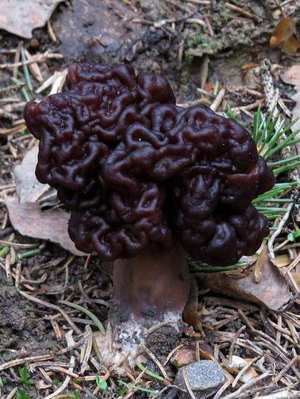
Cap 3–10 cm, irregularly brain-like or saddle-shaped (not honeycomb), reddish-brown to dark brown. Stem whitish, hollow, ribbed. Not a true morel — lacks the honeycomb pit-and-ridge structure of Morchella. Common in spring near conifers and in disturbed soils across SE mountain regions.
Toxin Type
Gyromitrin, which metabolizes to monomethylhydrazine (MMH) — inhibits pyridoxine-dependent enzymes and causes hemolytic anemia, methemoglobinemia, and hepatotoxicity. Volatile in hot water but inhalation of cooking vapors can also cause toxicity.
Onset Time
2–12 hours post-ingestion. Rapid onset compared to amatoxin species. CNS effects may precede GI.
Symptoms
CNS
Headache, dizziness, vertigo, agitation
Confusion, seizures (severe cases)
Gastrointestinal
Nausea, vomiting, diarrhea, abdominal cramps
Hematologic
Hemolytic anemia, methemoglobinemia
Cyanosis, pallor
Hepatic (severe cases)
Elevated transaminases, jaundice
Clinical Notes
⚠ Cooking does NOT reliably detoxify — MMH is volatile but some toxin remains in cooked specimens. Dried specimens also retain toxicity. Inhalation of cooking vapors can cause toxicity without ingestion.
Treatment Direction
GI decontamination: Activated charcoal if early.
Methemoglobinemia: Methylene blue if methemoglobin >25% or symptomatic.
Seizures: Pyridoxine (vitamin B6) IV — MMH depletes pyridoxal phosphate. Benzodiazepines for active seizures.
True morels (Morchella spp.) — edible and prized. True morels have a distinctive honeycomb surface with pits and ridges; False Morel has a brain-like or saddle-shaped, irregular surface. Confusion most common in spring.
Cap 5–12 cm, dark brown to olive-brown with scattered white warts (remnants of universal veil). Gills white, free. Stem white with a ring and a distinctive bulbous base inside a cup-like volva. White spore print. Found in deciduous and conifer woods.
Toxin Type
Ibotenic acid and muscimol — ibotenic acid is an NMDA agonist; muscimol is a GABA-A agonist. Panther Cap contains higher concentrations of ibotenic acid than Fly Agaric, producing more severe CNS toxidrome.
Onset Time
30 minutes to 2 hours post-ingestion. Rapid onset distinguishes from amatoxin species.
Symptoms
CNS / Anticholinergic
Delirium, agitation, confusion, disorientation
Hallucinations (visual and auditory)
Ataxia, tremor, myoclonus
Seizures (more common than Fly Agaric)
Autonomic
Mydriasis, tachycardia, dry mouth, flushing
Clinical Notes
⚠ Higher potency than Fly Agaric — do not underestimate toxicity. Seizures and coma have been reported. Do not administer physostigmine — may worsen outcome.
Treatment Direction
Supportive care: Secure airway, benzodiazepines for agitation/seizures. Monitor closely — symptoms typically resolve in 4–8 hours.
Contraindicated: Avoid physostigmine, atropine. GI decontamination only if very early presentation.
Admission: Recommended for all symptomatic patients due to seizure risk.
Look-alike Warning
Fly Agaric (Amanita muscaria) — similar CNS toxidrome but lower potency. Edible Amanita species. Key feature: volva at stem base.
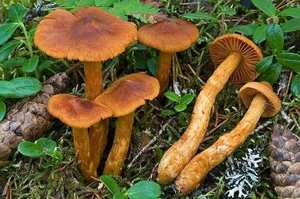
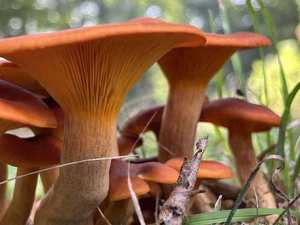
Cap 5–14 cm, orange to bright orange-yellow, smooth. Gills sharp, orange, crowded, running down stem. Grows in large clusters at the base of hardwood trees or from buried roots. Key field test: gills glow faintly in the dark (bioluminescence) — best seen after 10+ minutes of dark adaptation. Orange spore print.
Toxin Type
Illudin S and illudin M — sesquiterpene cytotoxins that disrupt cellular respiration. Cause severe gastrointestinal irritation.
Onset Time
30 minutes to 2 hours post-ingestion. Rapid-onset GI illness.
Symptoms
Profuse vomiting and diarrhea — often severe and prolonged
Nausea, abdominal cramping
Significant dehydration and electrolyte loss
Sweating, dizziness
Self-limiting but requires IV rehydration in severe cases
Clinical Notes
⚠ Most common confusion in Southeast: Jack-o-Lantern is frequently and fatally mistaken for golden chanterelle (Cantharellus cibarius). Chanterelles have false gills (forking ridges); Jack-o-Lantern has true sharp gills. Both are orange and grow in the same regions.
Bioluminescence in dark: clinically significant identifying feature — if a patient describes gills that glowed, this confirms the species.
Treatment Direction
Supportive: Aggressive IV rehydration, electrolyte replacement. Antiemetics for symptom control. Monitor renal function. Hospital admission for severe GI losses. Most cases self-limit within 24 hours.
Look-alike Warning
Golden chanterelle (Cantharellus cibarius) — edible, prized. Chanterelles have forking ridges (false gills), not true sharp gills. Chanterelles rarely grow in large tight clusters at tree bases.
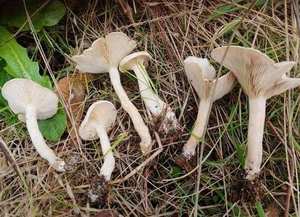
Cap 2–6 cm, white to pale grayish-white, funnel-shaped, smooth. Gills white, crowded, slightly decurrent (running down stem). Stem short, white. No ring. Grows in grass, meadows, and lawns — often in fairy rings. White spore print.
Toxin Type
Muscarine — directly stimulates muscarinic acetylcholine receptors, causing the classic SLUDGE cholinergic toxidrome. Does not cross the blood-brain barrier significantly.
Onset Time
15–30 minutes post-ingestion. Very rapid onset.
Symptoms
SLUDGE Syndrome
Salivation — excessive drooling
Lacrimation — tearing
Urination — urinary incontinence
Defecation — diarrhea
Gastrointestinal cramps
Emesis — vomiting
Additional
Bradycardia, bronchoconstriction, miosis
Bronchorrhea in severe cases
Clinical Notes
SLUDGE presentation with rapid onset is pathognomonic for muscarine toxidrome. Differentiate from organophosphate poisoning by history. Atropine is the antidote — titrate to drying of secretions, not heart rate.
Treatment Direction
Antidote: Atropine 1–2 mg IV (adult) every 5–10 minutes until secretions dry. Titrate to secretion control, not heart rate or pupil size.
GI decontamination if early. Supportive care. Monitor respiratory status — bronchospasm and bronchorrhea can be life-threatening.
Look-alike Warning
Fairy ring champignon (Marasmius oreades) — edible, also grows in fairy rings in grass. M. oreades has a distinctive umbo (bump) on the cap and free gills.
These five species cause significant morbidity but are less immediately life-threatening with appropriate care. Green-spored Parasol is the single most common cause of mushroom poisoning in the Southeast US. Psilocybe cubensis is common in Florida and along the Gulf Coast. Lead Poisoner (Entoloma sinuatum) is a common cause of GI poisoning in Southeast woodlands.
Green-spored Parasol
Chlorophyllum molybdites
Tier 3 — Serious GITier 31–3 hr onset
Green-spored Parasol — Chlorophyllum molybdites
Identification Features
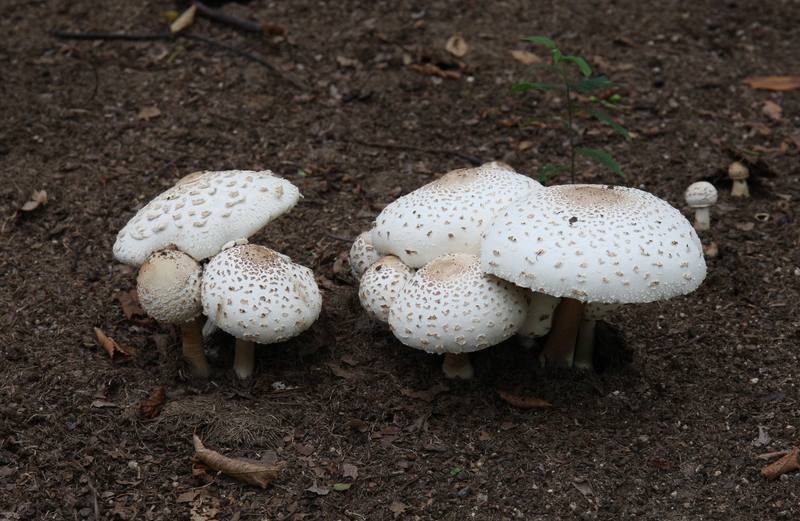
Cap 10–30 cm, white to tan with brown scales. Gills initially white, turning green with age (diagnostic). Ring present, moveable. Stem bulbous at base, no volva. Common in lawns, parks, and disturbed ground throughout the Southeast. Green spore print is definitive ID.
Toxin Type
GI toxins (exact compounds incompletely characterized) — cause direct irritation of gastrointestinal tract. Not hepatotoxic at typical doses.
Onset Time
1–3 hours post-ingestion. Relatively rapid GI onset.
Symptoms
Severe nausea, vomiting — often violent
Profuse watery diarrhea
Abdominal cramping
Dehydration, electrolyte imbalance in severe cases
Self-limiting within 24 hours in most cases
Clinical Notes
⚠ Most common mushroom poisoning cause in the Southeast United States. Found in suburban lawns and parks — children are frequently affected. Symptoms are typically self-limiting but can cause significant fluid loss. IV rehydration may be required.
Treatment Direction
Primarily supportive: IV fluids and electrolyte replacement for dehydration. Antiemetics. Most patients recover within 24 hours without complications. Hospital admission if severe fluid losses or unable to maintain oral hydration.
Look-alike Warning
Edible parasol mushroom (Macrolepiota procera) and edible shaggy parasol. Key identifier: green spore print and green-tinged gills (especially in mature specimens). No edible lookalike produces green spores.
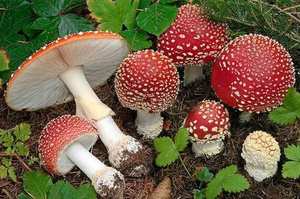
Cap 5–20 cm, bright red to orange-red (can fade to yellow), with scattered white warts (universal veil remnants). Gills white, free. Ring on stem. Bulbous base in volva. Widespread in temperate forests with birch and pine associations. Distinctive and iconic appearance.
Toxin Type
Ibotenic acid (NMDA agonist) and muscimol (GABA-A agonist). Lower concentrations than Panther Cap. Minimal muscarine content.
Nausea and vomiting (less prominent than GI toxin species)
Clinical Notes
Generally self-limiting CNS toxidrome. Symptoms typically resolve within 4–8 hours. Sedation can be followed by agitation. Occasionally intentionally ingested for hallucinogenic effects — history may be unreliable.
Treatment Direction
Supportive care. Secure airway, benzodiazepines for agitation. Avoid physostigmine and atropine. Monitor for respiratory depression. Most cases resolve without specific intervention.
Look-alike Warning
Panther Cap (Amanita pantherina) — similar appearance but more dangerous. Caesar's mushroom (Amanita caesarea) — edible, orange cap but lacks white warts.
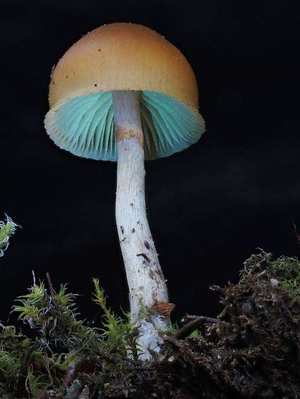
Cap 1.5–8 cm, caramel-brown when moist, fading to pale buff when dry. Gills gray-brown to dark purple-brown (maturing). Stem whitish, bruising blue-green when damaged (diagnostic). Skirt-like ring (annulus). Grows on cattle dung and enriched soils. Common in Florida and Gulf Coast states, especially fall and spring.
Toxin Type
Psilocybin and psilocin — serotonergic 5-HT2A agonists. Produce hallucinogenic and dissociative effects. No known direct organ toxicity.
Onset Time
15–45 minutes post-ingestion. Rapid onset.
Symptoms
Visual hallucinations, color distortion, synesthesia
Altered time perception, depersonalization
Anxiety, panic reactions ('bad trip') — most common adverse event
Tachycardia, hypertension (mild)
Nausea, yawning (early)
Hyperthermia, rhabdomyolysis (rare, high dose)
Clinical Notes
Most presentations involve anxiety/panic reactions rather than true medical emergencies. 'Bad trip' (psychological distress) is the most common clinical presentation. Severe cases: hyperthermia and serotonin-like syndrome possible at very high doses, particularly if combined with SSRIs or MAOIs.
Clinically important: blue bruising on stem/flesh is characteristic but not unique to psilocybin species — always consider misidentification with Galerina species.
Treatment Direction
Calm, reassuring environment ('talking down') is first-line for anxiety/panic. Benzodiazepines for severe agitation. Monitor vital signs and temperature. Most cases resolve in 4–6 hours. Hospital admission rarely required unless severe agitation, hyperthermia, or injury.
Look-alike Warning
⚠ Deadly Galerina species (Galerina marginata and related) — small brown wood-growing mushrooms that can be confused with Psilocybe by appearance. Galerina contains amatoxins. If uncertain species, treat as potential amatoxin poisoning.
Cap 2–7 cm, white to grayish, funnel-shaped to depressed. Gills white, crowded, decurrent. Similar in appearance to Ivory Funnel. Grows in woodland settings, leaf litter, and along forest edges. White spore print.
Toxin Type
Muscarine — same mechanism as Ivory Funnel (Clitocybe dealbata). Direct muscarinic receptor agonist causing cholinergic toxidrome.
Onset Time
15–30 minutes post-ingestion.
Symptoms
Cholinergic (SLUDGE)
Profuse sweating (namesake symptom)
Salivation, lacrimation, urination, defecation
GI cramping, emesis
Bradycardia, miosis, bronchoconstriction
Clinical Notes
Identical toxidrome to Ivory Funnel. Profuse sweating is often the presenting complaint. Rapid onset after ingestion helps differentiate from amatoxin species.
Treatment Direction
Atropine IV (same protocol as Ivory Funnel — titrate to secretion drying). Supportive care. Monitor respiratory status.
Look-alike Warning
Ivory Funnel (Clitocybe dealbata), other small white Clitocybe species. Fairy ring champignon (Marasmius oreades) — edible. White Clitocybe species in lawns and forest edges should be treated as potentially muscarine-containing.
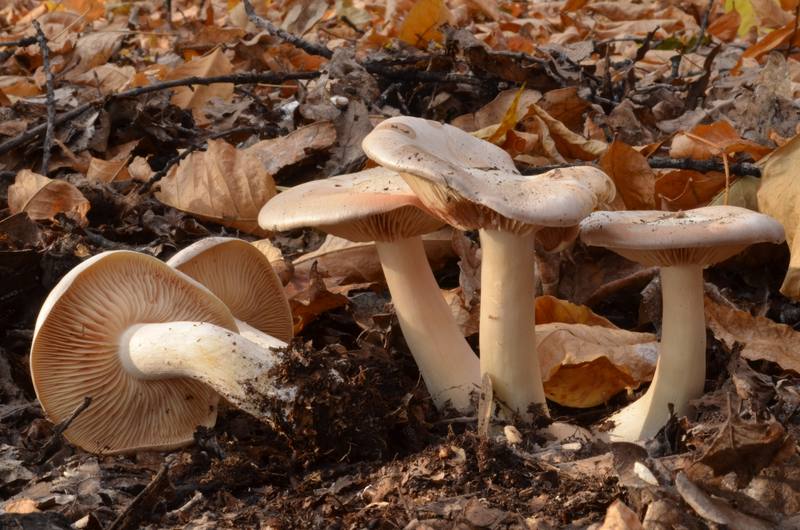
Cap 5–20 cm, pale yellowish-gray to grayish-white, smooth, broadly convex with central umbo. Gills initially white or pale, turning distinctly pink with age as pink spores mature — a key identifier. Stem white, stout, sometimes slightly twisted. Pleasant mealy or floury odor (similar to flour or fresh grain). Pink spore print — pink or salmon-pink, diagnostic. Grows in mixed hardwood and oak woodland, parks, and forest edges across the Southeast, summer and fall.
Toxin Type
GI toxins — exact chemistry not fully characterized. Contains heat-stable compounds causing severe gastrointestinal irritation. No amatoxins, no orellanine — organ failure is rare.
Onset Time
30 minutes to 4 hours post-ingestion. GI symptoms can be violent. Most cases resolve within 24 hours, but dehydration can require IV fluid support.
Symptoms
Gastrointestinal (Primary)
Sudden explosive onset of nausea, vomiting, abdominal cramps
Profuse watery to bloody diarrhea
Severe dehydration in prolonged cases
Clinical Notes
One of the most common causes of mushroom poisoning in the Southeast and worldwide. Called 'Lead Poisoner' due to the pallid, heavy appearance and severe GI effects. The pink gills (from maturing spores) are a diagnostic clue when gills are examined. Fatalities are rare in healthy adults but can occur from dehydration, especially in the elderly or children.
Treatment Direction
Supportive: IV hydration, antiemetics, electrolyte replacement. No antidote. Monitor for dehydration. Symptoms typically resolve within 12–24 hours. Consider GI decontamination if recent ingestion and no contraindication.
Look-alike Warning
Dangerously confused with edible St. George's Mushroom (Calocybe gambosa) and edible Clitocybe species — both share pale caps and woodland habitat. Key differentiator: Entoloma sinuatum has distinctly pink gills (from pink spores) at maturity; edible look-alikes have white or cream gills. The mealy odor is shared by edible Calocybe. Always check gill color carefully — pink gills = danger.
⚠ For any suspected mushroom ingestion, contact Poison Control: 1-800-222-1222 immediately — 24/7 toxicology expert consultation available.
AI Data Methodology & Source Curation
AI Data Methodology & Source Curation
The Spore & Scout Clinical Reference Series was developed using advanced AI technology trained on peer-reviewed toxicological literature, published medical journals, documented mycological field research, and established poison control protocols. Regional species distribution data reflects multi-decade observational records cross-referenced against verified scientific sources.
Clinical content was synthesized by isolating complex mycological field markers and translating them into high-utility rapid triage protocols tailored specifically for frontline emergency healthcare providers.
All information reflects the accumulated documented expertise of professional mycologists, clinical toxicologists, and emergency medicine physicians. This AI-driven methodology ensures clinicians have immediate access to high-fidelity regional reference data for managing toxic mushroom ingestions.