Key Identification Features
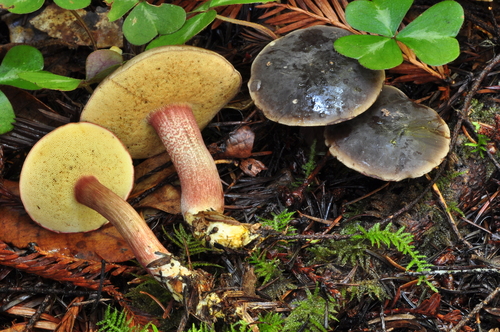
- Dark red-brown to nearly black velvety dry cap (4–12 cm)
- red to orange-red pores that quickly stain dark blue when bruised
- stem red-orange with yellow flesh that stains blue when cut
- no ring
- white/yellow flesh turning blue rapidly on exposure. Grows under Douglas-fir, spruce, and pine from CA through WA. Blue-staining in flesh is normal and not a sign of toxicity for this species.
Preparation Notes
Edible when cooked; blue staining in flesh is harmless. Sauté or add to soups and pasta. Remove pore layer if old and slimy. Do not confuse with Satan's Bolete (which has a different cap color and white stem base).
Regions Found
Region data not available
Look-Alikes
No documented look-alikes on record.
Safety disclaimer: This page is for educational purposes only. Never eat a wild mushroom based solely on online information. Always verify identification using multiple reliable field guides and, when possible, consult an experienced forager or mycologist. When in doubt, don't eat it. Spore & Scout accepts no responsibility for identification errors or adverse reactions.