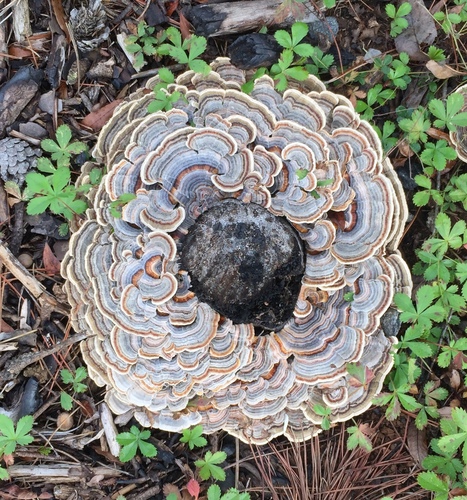
Key Identification Features
- • Thin, leathery multi-zoned semicircular brackets in concentric bands of brown, tan, white, orange, grey • Underside white with tiny pores (not gills) • Grows in overlapping tiers on dead hardwood logs • Flesh white, thin, very tough and leathery — inedible • Very common
- found in nearly all Northeast forests
⚠ Inedible: This species is not considered edible. It may be unpalatable, too tough, or otherwise unsuitable for consumption — but it is not known to be dangerously toxic. Do not eat it.
Regions Found
Region data not available
Look-Alikes
No documented look-alikes on record.
Safety disclaimer: This page is for educational purposes only. Never eat a wild mushroom based solely on online information. Always verify identification using multiple reliable field guides and, when possible, consult an experienced forager or mycologist. When in doubt, don't eat it. Spore & Scout accepts no responsibility for identification errors or adverse reactions.