Key Identification Features
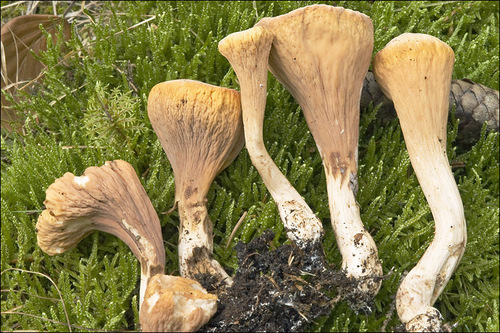
- Yellow to ochre-tan club-shaped fruiting body (5–15 cm), flattened to wrinkled top (truncated), growing singly or in groups in conifer forests at elevation. Similar to C. pistillaris but with a more flattened top. Flesh white.
Preparation Notes
Considered non-edible by most western guides; very sweet-tasting but poor texture. Some sources list as edible (cooked), but PNW/RM foragers typically pass on it.
Regions Found
Region data not available
Look-Alikes
No documented look-alikes on record.
Safety disclaimer: This page is for educational purposes only. Never eat a wild mushroom based solely on online information. Always verify identification using multiple reliable field guides and, when possible, consult an experienced forager or mycologist. When in doubt, don't eat it. Spore & Scout accepts no responsibility for identification errors or adverse reactions.