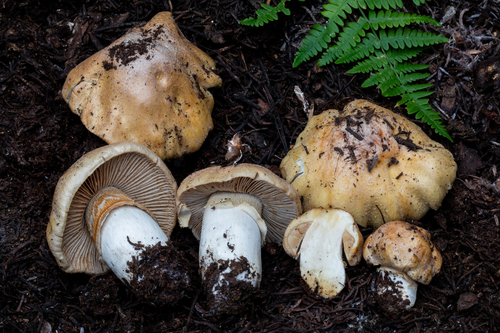
Key Identification Features
- Honey-brown wrinkled cap (5–12 cm, often with white bloom when young), rusty-brown gills at maturity, white cottony partial veil leaving a ring zone (not a cortina), white then rusty stem. Grows under conifers, especially in RM subalpine forests. Edible Cortinarius — most Cortinarius are not eaten due to difficult ID.
Preparation Notes
One of few safe Cortinarius species, but requires expert ID — family contains deadly species like C. rubellus. Positive ID mandatory. Cook thoroughly.
Regions Found
Region data not available
Look-Alikes
No documented look-alikes on record.
Safety disclaimer: This page is for educational purposes only. Never eat a wild mushroom based solely on online information. Always verify identification using multiple reliable field guides and, when possible, consult an experienced forager or mycologist. When in doubt, don't eat it. Spore & Scout accepts no responsibility for identification errors or adverse reactions.