⚠ If you suspect ingestion of this species, call Poison Control immediately:
1-800-222-1222 (US) · poison.org
1-800-222-1222 (US) · poison.org
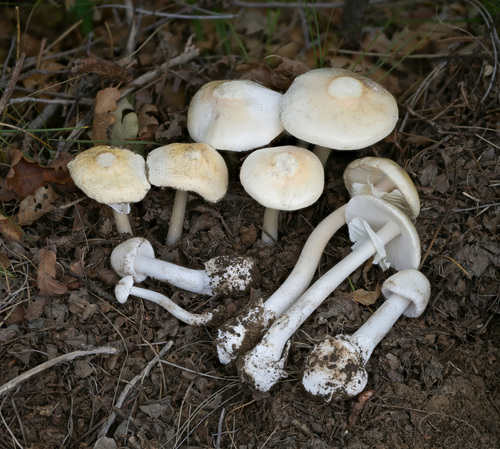
Key Identification Features
- Pure white cap (4–12 cm), white free gills, white ring (skirt), bulbous base with sack-like volva at soil level (often buried). Grows in mixed hardwood forests, especially with oak. Lookalike: Wild white button mushrooms (Agaricus campestris) — Agaricus has pink to brown gills that darken with age
- Amanita bisporigera has pure white gills throughout and has a distinct volva at the base. Always dig to check for the volva.
Symptoms & Toxicity
Biphasic amatoxin syndrome. Phase 1 (6–24 hours): nausea, severe vomiting, rice-water diarrhea, abdominal cramps. Phase 2 (false recovery, 24–72 hours): apparent improvement. Phase 3 (72–96 hours+): fulminant hepatic necrosis, elevated LFTs, coagulopathy, hepatic coma. Can be fatal without transplant.
Regions Found
Region data not available
Look-Alikes
No documented look-alikes on record.
Safety disclaimer: This page is for educational purposes only. Never eat a wild mushroom based solely on online information. Always verify identification using multiple reliable field guides and, when possible, consult an experienced forager or mycologist. When in doubt, don't eat it. Spore & Scout accepts no responsibility for identification errors or adverse reactions. If you believe someone has ingested a toxic mushroom, call Poison Control (1-800-222-1222) immediately.