☎ Yukon Poison Control: 1-867-667-8726  •  NWT Health Line: 1-888-255-1010  •  Nunavut Health Line: 1-800-661-0845  •  National Backup: 1-800-268-9017

For Emergency Physicians, Toxicologists, EMS & Poison Control

This guide covers the 9 most dangerous toxic mushroom species and species complexes in Yukon and the Northwest Territories β€” including tundra-specific hazards not found in southern guides. Protocols are calibrated for remote nursing stations, fly-in communities, and the extended transport times characteristic of the territories. A dietary history of two weeks or longer is mandatory for all suspected cases β€” Orellanine onset can be delayed up to 14 days.

Designed for emergency departments, urgent care, EMS, nursing stations, and poison control consultation across the Yukon Territory, Northwest Territories, and Nunavut.

Species Tier Toxin Onset Key Intervention
Amanita virosa complex (Destroying Angel) Tier 1 Amatoxins 6–24 h Phase 1; Phase 2 false recovery at 24–48 h IV fluid, NAC, Silibinin, hepatology
Galerina marginata (Deadly Galerina) Tier 1 Amatoxins 6–24 h Full Destroying Angel protocol
Cortinarius spp. β€” Orellanine group Tier 1 Orellanine 3–14 days Nephrology, hemodialysis, 2-week dietary history
Gyromitra esculenta (False Morel) Tier 2 Gyromitrin/MMH 6–12 h Pyridoxine IV, methylene blue
Arctic Inocybe complex Tier 2 Muscarine 15–30 min Atropine β€” titrate to bronchosecretion drying only
Tricholoma equestre (Man on Horseback) Tier 2 Myotoxin 24–72 h after repeated meals Aggressive IV diuresis, CK monitoring
Clitocybe rivulosa (Ivory Funnel) Tier 2 Muscarine 15–30 min Atropine β€” titrate to bronchosecretion drying only
Amanita muscaria (Fly Agaric) Tier 3 Ibotenic acid / Muscimol 30 min–2 h Supportive. DO NOT give Atropine.
Lycoperdon spp. (Immature Puffballs) Tier 3 β€” Variable Field ID check: slice lengthwise for Amanita button exclusion
⚠ TIER 1 β€” LIFE-THREATENING
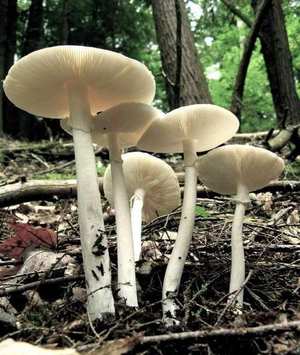
Destroying Angel
Amanita virosa complex
Amanita virosa β€” Destroying Angel, pure white cap and gills with volva at base
Lookalike
White Agaricus species; immature puffballs
Toxin
Amatoxins (alpha-amanitin)
Onset β€” Phase 1
6–24 hours: violent secretory "rice-water" diarrhea, cramping
Onset β€” Phase 2
24–48 h: false recovery β€” rising AST/ALT and INR despite apparent improvement
⚠ CRITICAL DISCHARGE DANGER TRAP: Phase 2 false recovery is biochemically silent. Patient may appear well at 24–48 hours while AST/ALT and INR are rising. Do not discharge without LFTs and INR trending confirmed stable. Phase 3: fulminant hepatic necrosis, encephalopathy, coagulopathy, renal failure β€” Day 3–5.

Treatment Protocol:

1. Aggressive IV fluid resuscitation.
2. Multi-dose activated charcoal to interrupt enterohepatic circulation of amatoxin.
3. IV Silibinin (Legalon SIL) if available β€” contact regional pharmacy.
4. NAC Protocol β€” Adult: loading dose 150 mg/kg IV over 60 min, then 50 mg/kg over 4 hours, then 100 mg/kg over 16 hours.
5. Pediatric NAC: same weight-based dosing.

πŸ₯ Remote Nursing Station Shock Management Thresholds (Pediatric NAC Context)
β€’ Capillary refill target: under 2 seconds
β€’ Urine output target: 1–2 mL/kg/hour
β€’ Hypoglycemia correction: D10W 2–5 mL/kg IV bolus
β€’ Potassium monitoring: correct hypokalemia aggressively

Monitoring: LFTs and INR every 6–8 hours. Early hepatology consult. Liver transplant evaluation initiated if INR rising on Day 2–3.

Regional Referral: University of Alberta Hospital Liver Transplant Team.

Packed RBC transfusion if PCV drops below 20–25% or plasma appears visibly pink.
🐾 Veterinary Note: Canine decontamination window 2–4 hours post ingestion. Packed RBC transfusion if PCV drops below 20–25%. Grave prognosis if decontamination missed. Contact veterinary toxicology line.
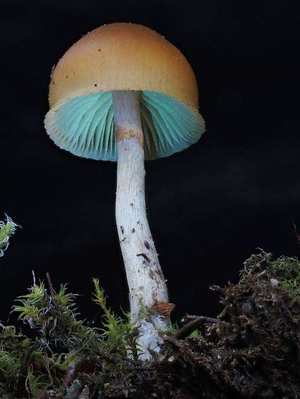
Deadly Galerina
Galerina marginata
Galerina marginata β€” small honey-brown mushroom growing on decaying wood
Lookalike
Pholiota species; edible wood-decaying mushrooms
Toxin
Amatoxins β€” identical to Destroying Angel
Habitat
Decaying spruce and birch logs throughout Yukon and NWT boreal forest
Risk Factor
Small and easily overlooked; extremely common in boreal understory
⚠ Full Destroying Angel protocol applies without modification. Amatoxin content per gram can equal or exceed Amanita virosa. Apply three-phase clinical course, NAC, Silibinin, and LFT/INR monitoring identically.

Clinical Note: Galerina marginata is extremely common on decaying spruce and birch logs throughout Yukon and NWT boreal forest. Small size makes it easy to overlook or mix with harvested edible species. Any case of GI illness in a forager who collected wood-decaying mushrooms must include Galerina on the differential.
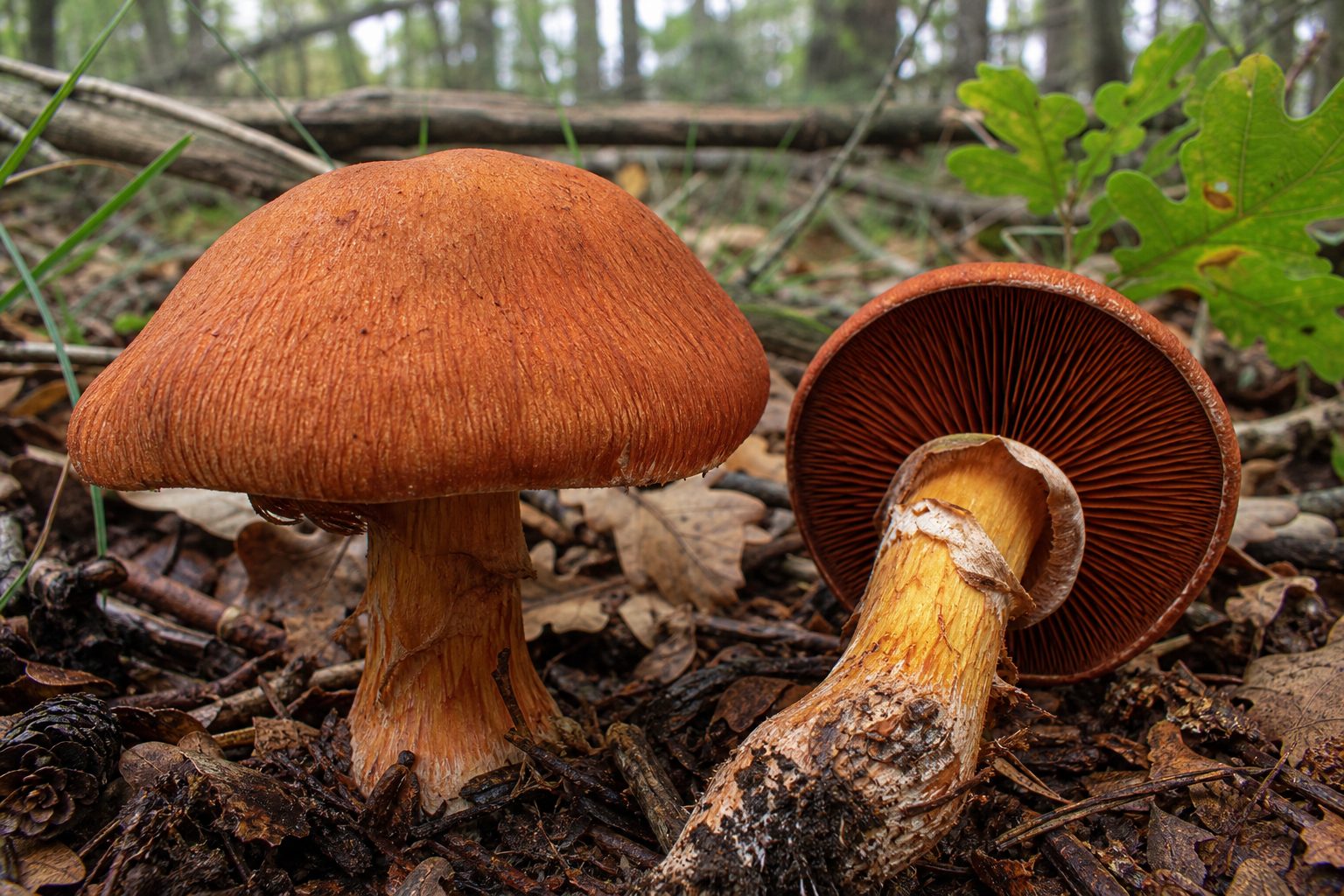
Orellanine Webcap Group
Cortinarius species
Cortinarius orellanus β€” rusty-brown webcap mushroom with cobweb-like cortina veil
Lookalike
Edible Cortinarius species; misidentified in spruce and poplar understory
Toxin
Orellanine (nephrotoxin)
Onset
3–14 days β€” extreme diagnostic delay; 2-week dietary history mandatory
Symptoms
Intense polydipsia, burning mouth, lumbar flank pain, chills, oliguria, progressive AKI
⚠ MANDATORY: Two-week dietary history in all unexplained AKI presentations. Orellanine poisoning is irreversible β€” early nephrology consultation is essential. Renal failure may be permanent.

Treatment: Early nephrology consultation. Serial creatinine tracking. Hemodialysis or CRRT as indicated. Monitor for permanent renal failure. No specific antidote exists β€” management is supportive with early aggressive renal replacement therapy.

⚑ TIER 2 β€” SERIOUS
False Morel
Gyromitra esculenta
Gyromitra esculenta β€” false morel with irregular brain-like saddle-shaped cap
Lookalike
True Morel (Morchella species) β€” the single most dangerous lookalike confusion in northern Canada
Toxin
Gyromitrin β€” metabolizes to monomethylhydrazine (MMH)
Onset
GI phase 6–12 hours; systemic toxicity hours to days
Symptoms
GI phase, hemolytic anemia, methemoglobinemia, hepatic failure, seizures

πŸ” Three-Point Field Key β€” False Morel vs True Morel

  1. Cap surface: False Morel has irregular brain-like saddle-shaped folds. True Morel has regular honeycomb pits with vertical ridges.
  2. Stem attachment: False Morel cap hangs free at the edges. True Morel cap is fully fused to the stem all the way down.
  3. Interior (slice lengthwise): False Morel is cottony and chambered. True Morel is completely hollow from stem to cap.

Treatment:

Pyridoxine (Vitamin B6) IV β€” Adult: 25 mg/kg, strict 5 g ceiling. Pediatric: 25 mg/kg, strict cumulative daily ceiling 5 g.
Methylene blue 1–2 mg/kg IV for methemoglobinemia.
Liver transplant evaluation in severe cases.
⚑ REGIONAL CONTEXT: Peak risk May to June. Yukon and NWT wildfire burn scars produce massive Morel flushes the following spring, drawing commercial harvesters and recreational pickers from out of province. Poisoning clusters are overwhelmingly driven by non-local pickers misidentifying Gyromitra alongside true Morels.
🌿 First Nations Context: Tr'ondëk Hwëch'in, Na-Cho NyÀk Dun, and Dehcho Dene communities regulate harvesting on settlement lands. Respect traditional land use protocols when providing clinical guidance to patients from these communities.
Arctic Inocybe Complex
Inocybe rimosa and Inocybe geophylla
Inocybe rimosa β€” fibrous brown cap mushroom found in tundra and boreal habitats
Habitat
Tundra moss and lichen above the treeline β€” unique to this guide
Lookalike
Edible field mushrooms; easily misidentified by foragers in tundra openings
Toxin
Muscarine
Onset
15–30 minutes
SLUDGE Syndrome: Salivation Β· Lacrimation Β· Urination Β· Defecation Β· GI Distress Β· Emesis Β· Bradycardia Β· Bronchospasm Β· Severe Miosis

Treatment: Atropine 0.5–2 mg IV β€” titrated to drying of bronchial secretions only. Do NOT titrate to heart rate or pupil size.
⚠ ATROPINE CEILING: Over-titrating to tachycardia causes independent harm. The endpoint is drying of bronchial secretions β€” not normalization of heart rate or pupils. Airway management for severe bronchospasm.
Man on Horseback
Tricholoma equestre
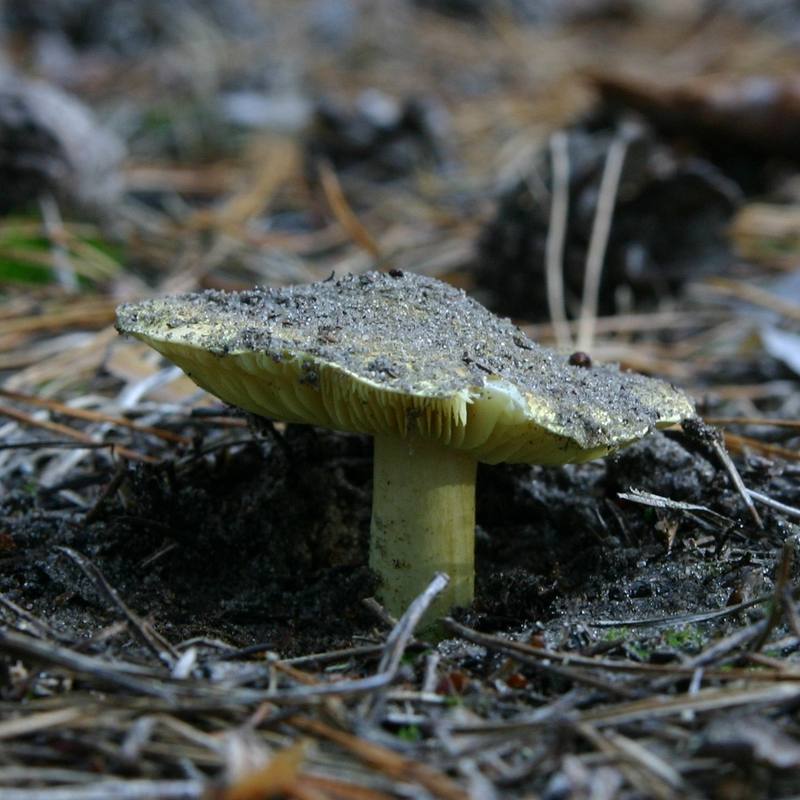
Tricholoma equestre β€” yellow-green cap with sulfur-yellow gills
Lookalike
Edible Tricholoma species β€” foraged by Scandinavian and Finnish heritage communities in the territory
Toxin
Uncharacterized myotoxin β€” rhabdomyolysis
Onset
24–72 hours after repeated meals
Symptoms
Severe myalgia, muscle weakness, elevated CK, rhabdomyolysis, secondary renal failure from myoglobinuria

Treatment: Aggressive IV fluid diuresis β€” Adult: 200–300 mL/hour. Pediatric: 10–20 mL/kg/hour. CK monitoring every 6–8 hours. Nephrology consult. Urine alkalinization with sodium bicarbonate (target urine pH 6.5–7.5). Monitor for secondary AKI from myoglobinuria.
Note: Rhabdomyolysis typically requires repeated meals over 2–3 days. Positive dietary history of multiple meals with this species is characteristic. Single meal ingestion rarely causes full syndrome.
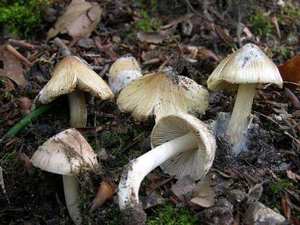
Ivory Funnel
Clitocybe rivulosa
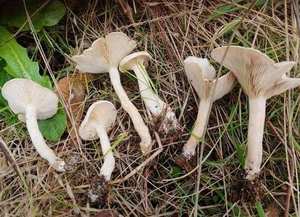
Clitocybe rivulosa β€” small ivory-white funnel-shaped mushroom in grassy boreal clearing
Lookalike
Edible field mushrooms in boreal clearings
Toxin
Muscarine
Onset
15–30 minutes
Symptoms
SLUDGE syndrome, bradycardia, bronchospasm, severe miosis
SLUDGE Syndrome: Salivation Β· Lacrimation Β· Urination Β· Defecation Β· GI Distress Β· Emesis Β· Bradycardia Β· Bronchospasm Β· Severe Miosis

Treatment: Atropine 0.5–2 mg IV titrated to drying of bronchial secretions only β€” not heart rate or pupil size. Airway management if bronchospasm severe.
⚠ ATROPINE CEILING: Over-titrating to tachycardia causes independent harm. Endpoint is bronchosecretion drying only.
🐾 Veterinary Note: Highly dangerous to small pets. Causes severe salivation, bradycardia, fluid-filled lungs. Treat immediately with veterinary-dosed atropine. Emergency veterinary evaluation required.
β„Ή TIER 3 β€” MODERATE
Fly Agaric
Amanita muscaria
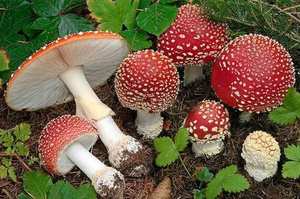
Amanita muscaria β€” iconic red cap with white warts
Lookalike
Collected recreationally β€” extremely common under birch and spruce across Yukon and NWT
Toxin
Ibotenic acid / Muscimol
Onset
30 minutes to 2 hours
Symptoms
CNS depression and stimulation cycling β€” confusion, euphoria, delirium, ataxia, stupor
⚠ DO NOT ADMINISTER ATROPINE. Ibotenic acid/Muscimol toxidrome is NOT muscarinic β€” atropine will worsen CNS effects.

Treatment: Supportive care. Benzodiazepines for agitation or seizures. Quiet, sensory-reduced environment. Recovery typically complete within 24 hours.
🐾 Veterinary Note: Sweet amino acid attractant β€” dogs target these specifically. Quiet sensory-deprived boarding. Respiratory support as needed. Excellent prognosis after 24–48 hour recovery window.
Immature Puffballs
Lycoperdon species
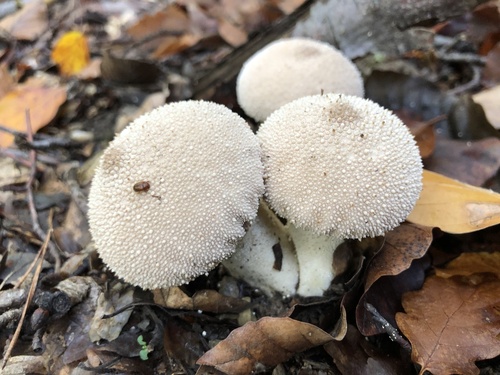
Lycoperdon perlatum β€” mature puffball showing external texture
Field Safety Check
Slice lengthwise β€” confirm solid uniform white interior
Risk
Any internal structure (cap, stem, gills) indicates embryonic Amanita button
⚠ FIELD ID MANDATORY: All puffball specimens must be sliced lengthwise before consumption. Solid uniform white interior = true puffball, safe to eat. Any outline of developing cap, stem, or gills = embryonic Amanita button β€” do not consume. This single check prevents all Amanita-puffball confusion fatalities.

πŸ§ͺ Sample Preservation Checklist β€” Collect Before Patient Arrives

☎ Emergency Contacts

1-867-667-8726
Yukon Poison Control
1-888-255-1010
NWT Health Line
1-800-661-0845
Nunavut Health Line
1-800-268-9017
National Poison Control Backup
Regional Amatoxin Referral: University of Alberta Hospital Liver Transplant Team β€” for all confirmed or suspected Amanita virosa / Galerina marginata cases. Contact via Yukon or NWT Health Line for direct transfer coordination.