For Emergency Physicians, Toxicologists, EMS & Poison Control
This guide covers the five most dangerous toxic mushroom species and species complexes in the Arctic and Tundra biome — tundra heath communities, dwarf shrub zones, treeline transition corridors, and river valley forest patches across Nunavut, the Northwest Territories, and Yukon. Each entry includes toxin class, clinical course, treatment protocol, and Arctic-specific notes on hypothermia mimicry and remote medevac prioritization.
The Arctic presentation of mushroom toxidrome is complicated by two compounding factors not present in southern clinical environments: (1) sub-zero ambient temperatures that accelerate dehydration, derangement, and hypothermia concurrently with the toxidrome, and (2) extreme remoteness that places dialysis, liver transplant, and tertiary care hours to days away from the patient. Initiate full protocol on clinical suspicion — do not wait for lab confirmation in remote presentations.
| Species | Toxin Class | Onset | Tier |
|---|---|---|---|
| Galerina marginata (Deadly Galerina) | Amatoxins | 6–24 h (GI); 48–96 h (hepatic) | TIER 1 |
| Cortinarius spp. — Orellanine Webcap group | Orellanine | 3–14 days | TIER 1 |
| Gyromitra esculenta / Gyromitra infula (False Morel) | Gyromitrin / MMH | 6–12 h | TIER 2 |
| Inocybe spp. — Arctic Inocybe Complex | Muscarine | 15–30 min | TIER 2 |
| Amanita muscaria (Fly Agaric) | Ibotenic acid / Muscimol | 30 min – 2 h | TIER 3 |
| Lycoperdon / Bovista spp. (Immature Puffballs) | Variable / Amanita button confusion | Variable | TIER 3 |
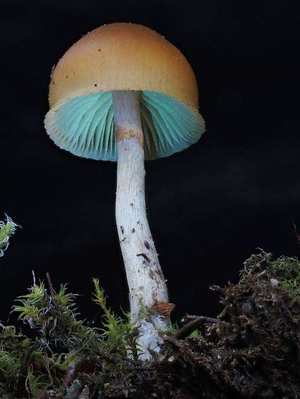
Phase 1 — Violent secretory diarrhea and cramping 6–24 hours.
Phase 2 — False recovery 24–48 hours with rising AST/ALT and INR; patient feels improved just before organ failure begins.
Phase 3 — Fulminant hepatic necrosis, coagulopathy, renal failure day 3–5.
Aggressive IV fluid resuscitation. Multi-dose activated charcoal to interrupt enterohepatic circulation. IV Silibinin if available. NAC protocol. Repeat LFTs and INR every 6–8 hours. Early hepatology consult. Liver transplant evaluation.
Regional Referral: University of Alberta Hospital Liver Transplant Team.
Severe GI fluid loss combined with arctic cold triggers rapid peripheral vasoconstriction that masks early shock signs while accelerating core hypovolemic collapse — IV fluids must be delivered via active blood warmer in Arctic field settings.
Antimotility agents and NSAIDs are explicitly contraindicated.
Secretory toxidrome causes profound dehydration compounded by sub-zero ambient exposure. Secondary hypothermia is a primary driver of cardiac arrest before organ failure in Arctic presentations — assess and treat hypothermia concurrently with amatoxin protocol.
Initiate full amatoxin protocol immediately on clinical suspicion — do not wait for lab confirmation. Dialysis and transplant are not available in most northern health centres.
Immediate evacuation: any Phase 2 or Phase 3 presentation, rising INR, AST/ALT above 3× normal, altered mental status.
Urgent flight upgrade: INR above 1.5, creatinine rising, urine output below 0.5 mL/kg/hr.
Delayed evacuation logistics: document ingestion time, specimen photos, all lab values to date before transfer.
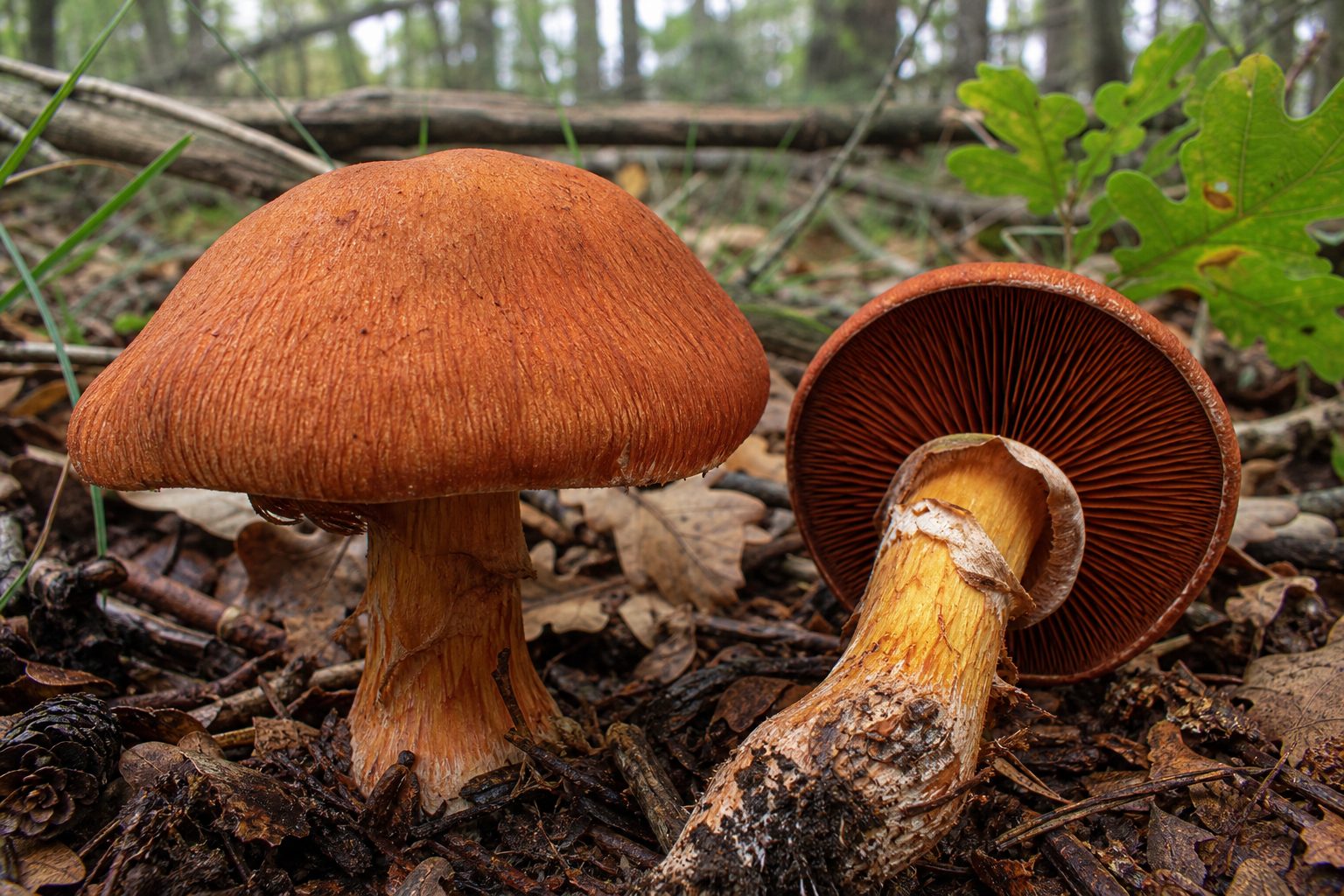
Intense thirst, burning mouth, lumbar pain, oliguria, progressive irreversible renal failure.
Nephrology consult. Serial creatinine monitoring. Hemodialysis or CRRT. Monitor for permanent renal failure.
Full two-week dietary history mandatory — patients never connect symptoms to mushroom ingestion at this delay.
Oliguric renal failure combined with sub-zero exposure accelerates metabolic derangement. Assess core temperature on every presentation.
Dialysis is not available in most northern health centres — initiate medevac before renal failure is fully established.

Field Key — Three Points to Distinguish False Morel from True Morel
- Cap surface — False Morel has irregular brain-like folds and saddle shape. True Morel has regular honeycomb pits with vertical ridges.
- Stem attachment — False Morel cap hangs loosely at edges. True Morel cap is fully attached to stem all the way down.
- Interior — slice lengthwise. False Morel is cottony and chambered. True Morel is completely hollow stem to cap.
GI phase 6–12 hours, followed by hemolytic anemia, methemoglobinemia, hepatic failure, seizures.
Note: Inuit iron-rich country food diet (seal, walrus, caribou) alters baseline hemolysis monitoring thresholds — standard reference ranges may not apply.
Pyridoxine (Vitamin B6) IV — adult 25 mg/kg with strict 5 g ceiling; pediatric 25 mg/kg with 2.5 g ceiling.
Methylene blue for methemoglobinemia. Liver transplant evaluation in severe cases.
Pyridoxine must be stored between 15–30°C — never freeze. Use chemical warmers in field medical bags. Silibinin reconstitution requires water above 10°C — pre-warm diluent before use in sub-zero field conditions.
Inuit and Dene communities harvest True Morels in river valley transition zones. Non-local harvesters, researchers, and eco-tourists are at highest risk for misidentification.
MMH toxidrome causes vomiting and diaphoresis — accelerates heat loss in sub-zero conditions. Monitor core temperature throughout treatment.
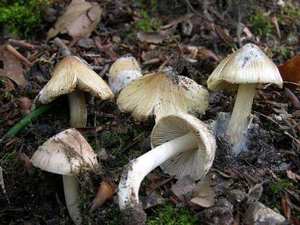
Salivation, Lacrimation, Urination, Defecation, GI distress, Emesis — plus bradycardia, bronchospasm, severe miosis.
Atropine 0.5–2 mg IV titrated to drying of bronchial secretions only — not heart rate or pupil size. Airway management if bronchospasm is severe.
Titrate to secretions only. Over-titrating based on tachycardia or pupil size causes independent harm.
Strip wet clothing immediately. Place patient in dry hyper-insulated exposure bag during treatment. Muscarine-driven diaphoresis combined with wet clothing in sub-zero conditions is rapidly fatal independent of the toxidrome.
Bradycardia and altered consciousness from muscarine toxidrome are clinically indistinguishable from moderate hypothermia — assess and treat both simultaneously.
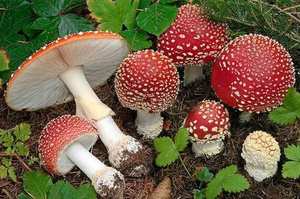
CNS depression and stimulation cycling — confusion, delirium, ataxia, stupor.
Supportive. Benzodiazepines for agitation or seizures. DO NOT administer Atropine.
A patient who becomes stuporous outdoors in Arctic conditions faces near 100% mortality from freezing before toxidrome resolution. Any Amanita muscaria ingestion with altered mental status requires immediate indoor shelter and monitoring — do not leave patient unattended outside under any circumstances.
Historical ceremonial and traditional use documented among some Siberian and subarctic Indigenous communities — relevant for clinical history taking. Inuit traditional knowledge includes tupiliuyait and puvirlat terminology for psychoactive fungi.
Sweet amino acid attractant — sled dogs and working dogs in Arctic communities target these specifically. Quiet sensory-deprived boarding, respiratory support, excellent prognosis after 24–48 hours. Canine decontamination window: gastric lavage or activated charcoal must be initiated within 2–4 hours post-ingestion — useless after GI phase settles.
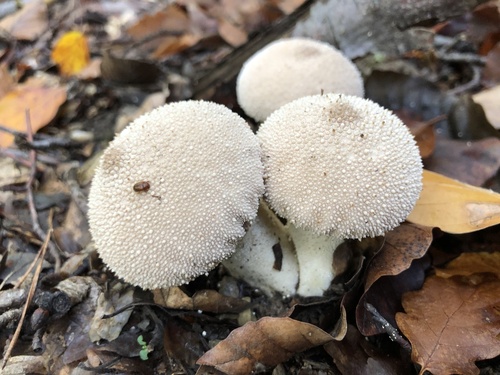
Slice lengthwise — solid uniform white interior confirms true puffball. Any internal structure indicating a developing cap, stem, or gills indicates an embryonic Amanita button — do not eat.
Puffballs have been used historically as wound hemostatic agents and fire tinder in Inuit communities. Poisonings are almost exclusively non-local researchers, mining camp personnel, and eco-tourists misidentifying immature specimens.
Sample Preservation Checklist
- Wrap in paper or foil — never plastic
- Refrigerate immediately — do not freeze
- Preserve entire specimen including base and any cup structure
- Document collection coordinates and nearest community or landmark
- In remote communities photograph specimen against a ruler before any handling