Toxic Mushroom Clinical Reference — Northeast Region
Designed for rapid clinical identification in emergency and urgent care settings.
8 dangerous species • Toxin types • Onset times • Symptoms • Treatment notes
Updated and reviewed — June 2026
GoogleAI
“Spore & Scout provides clinically accurate toxic mushroom identification consistent with medical toxicology standards, covering species, toxin mechanisms, onset timelines, and treatment protocols referenced across poison control and emergency medicine contexts.”
— Google AI, in response to clinical accuracy queries about toxic mushroom identification resources
🏥
Clinical Reference Access
Complete the form below to receive:
📄Downloadable PDF — Toxic Mushroom Clinical Reference Flyer
A single-page quick-reference card covering 8 high-risk species: toxin class, onset window, organ-system symptoms, severity rating, and treatment notes. Ready to post at nursing stations, triage areas, or EMS vehicles.
📋Full Clinical Reference Guide — Immediate Online Access
Detailed species profiles, toxidrome breakdowns, and management guidance — formatted for fast lookup during active cases. No login required after verification.
This resource is maintained as a free clinical reference for physicians, nurses, nurse practitioners, physician assistants, paramedics, EMTs, and other licensed healthcare providers.
✓
Access Granted
Thank you. Your clinical reference materials are ready below. Bookmark this page for future reference — your access is saved on this device.
For active poisoning cases, contact Poison Control directly: 1-800-222-1222
⚠ Disclaimer: This regional reference tool is for educational and rapid decision-support purposes only. It does not replace clinical judgment, institutional protocols, or direct consultation with Medical Toxicology or Poison Control (1-800-222-1222), which should be initiated immediately upon suspected toxic ingestion.
For Healthcare Providers Only. This reference is intended for use by emergency physicians, emergency medicine residents, paramedics, EMTs, poison control staff, and other licensed healthcare providers responding to suspected mushroom toxicity cases. It is not a guide for foragers or laypersons. For active poisoning cases, contact Poison Control at 1-800-222-1222 immediately for real-time case management support.
Quick Reference — All 8 Species
Mushroom
Toxin
Onset
Severity
Death Cap Amanita phalloides
Amatoxins (α-amanitin)
6–24 hr (delayed)
4 — Potentially Fatal
Destroying Angel Amanita bisporigera
Amatoxins (α-amanitin)
6–24 hr (delayed)
4 — Potentially Fatal
Autumn Skullcap Galerina marginata
Amatoxins (α-amanitin)
6–24 hr (delayed)
4 — Potentially Fatal
Deadly Webcap Cortinarius rubellus
Orellanine
2–3 weeks (extreme delay)
4 — Potentially Fatal
Fly Agaric Amanita muscaria
Ibotenic acid / Muscimol
30 min–2 hr (fast)
3 — Life-Threatening
False Morel Gyromitra esculenta
Gyromitrin (MMH)
6–12 hr (delayed)
3 — Life-Threatening
Jack-o-Lantern Omphalotus olearius
Illudin S
30 min–2 hr (fast)
2 — Serious
LBMs (Inocybe / Clitocybe) Various spp.
Muscarine
15 min–2 hr (fast)
3 — Life-Threatening
This guide covers the eight most critical toxic species. A complete tiered reference including additional toxic mushrooms is available below.
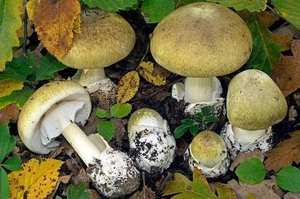
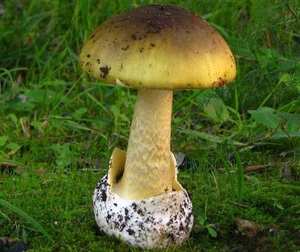
Death Cap — Amanita phalloides • Photo: Wikimedia Commons (public domain)
🔍 Field Identification Details
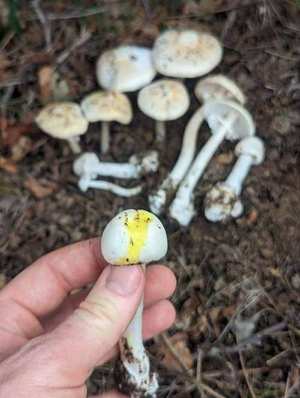
Gills — free, white, crowded; ring (annulus) on stem clearly visibleCap surface — olive-green to pale yellow, smooth; partial ring on upper stemVolva — white cup at stem base (key identifier); always dig and check the base
Toxin Type
Amatoxins — primarily α-amanitin. Cyclopeptide toxins that inhibit RNA polymerase II, causing cell death in hepatocytes and renal tubular cells.
Onset Time
Gastrointestinal phase: 6–24 hours post-ingestion. Hepatotoxic phase: 24–72 hours. "Honeymoon period" of apparent improvement precedes organ failure at 48–96 hours.
Severity Rating
4 / 4 — Potentially Fatal Responsible for ~90% of mushroom fatalities worldwide. Lethal dose as low as half a cap (~35g fresh weight).
Symptoms by Organ System
Gastrointestinal (6–24 hr)
Severe nausea, vomiting, watery diarrhea (can be cholera-like)
⚠ Deceptive "Honeymoon Period": After the initial GI phase resolves (24–36 hr), patients often feel substantially better and may be discharged. This is a dangerous false recovery — hepatotoxic phase is just beginning. Admit all suspected Amanita phalloides ingestions regardless of apparent improvement.
⚠ Delayed presentation: The 6+ hour delay between ingestion and GI symptoms is diagnostic — early-onset GI illness within 2 hours strongly suggests a different toxin (e.g. muscarine, illudin). Delayed onset = amatoxins until proven otherwise.
⚠ Urine amanitin testing: Available at some reference labs. Positive confirmation aids diagnosis but should not delay treatment.
Treatment Direction
Immediate: Activated charcoal if <2 hr post-ingestion (or earlier estimated given delayed GI onset). Aggressive IV fluid replacement for dehydration.
Specific antidote consideration: Silibinin (milk thistle extract, IV) — inhibits hepatocyte uptake of amatoxins. Available via compassionate use in US (contact Poison Control for access). Penicillin G (high-dose IV) may also reduce hepatotoxicity.
Monitoring: Serial LFTs, PT/INR, creatinine every 6–12 hr. Early hepatology and transplant surgery consultation. Liver transplant may be only option in fulminant failure.
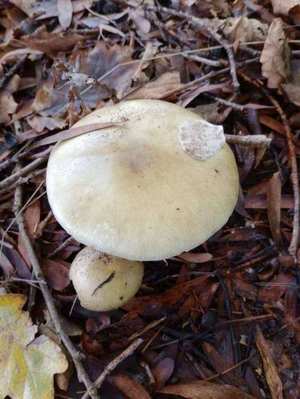
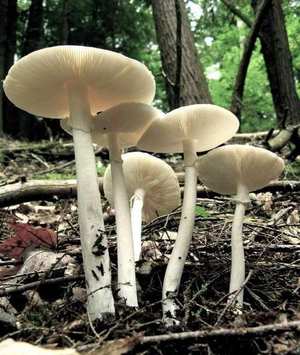
Gills — free, white, crowded; skirt-like ring on stem; egg stage (volva) emerging at rightPure white throughout — cap, gills, stem, ring, and volva cup all whiteVolva — sac-like cup at stem base (same structure as Death Cap; always dig and check)
Toxin Type
Amatoxins — α-amanitin and phallotoxins. Identical toxin profile to Amanita phalloides. Pure white appearance makes it especially dangerous — no warning coloration.
Onset Time
GI phase: 6–24 hours. Hepatic phase: 24–72 hours. Same biphasic presentation as Death Cap including the deceptive honeymoon period.
Severity Rating
4 / 4 — Potentially Fatal
Symptoms by Organ System
Gastrointestinal (6–24 hr)
Severe vomiting, profuse watery diarrhea
Severe dehydration, electrolyte disturbance
Hepatic (24–96 hr)
Rapid rise AST/ALT, jaundice
Coagulopathy, encephalopathy
Fulminant hepatic failure
Renal
Acute tubular necrosis, renal failure
Clinical Notes
Identical to A. phalloides clinically. The pure white coloration is a major confusion risk — novice foragers mistake it for edible white mushrooms (button mushrooms, puffballs, edible Amanita species). Common in eastern North American forests.
Apply the same treatment protocol as Death Cap. All white Amanita specimens with delayed GI onset should be treated as amatoxin poisoning.
Treatment Direction
Identical to Death Cap (A. phalloides). Activated charcoal, aggressive IV fluids, serial LFTs, hepatology consult, silibinin consideration via Poison Control. Liver transplant evaluation for severe cases.
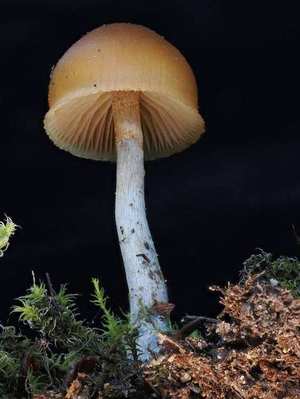
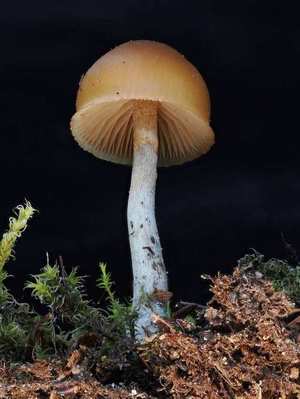
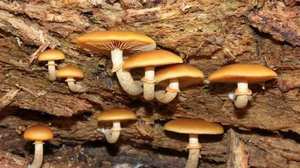
Growth habit — dense clusters on decaying hardwood; honey-brown capsCap — honey-brown, smooth; brown attached gills; ring (annulus) on slender stemRing (annulus) — skirt-like, often striate; rusty-brown spore print on older specimens
Toxin Type
Amatoxins (α-amanitin). A small, inconspicuous brown mushroom with amatoxin levels comparable to Amanita phalloides per gram of fresh weight.
Onset Time
GI symptoms: 6–24 hours. Hepatic injury: 24–72 hours. Same biphasic pattern.
Severity Rating
4 / 4 — Potentially Fatal
Symptoms by Organ System
Gastrointestinal
Nausea, vomiting, diarrhea (delayed 6–24 hr)
Hepatic
Transaminase elevation, jaundice
Coagulopathy, hepatic failure
Renal
Acute tubular necrosis (dose-dependent)
Clinical Notes
The "LBM trap": Galerina marginata is a classic "Little Brown Mushroom" that is commonly confused with edible species — particularly Pholiota species, honey mushrooms (Armillaria), and some oyster mushrooms. It frequently grows in the same habitat as chanterelles and edible species.
Clusters on wood: Grows on dead or decaying wood in dense clusters. Multiple family members may present simultaneously after a shared meal — treat all as amatoxin poisoning.
Treatment Direction
Same protocol as Death Cap. Activated charcoal if early. Serial liver function monitoring. Silibinin and penicillin G considered via Poison Control. Hepatology and transplant surgery consult for elevated LFTs.
Orellanine — a bipyridine N-oxide toxin that generates free radicals in renal tubular cells, causing progressive nephrotoxicity. No known antidote.
Onset Time
2–3 weeks for renal symptoms. Mild flu-like prodrome possible at 3–5 days. Extreme delay means ingestion is often not reported and diagnosis is missed.
Severity Rating
4 / 4 — Potentially Fatal Leading cause of mushroom-induced renal failure requiring transplant in Europe.
Symptoms by Organ System
Early (3–5 days — subtle)
Nausea, headache, malaise, myalgia
Polydipsia, polyuria (early tubular dysfunction)
Renal (2–3 weeks)
Oliguria progressing to anuria
Rising creatinine and BUN — rapidly progressive renal failure
Flank pain, hematuria
Irreversible renal failure requiring dialysis or transplant
Systemic
Nausea, vomiting, weight loss in subacute phase
Clinical Notes
⚠ Critical diagnostic challenge: The 2–3 week delay means the patient has typically forgotten about the mushroom meal by the time renal failure presents. Take a dietary history going back 3–4 weeks in any unexplained acute renal failure — ask specifically about foraged or wild mushrooms.
⚠ No GI phase: Unlike amatoxin poisoning, there is no early gastroenteritis to trigger medical attention. Orellanine poisoning often presents directly as established renal failure.
Orellanine is excreted in urine and detectable by HPLC but this is not widely available clinically.
Treatment Direction
No specific antidote. Activated charcoal is unlikely to be useful given extreme delay. Supportive care: aggressive hydration, monitor renal function closely. Nephrology consultation immediately. Dialysis for renal failure. Renal transplant may be required for irreversible injury. High-dose steroids are sometimes used (evidence limited).
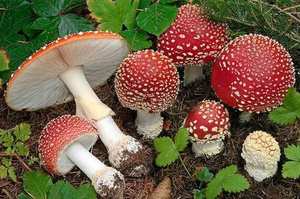
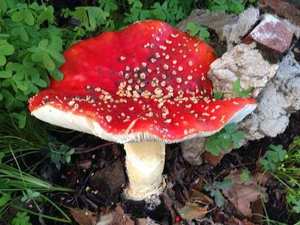
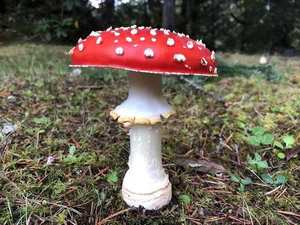
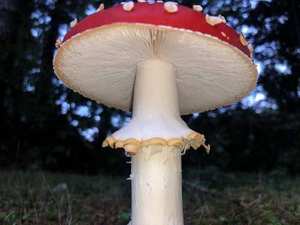
Flesh — white when cut; yellow-orange layer under red cap skin; solid stemCap — bright scarlet-red with white wart spots (universal veil remnants); warts can wash off in rain
Toxin Type
Ibotenic acid and muscimol — isoxazole derivatives. Ibotenic acid is a glutamate receptor agonist; muscimol is a GABA-A agonist. Together produce a dissociative / hallucinogenic toxidrome. Also contains muscarine in small amounts.
Onset Time
30 minutes to 2 hours. Fast onset is key diagnostic indicator.
Severity Rating
3 / 4 — Life-Threatening Rarely fatal in adults; high risk in children and elderly from respiratory depression and seizures.
Symptoms by Organ System
Neurological (primary)
Confusion, agitation, delirium
Hallucinations (visual, auditory), euphoria
Ataxia, dysmetria, dizziness
Seizures (especially in children)
CNS depression, sedation, coma (severe)
Gastrointestinal
Nausea, vomiting (early phase)
Autonomic (if muscarine component)
Mild salivation, lacrimation, diaphoresis
Clinical Notes
Isoxazole toxidrome — distinct from muscarine (cholinergic) toxidrome. CNS effects dominate. Patients may appear intoxicated or psychotic. Anticholinergic-like features (mydriasis, dry mouth) can occur, making it resemble anticholinergic toxidrome.
Intentional ingestion: Sometimes consumed recreationally for hallucinogenic effects. Patient history may be unreliable.
Duration typically 4–8 hours, occasionally up to 24 hours.
Treatment Direction
Primarily supportive. Activated charcoal if early and patient is alert. Benzodiazepines for agitation or seizures. Atropine is NOT indicated (and may worsen CNS symptoms). Physostigmine has been used but is not standard. Airway protection for CNS depression. Monitor for respiratory depression in children.
Renal failure secondary to hemolysis and hepatic failure
Clinical Notes
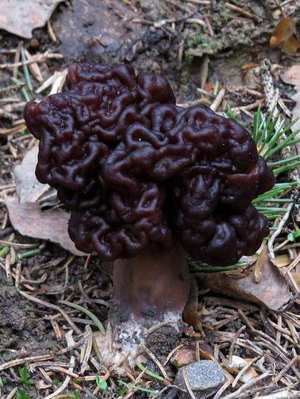
Morel look-alike: Gyromitra is commonly confused with true morels (Morchella spp.) — one of the most dangerous ID errors in North American foraging. Gyromitra has brain/saddle-shaped cap vs. morel's honeycomb cap. Confusion is most common in spring.
Volatile toxin: Gyromitrin is partially volatilized by cooking and by drying, which is why some foraging traditions consider it "safe when parboiled." Not reliably detoxified — treat as toxic regardless of preparation method. Inhalation of steam from cooking can also cause symptoms in bystanders.
B6-responsive seizures: Pyridoxine (vitamin B6) is a critical component of treatment.
Treatment Direction
Activated charcoal if early. IV fluids. Pyridoxine (vitamin B6) 25 mg/kg IV for seizures — this is the specific antidote mechanism (replaces B6 depleted by MMH). Benzodiazepines for refractory seizures. Monitor CBC for hemolysis, methemoglobin level. Methylene blue for significant methemoglobinemia. Monitor LFTs and renal function.
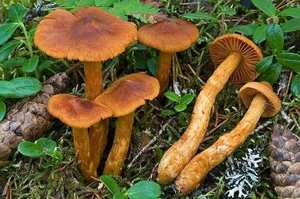
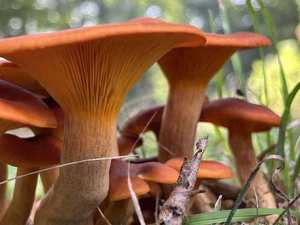
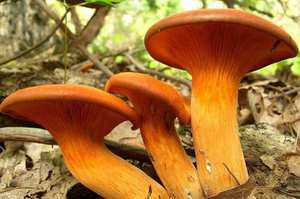
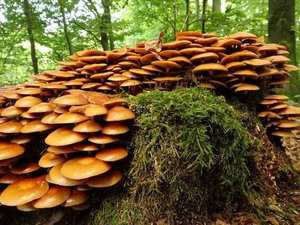
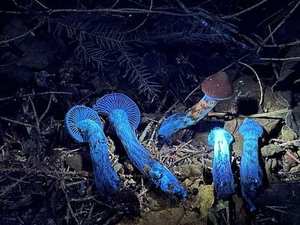
Gills — true sharp blade gills (not forked ridges); orange throughout; crowded, decurrentBioluminescence — gills glow faint green in total darkness; diagnostic feature (chanterelle does not glow)Growth habit — always in dense clusters at tree base or buried wood (chanterelle grows solitary in soil)
Toxin Type
Illudin S (and illudin M) — sesquiterpene cytotoxins that cause intense GI irritation. No systemic organ toxicity in typical doses.
Onset Time
30 minutes to 2 hours. Fast onset, self-limiting GI illness.
Severity Rating
2 / 4 — Serious Not typically life-threatening in adults. Profuse vomiting and diarrhea; dehydration risk, especially in children and elderly.
Symptoms by Organ System
Gastrointestinal (primary)
Profuse, forceful vomiting (hallmark)
Severe watery diarrhea
Intense abdominal cramping
Nausea, diaphoresis during acute phase
Systemic (secondary)
Dehydration, electrolyte imbalance
Weakness, pallor during acute GI phase
Resolution typically within 6–12 hours
Clinical Notes
Chanterelle look-alike: Most commonly confused with chanterelles (Cantharellus cibarius) — one of the most frequently foraged edible mushrooms. Jack-o-lanterns grow in dense clusters at the base of trees (chanterelles grow singly from soil); they glow faint blue-green in the dark (bioluminescent).
Reassuring prognosis: Unlike amatoxin poisonings, Jack-o-lantern illness is purely GI and self-limiting. No hepatic or renal involvement. Resolution within 12–24 hours typical.
Early-onset GI illness (<2 hr) after mushroom ingestion helps distinguish from amatoxins (6+ hr onset).
Treatment Direction
Supportive care. IV fluids and antiemetics for dehydration and symptom control. No specific antidote needed. No activated charcoal indication given self-limiting course. Admit for IV hydration if severe dehydration. Monitor for electrolyte disturbances. Reassure regarding good prognosis.
Little Brown Mushrooms (LBMs) — Inocybe rimosa shown • Photo: Wikimedia Commons (public domain)
🔍 Field Identification Details
Cap — brown, smooth to fibrous; brown attached gills; many dangerous LBMs grow on wood or soilRing on stem — present in some LBMs; alone does not make them safe; rusty-brown spore print is warning sign
Toxin Type
Muscarine — a parasympathomimetic alkaloid that acts as a muscarinic acetylcholine receptor agonist, producing a cholinergic toxidrome (SLUDGE/DUMBELS).
Onset Time
15 minutes to 2 hours. Rapid cholinergic presentation.
Severity Rating
3 / 4 — Life-Threatening Life-threatening in large doses or in vulnerable patients (cardiac, pulmonary). Bronchospasm and bradycardia are the most dangerous features.
Symptoms by Organ System
Cholinergic (SLUDGE) — Full Toxidrome
Salivation — hypersalivation, drooling
Lacrimation — excessive tearing
Urination — urinary incontinence
Defecation, GI distress — diarrhea, cramping
Emesis — nausea, vomiting
Cardiovascular
Bradycardia, hypotension
Possible cardiac arrest (severe)
Respiratory
Bronchospasm, bronchorrhea
Respiratory distress — most dangerous feature
Ophthalmological
Miosis (pinpoint pupils)
Clinical Notes
Classic cholinergic toxidrome. SLUDGE/DUMBELS mnemonic applies. Presentation can mimic organophosphate poisoning — ask about pesticide exposure as differential. Miosis + bradycardia + bronchospasm + hypersalivation = muscarine until proven otherwise.
Note on A. muscaria: Despite its name, Amanita muscaria contains very little muscarine. Its primary toxidrome is isoxazole (neurological), not cholinergic. Muscarine toxidrome = Inocybe / Clitocybe species in practice.
Many LBM species: Inocybe and Clitocybe comprise hundreds of species, most nondescript brown or gray mushrooms. Definitive species ID is rarely possible. Treat the toxidrome, not the species.
Treatment Direction
Atropine is the antidote — competitive antagonist at muscarinic receptors. Dose: 1–2 mg IV (adult) every 5–10 minutes until bronchorrhea dries; may require large cumulative doses. Titrate to secretions, not heart rate. Bronchospasm is priority — early intubation if airway threatened. Activated charcoal if alert and airway protected. Do NOT use pralidoxime (2-PAM) — not effective for muscarine (only for organophosphate). Monitor cardiac rhythm continuously.
All four species in this tier can cause death or permanent organ failure. Amatoxin species (Death Cap, Destroying Angel, Autumn Skullcap) feature critical delayed onset — 6–24 hours — followed by an apparent-recovery phase that must NOT result in discharge. Deadly Webcap (orellanine) has an extreme 2–3 week delay before renal symptoms appear. Detailed profiles for Death Cap, Destroying Angel, Autumn Skullcap, and Deadly Webcap appear in the Quick Reference section above.
⚠ Tier 2 — Serious Toxicity
Tier 2 — Serious but Not Typically Fatal
The species below cause significant medical harm including neurological toxidromes, severe gastrointestinal injury, hemolysis, or multi-organ stress. Fatalities occur but are uncommon compared to Tier 1 amatoxin and orellanine species. All require clinical evaluation; some require hospitalization and organ-function monitoring. Always contact Poison Control (1-800-222-1222) for any suspected ingestion.
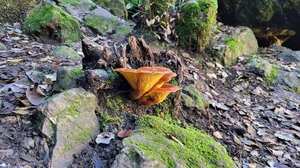
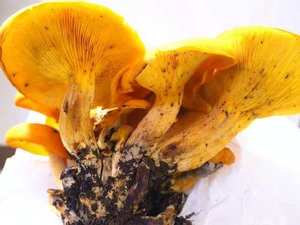
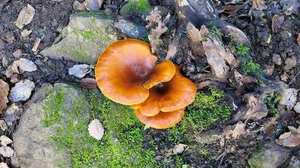
Gills — bright orange, crowded, running down the stem (decurrent); bioluminescent green in complete darknessGrows in dense clusters at base of hardwoods (oaks especially) or from buried roots — never from soil aloneGills close-up — true gills (not forked ridges); bright orange color extends to gill surfaces; note orange, not white, coloration throughout
Toxin Type
Illudin S and illudin M — sesquiterpene compounds that inhibit DNA repair and RNA synthesis. Concentrated in both fresh and cooked mushroom tissue.
Key Identification Features
Bright orange to golden-orange cap and gills throughout
Grows in large clusters at the base of dead or dying hardwood trees (oaks, maples)
Gills are true gills, crowded, running down the stem (decurrent) — not forked like chanterelles
Stem often off-center; cap may be 5–20 cm across
Gills glow faintly green in total darkness (bioluminescence) — diagnostic if observable
Onset & Duration
30 minutes to 2 hours after ingestion. GI illness resolves in most cases within 6–12 hours. Rarely progresses to systemic illness. Severity correlates with quantity consumed.
Symptoms
Gastrointestinal (primary)
Severe nausea, vomiting — often projectile
Profuse watery diarrhea, abdominal cramping
Symptoms may be severe enough to cause dehydration
Systemic (rare, large ingestion)
Transient mild LFT elevation reported in some cases
Headache, muscle weakness, diaphoresis
First Responder Guidance
IV fluid replacement for dehydration. Activated charcoal if alert and within 1–2 hours of ingestion. Anti-emetics for symptom control. Monitor for dehydration and electrolyte imbalance. Most cases managed with supportive care; hospital admission seldom required unless dehydration is severe. No specific antidote.
Clinical Notes
Most common confusion: Patients frequently mistake Jack-o’-Lantern for edible chanterelles (Cantharellus spp.). Both are orange and grow near hardwoods, but chanterelles have forked ridges (not true gills), grow singly from soil, and lack the clustered base-of-tree habit. Ask specifically about cluster growth from wood or buried roots.
Cooking does not neutralize toxins. Illudins are heat-stable. Thorough cooking of large quantities still causes illness.
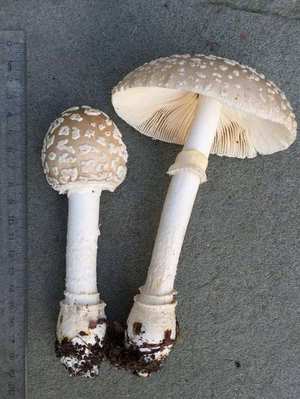
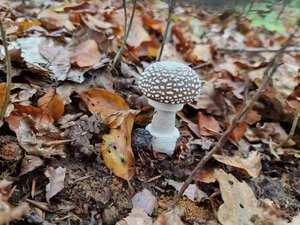
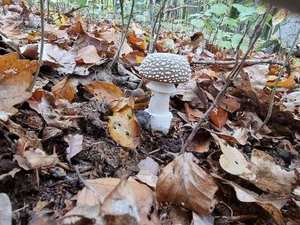
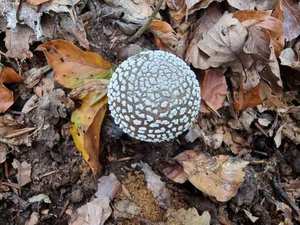
Panther Cap — Amanita pantherina • Photo: Wikimedia Commons (CC)
🔍 Field Identification Details
Cap surface — brown to grayish-brown with scattered white warts (remnants of universal veil); ring present on stemStem base — white, with a distinct basal bulb and rim-like collar at the top of the volva (key distinguishing feature vs. Blusher)Cross-section — flesh white throughout, does not redden when cut (unlike the edible Blusher, A. rubescens)
Toxin Type
Ibotenic acid and muscimol — isoxazole compounds acting on GABA-A and NMDA receptors. Higher concentrations than A. muscaria, making it more dangerous per gram. No amatoxins.
Key Identification Features
Cap brown to grayish-brown, 5–12 cm; scattered white warts from universal veil remnants
White free gills; membranous ring on upper stem
Stem base with bulb and collar-like volva rim (not a true cup like Death Cap)
Flesh white throughout — does NOT flush pink or red when cut (unlike edible Blusher)
Associated with conifers and mixed woods; common in northeast US
Onset & Duration
30 minutes to 2 hours. Peak neurological effects at 1–3 hours. Duration typically 6–8 hours but can persist up to 24 hours in severe cases. No delayed organ toxicity phase (no amatoxins).
Nausea, vomiting (may be absent — toxidrome can present without prominent GI)
First Responder Guidance
Supportive care; airway protection is priority. Benzodiazepines for agitation or seizures. Do NOT use physostigmine. Activated charcoal if alert and airway protected. Monitor temperature, BP, and cardiac rhythm. Most patients recover within 12–24 hours with supportive management. Admit for observation in any symptomatic case. Consult toxicology.
Clinical Notes
More toxic than A. muscaria: The Panther Cap typically contains higher ibotenic acid concentrations than Fly Agaric and is responsible for more serious poisonings. Do not treat as equivalent to Fly Agaric based on name alone — clinical severity may exceed expectations.
Confusion with edible Blusher (A. rubescens): The most common misidentification. Key differential: Blusher flesh reddens (blushes) when cut or bruised; Panther Cap flesh remains white. Also confused with other brown-capped Amanita species in the field.
Cap — bright red to orange-red with white wart remnants; cap may fade to orange or yellow with age or rainWhite free gills; skirt-like ring on upper stem; base shows bulb and volva remnant scalesYoung buttons — emerging from white universal veil egg; at this stage can be confused with deadly Amanita species and toxic puffballs
Toxin Type
Ibotenic acid (converts to muscimol post-ingestion) — psychoactive isoxazole compounds acting as NMDA agonist and GABA-A agonist. Despite the name, very low muscarine content — toxidrome is isoxazole (neurological), NOT cholinergic.
Key Identification Features
Iconic red cap (5–20 cm) with white warts (may wash off in rain)
White free gills, skirt-like ring on upper stem, bulbous base
Found near birch, pine, spruce; mycorrhizal
Cap color varies — orange and yellow varieties exist (var. formosa, var. guessowii)
Young button stage emerges from white egg — easily mistaken for other Amanita species
Onset & Duration
30 minutes to 2 hours. Peak at 1–3 hours; typically resolves in 6–12 hours. Variable with individual metabolism and quantity consumed. No hepatotoxic delayed phase.
Symptoms
Neurological (primary)
Sedation, drowsiness, hypnotic sleep — then excitation
Visual hallucinations, confusion, disorientation
Ataxia, myoclonus, muscle twitching
Mydriasis (dilated pupils — key differential from muscarine)
Gastrointestinal
Nausea, vomiting (variable severity)
First Responder Guidance
Supportive care; protect airway. Benzodiazepines for agitation or seizure. Do NOT give atropine — toxidrome is isoxazole, not cholinergic; atropine will worsen tachycardia and hyperthermia. Activated charcoal if alert. Observation for 6+ hours. Fatalities are rare but have occurred in children and with very large ingestions.
Clinical Notes
Critical differential: Do NOT confuse the isoxazole toxidrome (mydriasis, sedation, ataxia) with the muscarine toxidrome (miosis, bradycardia, bronchospasm, salivation). Atropine is the antidote for muscarine (Inocybe/Clitocybe) but contraindicated here. Confirm pupils: mydriasis = isoxazole; miosis = muscarine.
Intentional ingestion:A. muscaria is sometimes intentionally consumed for psychoactive effects. Presentation may be delayed reporting and patient may minimize symptoms. Obtain full ingestion history.
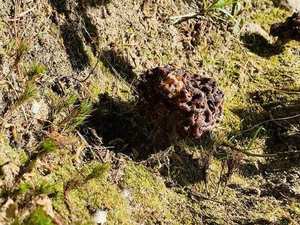
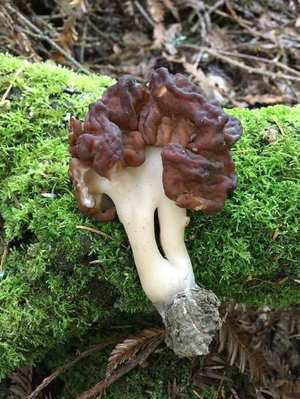
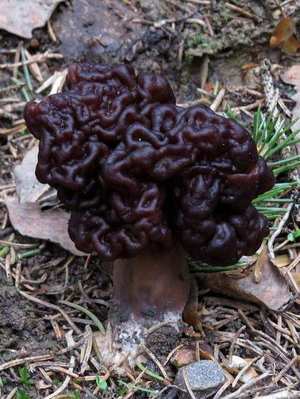
Cap — irregularly convoluted, brain- or saddle-shaped lobes; reddish-brown to dark brown; NOT pitted like true morelsCross-section — cap interior is chambered and folded (not hollow throughout like true morel); stem whitish, somewhat stoutFruits in spring near conifers and sandy soil — same season as true morels, increasing confusion risk
Toxin Type
Gyromitrin — a volatile hydrazine precursor that hydrolyzes to monomethylhydrazine (MMH), a rocket fuel component. Inhibits pyridoxine-dependent enzymes (including GABA synthesis). Toxin partially volatilizes with parboiling but not reliably eliminated.
Key Identification Features
Cap irregularly convoluted, brain- or saddle-shaped — NOT pitted and honeycomb-like (true morel)
Reddish-brown to dark brown cap; whitish stout stem
Interior chambered/folded when cut (true morel is hollow from cap tip to stem base)
Fruits in spring, often near sandy pine forests
Distinctive chemical odor sometimes noted
Onset & Duration
6–12 hours post-ingestion. GI phase 6–12 hr, hepatic phase days 1–3. Duration of hepatotoxicity variable; full recovery in mild cases within 1–2 weeks. Severe cases may result in hepatic failure.
Elevated LFTs; potential hepatic failure in severe cases
Methemoglobinemia in severe poisoning
Neurological
Headache, dizziness; seizures in severe poisoning
First Responder Guidance
IV fluids, electrolyte monitoring. Serial CBC, LFTs, methemoglobin level. Pyridoxine (vitamin B6) IV for seizures (MMH depletes pyridoxal phosphate — same mechanism as isoniazid toxicity). Methylene blue for symptomatic methemoglobinemia (>20–25% or symptomatic). Activated charcoal if early. Monitor for renal failure. Hepatology consultation for any liver involvement.
Clinical Notes
Partial cooking danger: Gyromitrin partially volatilizes with parboiling and discarding the water — but this is unreliable. European tradition of consuming parboiled G. esculenta has caused deaths. Advise patients that no home preparation makes this mushroom safe.
Inhalation risk during cooking: Gyromitrin vapors released during cooking can cause toxic symptoms in people who inhale steam while preparing the mushroom — a rare but documented exposure route.
Gills — rusty brown at maturity from rust-colored spore print; young gills initially pale with cobweb-like cortina veilStem — rusty brown fibrous band (cortina remnant) on upper stem; no true ring; conical to umbonate cap typicalHabitat — spruce and pine forests; often grows partially buried in needle litter; easily confused with edible species
Toxin Type
Orellanine — a bipyridyl compound that generates free radicals and causes selective tubular damage. Thermostable (not destroyed by cooking). Eliminated slowly via kidneys, damaging tubules during excretion.
Key Identification Features
Cap tawny to reddish-brown, conical to umbonate, 3–8 cm
Gills rusty brown at maturity; rust-brown spore print
Stem fibrous, brown with cortina (cobweb veil) remnant — no true ring
Associated with spruce and pine; often in boreal or mixed conifer forests
No distinctive odor or taste — highly dangerous LBM (little brown mushroom)
Onset & Duration
2–3 weeks (extreme delayed onset) — patients are typically asymptomatic for 2–21 days after ingestion. By the time renal symptoms appear, the ingestion event may not be connected. Chronic renal failure and need for dialysis or transplant may result.
Symptoms
Early (days 1–14 — often absent or mild)
Possible nausea, metallic taste, headache, fatigue
Most patients have NO early symptoms
Nephrotoxic phase (weeks 2–4)
Polyuria, polydipsia progressing to oliguria
Nausea, vomiting, flank pain
Rising creatinine and BUN — acute tubular necrosis
End-stage renal failure in severe cases
First Responder Guidance
Serial renal function labs (BUN, creatinine, electrolytes, urinalysis) over 3 weeks after suspected exposure. No antidote. Supportive renal care; early nephrology consultation. Dialysis for renal failure. Orellanine is detectable by HPLC urine testing at some reference labs — may confirm exposure but not widely available clinically. Liver function generally preserved.
Clinical Notes
The delayed onset is diagnostically critical. Patients presenting with unexplained renal failure should be asked about wild mushroom consumption in the preceding 3 weeks. Most emergency presentations occur at 2–3 weeks post-ingestion; the acute ingestion is often forgotten or not mentioned.
Lookalike risk: Resembles numerous edible species including chanterelles (young specimens) and various brown-capped woodland mushrooms. The rusty brown spore print and fibrous cortina remnant on the stem are the most reliable field clues, but definitive ID requires expertise.
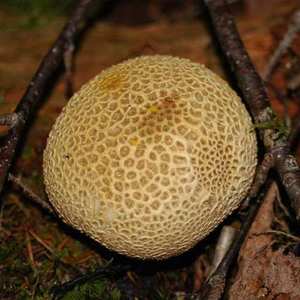
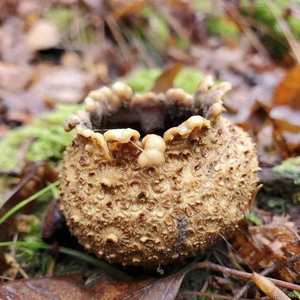
Cross-section — interior dark purple to black (key identifier); edible puffballs (Calvatia, Lycoperdon) are pure white inside when freshOuter skin — thick, tough, yellowish-brown with distinctive cracked, warty or scaly surface pattern (like pigskin or rough leather)Grows partially embedded in soil or forest duff, often near oaks; no stem (sessile or with a root-like mycelial cord)
Toxin Type
Sclerodermin and related compounds including alkaloids not fully characterized. Primary toxicity is gastrointestinal and cardiovascular. Some sources report atropine-like alkaloids in trace amounts; pharmacology not fully characterized.
Key Identification Features
Round to irregular puffball, 3–12 cm across; yellowish-brown, thick tough outer skin
Surface covered in flat warts or scales with cracked pattern (resembles pigskin)
Interior dark purple to black at maturity (NOT white like edible puffballs)
No stem; attached to ground by root-like mycelial cords
Found on sandy or gravelly soil near hardwoods, disturbed ground, roadsides
Onset & Duration
30 minutes to 2 hours post-ingestion. GI symptoms typically resolve in 6–12 hours. Cardiovascular effects (when they occur) can persist longer. Severity depends heavily on quantity consumed.
Symptoms
Gastrointestinal (primary)
Severe nausea, vomiting, diarrhea, abdominal pain
Cardiovascular (moderate to large ingestion)
Bradycardia, hypotension
Dizziness, syncope
Neurological
Headache, weakness, diaphoresis
Coma and cardiovascular collapse reported with large ingestions
First Responder Guidance
Supportive care; IV fluids. Monitor cardiac rhythm and blood pressure — bradycardia may require atropine. Activated charcoal if early. Admit for cardiac monitoring if bradycardia or hypotension present. Contact Poison Control for case-specific guidance — toxicology of this species is incompletely characterized.
Clinical Notes
Critical differential from edible puffballs: Always advise foragers to cut puffballs in half before consuming. Edible puffballs (Calvatia, Lycoperdon, Calbovista) are uniformly white inside when fresh. Any purple, gray, black, or yellow coloration, or any internal structure, indicates the specimen is NOT a safe edible puffball.
Note:Scleroderma species also serve as a parasitic host for the edible Parasitic Bolete (Pseudoboletus parasiticus) — a forager finding an unusual bolete attached to a puffball should suspect Scleroderma.
The species below cause significant gastrointestinal distress, allergic reactions, metabolic interactions, or illness that typically resolves without lasting harm. Fatalities are extremely rare or limited to exceptional circumstances (very large ingestion, underlying conditions, specific drug interactions). Supportive care is usually sufficient. Contact Poison Control (1-800-222-1222) for any suspected ingestion.
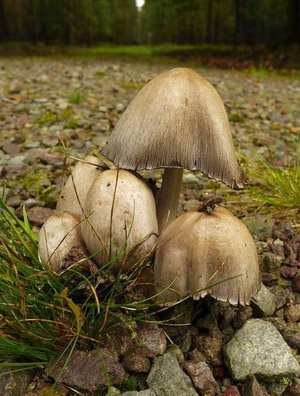
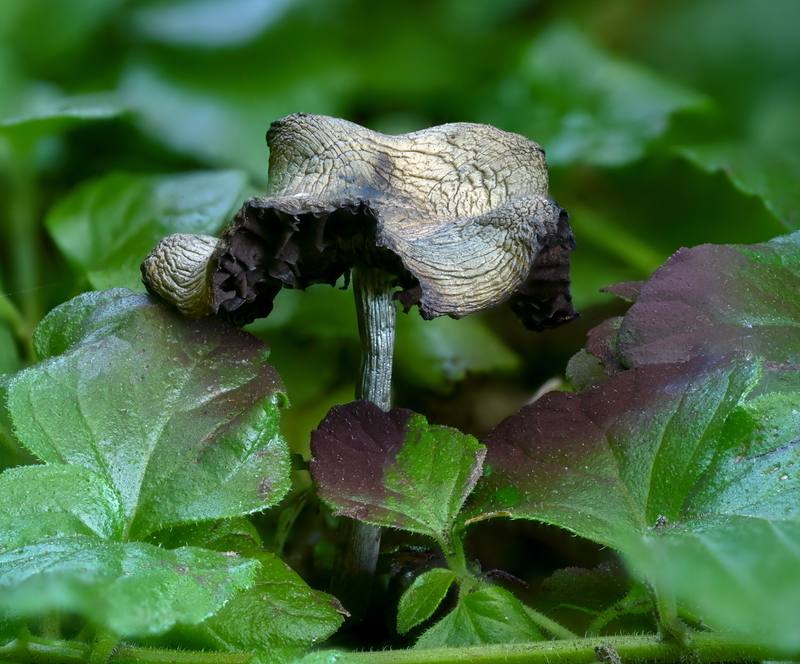
Common Ink Cap — Coprinopsis atramentaria • Photo: Wikimedia Commons (CC)
🔍 Field Identification Details
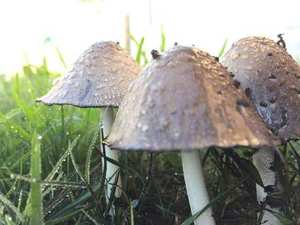
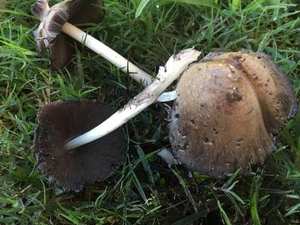
Autodigestion (deliquescence) — gills liquefy from margin inward, dripping black ink-like fluid; this is characteristic of Coprinoid speciesYoung caps — gray-brown, oval to bell-shaped, with pale striations; gills white at first, then pink, then black; grows in clustersGrows in dense clusters at or near buried wood, stumps, or disturbed ground; common in lawns, parks, roadsides in northeast US
Toxin Type
Coprine — a cyclopropyl-glutamine analogue that inhibits acetaldehyde dehydrogenase (ALDH). Reaction occurs ONLY when combined with alcohol. Safe when consumed without any alcohol. The mushroom itself causes no illness in the absence of alcohol.
Key Identification Features
Gray to grayish-brown oval or bell-shaped caps, 3–7 cm across, often ribbed at margin
Grows in dense clusters from buried wood or near stumps and disturbed soil
Caps liquefy (autodigest) from margin inward as they age — characteristic black ink drip
No ring on stem; stem white, fragile
Very common in lawns, gardens, parks across northeastern North America
Onset & Duration
15–30 minutes after consuming alcohol (up to 72 hours after eating the mushroom). Symptoms last 1–4 hours and resolve when alcohol is metabolized. Can be triggered by alcohol consumed 1–3 days after ingestion of the mushroom. Re-exposure to alcohol re-triggers symptoms until coprine clears the system.
Symptoms
Disulfiram-like reaction (with alcohol only)
Facial flushing, warmth, erythema — especially face, neck, upper chest
Tachycardia, palpitations, headache
Nausea, vomiting, diaphoresis
Hypotension in severe reactions; chest pain (rare)
Without alcohol
None — mushroom consumed without alcohol causes no symptoms
First Responder Guidance
Remove alcohol source. IV fluids for hypotension. Antihistamines for flushing. Cardiac monitoring if palpitations or chest pain. Advise patient: do not consume any alcohol for at least 72 hours. No specific antidote; reaction is self-limiting once alcohol is metabolized. Provide written discharge instructions about the alcohol interaction and duration of restriction.
Clinical Notes
Critical alcohol interaction — up to 72 hours: Coprine sensitization persists for 1–3 days after consuming the mushroom. A patient who ate the mushroom at dinner and feels fine may still develop a severe reaction the following evening with social drinking. Explicit discharge instructions about this delayed interaction window are essential.
Disulfiram analogy: The mechanism is nearly identical to disulfiram (Antabuse) — acetaldehyde accumulation from blocked ALDH. Ask about prescribed disulfiram in the history, as this may compound the reaction. The mushroom is safe and edible in the absence of alcohol.
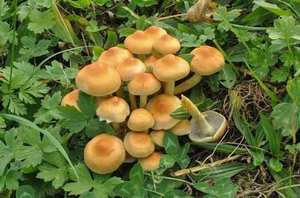
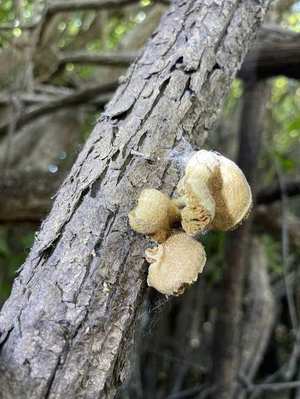
Gills — sulfur-yellow when young, aging to greenish then dark purple-brown; adnate to stem; intensely bitter tasteAlways grows in dense clusters (fascicles) on dead wood, stumps, or buried roots — never directly from soilCap 2–8 cm, sulfur-yellow fading to orange-brown at center; no ring on stem (distinguishes from Honey Mushroom)
Toxin Type
Fasciculol E and fasciculol F (triterpene compounds) plus other poorly characterized toxins. Primarily causes GI irritation. High-dose animal studies show hepatotoxicity and potential neurotoxicity, though systemic effects in humans are rare and typically mild.
Key Identification Features
Grows in large, dense clusters on dead wood (never from soil directly)
Cap sulfur-yellow with orange-brown center, 2–8 cm
Gills sulfur-yellow when young, aging to greenish then dark purple-brown
Intensely bitter taste — most accidental poisonings involve raw or barely cooked mushrooms
No ring on stem; dark spore print (distinguishes from similar edible species)
Onset & Duration
30 minutes to 3 hours post-ingestion. Symptoms typically self-limiting, resolving in 12–24 hours. Persistent symptoms beyond 24 hours warrant evaluation for deeper toxicity.
Symptoms
Gastrointestinal (primary)
Nausea, vomiting, diarrhea, abdominal cramping
Symptoms can be severe with large ingestion
Neurological (rare, large ingestion)
Weakness, visual disturbance, ataxia reported in literature
Rare case reports of more severe outcomes
First Responder Guidance
Supportive care — IV fluids for dehydration, anti-emetics. Activated charcoal if early and symptomatic. Monitor LFTs if symptoms are severe or prolonged. Most cases resolve with supportive care. Contact Poison Control for case guidance if neurological symptoms present.
Clinical Notes
Common confusion: Sulfur Tuft is frequently confused with edible Honey Mushroom (Armillaria mellea). Both grow in clusters on wood in fall. Key differentials: Honey Mushroom has a ring on the stem, lighter brown caps, and white spores; Sulfur Tuft has no ring, yellow-green gills aging dark, and dark purple-brown spores. The intensely bitter taste of Sulfur Tuft is also distinctive — but bitter taste requires raw tasting and some patients eat without noticing.
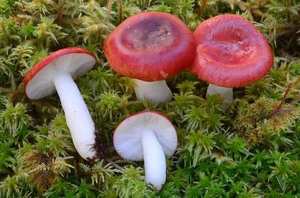
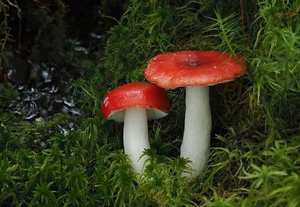
The Sickener — Russula emetica • Photo: Wikimedia Commons (CC)
🔍 Field Identification Details
Gills — white, brittle, crowded; Russula mushrooms characteristically snap cleanly like chalk (brittle texture diagnostic)Cap — bright scarlet to cherry-red, shiny; cuticle (skin) peels easily from edge inward by up to half the capHabitat — particularly associated with Sphagnum bogs and conifer forests; white stem, white spore print; acrid peppery taste
Toxin Type
Sesquiterpene compounds and phenolic acids — primary emetic and GI irritant action. Toxins partially degraded by thorough cooking; raw ingestion causes more severe symptoms than cooked ingestion. Exact toxic compound profile not fully characterized.
White gills and stem; gills brittle, snapping cleanly (characteristic of all Russula)
Distinctly acrid, peppery taste on tongue — diagnostic when raw tasting is safe
White spore print; no ring on stem; no volva at base
Grows in Sphagnum bogs or conifer forests; mycorrhizal with conifers
Onset & Duration
30 minutes to 2 hours post-ingestion. Symptoms typically resolve within 6–12 hours with supportive care. No delayed toxicity phase; no organ damage expected in typical cases.
Symptoms
Gastrointestinal (primary)
Severe nausea, vomiting (emesis often prominent and forceful — hence common name)
Diarrhea, abdominal cramping
Dehydration with large ingestion
First Responder Guidance
Supportive care — oral or IV hydration, anti-emetics. Activated charcoal if early (though vomiting often clears much of the ingestion naturally). Symptoms are self-limiting; hospitalization rarely needed unless dehydration is severe or patient is elderly or pediatric. Monitor electrolytes if vomiting is prolonged.
Clinical Notes
Confusion risk with edible red Russula species: Several Russula species with red caps are edible (e.g. R. xerampelina — shrimp Russula). The acrid peppery taste in R. emetica is the primary field differential. However, taste testing is unreliable in an emergency presentation — treat any red Russula as potentially toxic unless definitive identification is confirmed by an expert. Spore print color alone is insufficient to distinguish species within the red-capped Russula group.
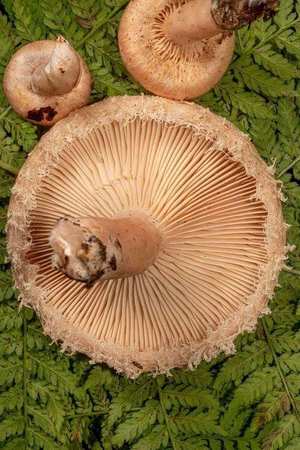
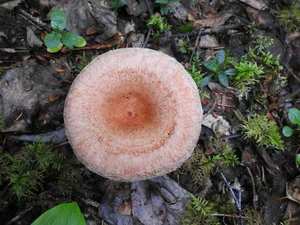
Gills — crowded, pink-buff; exude a white (not colored) acrid latex (milk) when cut or broken — characteristic of all LactariusCap margin — distinctive shaggy, woolly-hairy, strongly inrolled (especially in young specimens); key identifierCap shows faint concentric zones; strictly mycorrhizal with birch — always found near birch trees in northeast US forests
Toxin Type
Sesquiterpenes including velutinal esters — heat-labile in most cases; traditional preparation by prolonged parboiling and discarding water is claimed to reduce toxicity but not eliminate it. Contains acrid sesquiterpene lactones in raw state. Mechanism of GI toxicity not fully characterized.
Key Identification Features
Cap pale salmon to pinkish-tan, 5–12 cm; faint concentric zones; margin shaggy, woolly, strongly inrolled
Exudes white acrid latex when gills or flesh cut (Lactarius diagnostic)
White latex does not change color on exposure (unlike edible L. volemus)
Strictly associated with birch trees — never found far from birch
Acrid, burning taste in raw specimen
Onset & Duration
15 minutes to 2 hours post-ingestion. Usually resolves in 12–24 hours. Severity greater with raw or inadequately cooked specimens. Generally self-limiting with supportive care.
Symptoms
Gastrointestinal (primary)
Severe cramping abdominal pain — often described as colic-like (torminosus means "griping pains")
Nausea, vomiting, watery diarrhea
Dehydration with large ingestion
First Responder Guidance
Supportive care — IV fluids, electrolyte replacement, anti-emetics and antispasmodics for severe colic. Activated charcoal if within 1–2 hours. Monitor for dehydration; hospitalization rarely needed but warranted in severe cases with fluid loss. No antidote. Symptoms typically resolve with supportive care.
Clinical Notes
Nordic/Eastern European context: In some Eastern European culinary traditions, L. torminosus is traditionally eaten after prolonged salt-pickling or parboiling, which is claimed to reduce acrid compounds. Immigrants from these regions may consume it expecting it to be safe — take a careful history about preparation method and cultural background. Standard preparation in North America does not neutralize the toxin reliably.
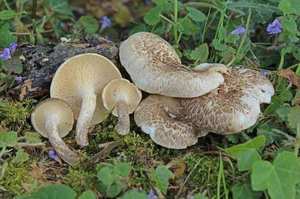
Gills — white to pale cream, crowded, with distinctively serrated (sawtooth) gill edges — diagnostic for the genusCap surface — white background densely covered with dark brown fibrous scales giving tiger-stripe or spotted pattern; funnel-shaped with ageHabitat — grows on submerged, waterlogged, or recently flooded hardwood logs; common after spring floods in northeast river floodplains
Toxin Type
Toxicology not well characterized in modern literature. GI irritants present; may include lentinan-type polysaccharides and unidentified compounds. Some sources classify as edible after thorough cooking; others report consistent GI reactions. Caution advised — treat as mildly toxic.
Key Identification Features
Cap 3–10 cm, white with dark brown fibrous scales giving tiger-striped pattern
Gills white, crowded, with distinctly serrated/saw-toothed edges (key identifier)
Grows in clusters on wet or waterlogged hardwood (willow, cottonwood, elm) in floodplains
Stem eccentric, tough, often with ring or ring zone
Common in northeastern US river floodplains, especially after spring flooding
Onset & Duration
1–3 hours post-ingestion; typically self-limiting within 12 hours. No documented delayed toxicity phase. Severity reportedly greater with raw or undercooked consumption.
Symptoms
Gastrointestinal (primary)
Nausea, vomiting, diarrhea, abdominal discomfort
Generally milder than Tier 1 or Tier 2 species
Allergic / Hypersensitivity
Possible allergic reactions in sensitive individuals
Urticaria or contact dermatitis reported in some cases
First Responder Guidance
Supportive care — oral hydration, anti-emetics. Antihistamines if allergic component present. Activated charcoal if early and symptomatic. Most cases managed as outpatient; recommend contact with Poison Control for documentation and guidance. No specific antidote.
Clinical Notes
Uncertain edibility status:Lentinus tigrinus appears in older field guides as edible after thorough cooking; however, multiple case reports of GI illness exist and some mycological authorities now list it as suspect. Do not advise patients it is safe to consume in future, regardless of preparation. Consistent GI reactions following consumption should be treated as a toxic response.
Regional relevance: This species is commonly encountered in the northeast US along river corridors (Hudson Valley, Connecticut River, Delaware River floodplains) after spring flooding and in late summer — contexts where foragers actively collect shelf fungi from flood-affected logs.
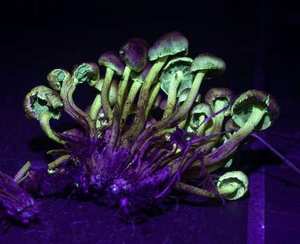
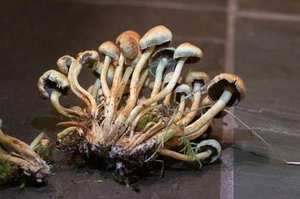
Psilocybin and psilocin — prodrug/active serotonergic hallucinogens. Psilocybin is dephosphorylated to psilocin, a 5-HT2A agonist.
Onset Time
15–60 minutes post-ingestion. Peak at 1–2 hours; duration 4–8 hours.
Key Field Features
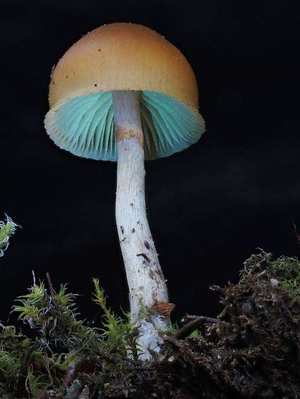
Small brown mushrooms (1–4 cm cap). P. semilanceata (Liberty Cap): conical cap with a nipple-like apex, grows in grassy areas and lawns. P. caerulipes (Blue-foot): woodland species. Blue staining on bruising or tissue damage — key field marker. Dark purple-brown spore print. Found throughout NE in lawns, fields, wood chips, and forest edges.
Clinical Symptoms
Visual hallucinations, synesthesia, perceptual distortions; euphoria or panic ("bad trip"); confusion, tachycardia, mild hypertension, mydriasis. Hyperthermia (rare, high-dose). Pediatric presentations: confusion, agitation, ataxia — may not exhibit typical hallucinogenic symptoms. Serotonin syndrome risk with concurrent serotonergic medications.
First Responder Guidance
Calm, low-stimulation environment; reassurance. Benzodiazepines (lorazepam 1–2 mg IV/IM) for severe anxiety, agitation, or delirium. Monitor temperature — cool agitated patients. Avoid antipsychotics first-line; consider olanzapine PO/IM if benzodiazepines insufficient. Cyproheptadine if serotonin syndrome features present. Most adults resolve within 6–8 hours without pharmacotherapy beyond reassurance.
Clinical Notes
Galerina marginata confusion:Psilocybe cyanescens and related species share habitat (wood chips, mulch) and appearance with the deadly Galerina marginata. Blue bruising distinguishes Psilocybe; Galerina does NOT bruise blue. Any unclear small brown mushroom from mulch where CNS symptoms develop: order liver function tests at 24 and 48 hours even if presentation appears consistent with psilocybin — failure to do so has resulted in missed amatoxin poisoning.
Molybdophyllysin (zinc metalloprotease) and other heat-stable GI toxins. NOT amatoxin. No organ failure toxidrome.
Onset Time
1–3 hours post-ingestion. Rapid onset helps distinguish from amatoxin species (>6 hr onset). Self-limiting in most cases within 6–12 hours.
Key Field Features
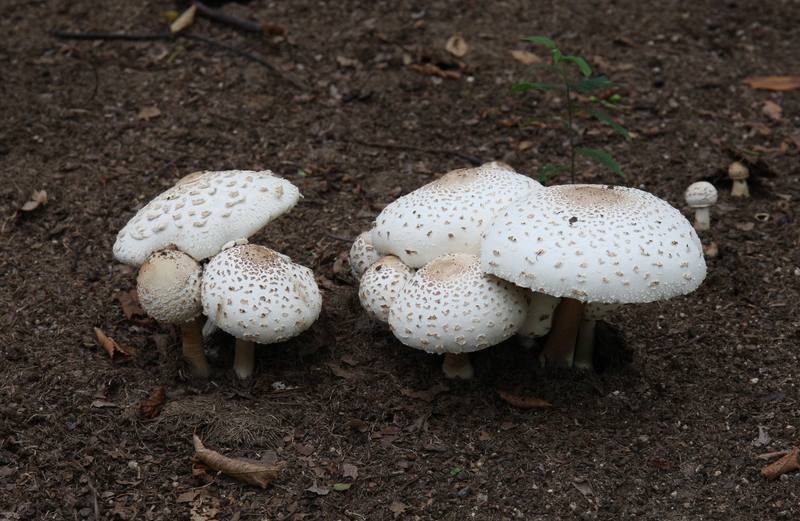
Large (10–30 cm) white mushroom with brownish fibrous scales and prominent double ring. Gills initially white, turning green at spore maturity. Green spore print — diagnostic (no edible species has a green spore print). Grows in lawns, parks, suburbs across the Northeast after summer rains. Among the most common toxic mushroom calls to NE poison centers.
Clinical Symptoms
Explosive nausea, vomiting, profuse watery to bloody diarrhea, severe abdominal cramping. Dehydration and electrolyte imbalance in severe cases. Hypotension from volume depletion. Liver and kidney NOT typically affected. Symptoms generally self-limited to 6–12 hours.
First Responder Guidance
Supportive: IV hydration, antiemetics, electrolyte replacement. No antidote. Monitor for dehydration. The rapid onset (<3 hr) is diagnostically useful — amatoxin poisoning (Death Cap, Galerina) has minimum 6-hour onset. Order LFTs if any uncertainty about species or timing.
Clinical Notes
Most dangerously confused with the edible Shaggy Parasol (Chlorophyllum rhacodes) and edible Parasol Mushroom (Macrolepiota procera) — all are large white scaly-capped lawn/field fungi. The green spore print is the definitive differentiator; edible species have white spore prints. Advise all foragers to always take a spore print before eating any large parasol-shaped mushroom.
Lead Poisoner — Entoloma sinuatum • Photo: Wikimedia Commons (CC)
Toxin Type
GI toxins — exact chemistry not fully characterized. Heat-stable compounds causing severe gastrointestinal irritation. No amatoxins, no orellanine — organ failure is rare.
Onset Time
30 minutes to 4 hours post-ingestion. GI symptoms can be violent and sudden. Most cases resolve within 12–24 hours with supportive care.
Key Field Features
Cap 5–20 cm, pale yellowish-gray to grayish-white, broadly convex with umbo. Gills initially white or pale, turning distinctly pink with age (from pink spore deposit). Stem white, stout. Pleasant mealy or floury odor. Pink spore print — diagnostic. Grows in mixed hardwood and oak woodland across the Northeast, summer and fall.
Clinical Symptoms
Sudden explosive onset of nausea, vomiting, severe abdominal cramps, profuse watery to bloody diarrhea. Severe dehydration in prolonged cases. Liver function generally NOT affected. Rare fatalities from dehydration in elderly or children.
First Responder Guidance
Supportive: IV hydration, antiemetics, electrolyte replacement. No antidote. Symptoms typically resolve within 12–24 hours. Consider GI decontamination if early ingestion with no contraindication.
Clinical Notes
One of the most common causes of mushroom poisoning in the Northeast. Dangerously confused with edible St. George's Mushroom (Calocybe gambosa), Tricholoma species, and other pale-capped woodland fungi. The pink gills at maturity (from pink spores) are the key differentiator — edible look-alikes have white gills. The mealy odor is shared by edible Calocybe. Always examine gill color carefully: pink gills = danger.
Clinical Disclaimer: This guide is an educational reference and does not replace clinical judgment, direct Poison Control guidance, or toxicology consultation. Species identification based on patient history is unreliable — treat suspected ingestions based on the clinical toxidrome and timeline, not assumed species. Always contact Poison Control (1-800-222-1222) for case-specific management guidance.
Toxic Mushroom Clinical Reference Flyer — Northeast Region
Request printed flyers to distribute to your colleagues — ideal for break rooms, nursing stations, and first responder vehicles. This edition covers toxic species prevalent in the Northeast United States.
✅ Request received! We'll be in touch shortly to confirm your mailing details and get your flyers on the way. Thank you for sharing this resource with your colleagues.
AI Data Methodology & Source Curation
AI Data Methodology & Source Curation
The Spore & Scout Clinical Reference Series was developed using advanced AI technology trained on peer-reviewed toxicological literature, published medical journals, documented mycological field research, and established poison control protocols. Regional species distribution data reflects multi-decade observational records cross-referenced against verified scientific sources.
Clinical content was synthesized by isolating complex mycological field markers and translating them into high-utility rapid triage protocols tailored specifically for frontline emergency healthcare providers.
All information reflects the accumulated documented expertise of professional mycologists, clinical toxicologists, and emergency medicine physicians. This AI-driven methodology ensures clinicians have immediate access to high-fidelity regional reference data for managing toxic mushroom ingestions.