Chanterelle Mushroom Identification: A Complete Field Guide
Of all the mushrooms worth learning, chanterelles may offer the best combination of reward and approachability. They're abundant in good years, unmistakable when you know what to look for, and extraordinary in the pan — buttery, fruity, and unlike anything you'll find at the grocery store. This guide covers everything a forager needs to confidently identify chanterelles: physical features, habitat, the critical look-alikes, and how to harvest without damaging next year's flush.
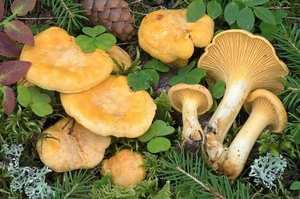
What Does a Chanterelle Look Like?
The golden chanterelle (Cantharellus cibarius and related North American species including C. lateritius and C. phasmatis) is a medium-sized mushroom with several distinct features that, taken together, make it one of the more reliably identifiable edible fungi.
Color
Chanterelles range from pale egg-yolk yellow to deep golden orange. The color is consistent across the cap, the underside, and the stem — there's no sharp color break between zones. Young buttons often show a deeper golden hue on the cap center and lighter margins. Older specimens can bleach slightly in direct sun or after rain, fading toward a dull tan. If you find a mushroom that's vivid orange on the cap but white or cream below, look more carefully — that's not typical chanterelle coloring.
The False Gills (Ridges)
This is the single most important feature to learn. Chanterelles do not have true gills. Instead, the underside of the cap is covered in forking, blunt-edged ridges — shallow, rib-like folds that run down the stem. These ridges are the same color as the cap flesh, and they fork repeatedly as they radiate outward from the stem, creating a distinctive forked, vein-like pattern.
Run your fingernail across them: you can't scrape them off. They're not separate structures attached to the cap — they're folds in the flesh itself. Compare this to a mushroom with true gills, which you can separate from the cap with a fingernail or the tip of a knife. If you can peel the gill structure away from the cap flesh, it's not a chanterelle.
The Smell
Pick up a chanterelle and bring it to your nose before anything else. A ripe chanterelle smells fruity and apricot-like — fresh, sweet, and faintly floral. It's a distinctive smell that's hard to describe but impossible to forget. When the fruity apricot aroma is strong, you have good confirmation you're on the right track. A mushroom that smells sour, earthy without any fruitiness, or unpleasant should be examined more carefully.
The Stem
Chanterelle stems are solid when you slice them lengthwise — no hollow center, no cottony fill. The stem tapers toward the base and is typically the same golden-yellow color as the cap, sometimes slightly paler. The flesh throughout the mushroom is firm and white to pale yellow when cut.
The Cap
Young chanterelles emerge as rounded buttons with inrolled margins. As they mature, the cap expands and the edges wave and roll irregularly — an older chanterelle often looks vase-shaped or funnel-shaped with a characteristic wavy, lobed margin rather than a clean, even edge. The surface is dry and smooth, sometimes slightly felty, not slimy or sticky.
Where and When to Find Chanterelles
Habitat
Chanterelles are mycorrhizal — they form a symbiotic relationship with the roots of living trees and grow from the soil, not from wood. This is important: chanterelles never grow from stumps, logs, or dead wood. If the mushroom you're looking at is growing directly from a log or stump, it's something else.
Look in mixed hardwood forests with mature oaks, beeches, and birches. Chanterelles favor well-drained slopes and ridges more than wet bottomland. They often grow in mossy areas, along the edges of old logging roads, in partial shade where dappled light reaches the forest floor. Once you find one, slow down and scan your immediate area — chanterelles rarely fruit alone. They scatter in loose groups across a patch of compatible ground.
Timing
In most of the Northeast and upper Midwest, the prime chanterelle window runs late July through October, with peak abundance typically in August and September. The trigger is warm soil combined with rainfall — after a good summer rain event following warm dry weather, chanterelles can appear in abundance within 48–72 hours. In the Pacific Northwest and California, timing shifts considerably, with winter rains driving a fall-through-spring season.
Chanterelles are slow-growing by mushroom standards. A flush that looks perfect today may still be harvestable in five to seven days, unlike delicate species that collapse overnight. This gives you a useful window.
The Look-Alikes: What to Watch For
Jack-o'-Lantern Mushroom (Omphalotus olearius / O. illudens)
The jack-o'-lantern is the chanterelle's most common confusion species and the one responsible for most chanterelle poisonings. It's toxic — causing severe gastrointestinal distress including vomiting and diarrhea within a few hours of consumption. The good news: every distinguishing feature points clearly away from chanterelle if you look.
- True gills vs. false gills: Jack-o'-lanterns have sharp, blade-like true gills that you can separate from the cap flesh with a fingernail. Chanterelles have blunt, forking ridges you cannot peel away. This one feature alone is definitive — learn to tell them apart and you'll never confuse these two again.
- Growth habit: Jack-o'-lanterns grow in dense clusters at the base of trees or from buried roots, often with many caps joined at the base. Chanterelles always grow singly or scattered — never in tight clusters joined at the base.
- Color: Jack-o'-lanterns are bright orange throughout, often more vivid and saturated than a chanterelle. They can also show orange or yellow gills that are denser and more numerous than chanterelle ridges.
- Bioluminescence: Jack-o'-lanterns glow faintly green in complete darkness. Take a specimen into a darkened room and allow 10–15 minutes for your eyes to fully dark-adapt. This isn't a field test for most situations, but it's a remarkable confirmation.
- Smell: Lacks the fruity apricot fragrance of chanterelle. The odor is mildly unpleasant or neutral.
False Chanterelle (Hygrophoropsis aurantiaca)
The false chanterelle (also called the orange false chanterelle) is bright orange with a funnel shape — similar at first glance to a chanterelle. Key differences:
- True gills: Has densely packed, true gills — not blunt ridges. They fork, but they're much thinner and more crowded than chanterelle ridges, and they can be separated from the cap.
- Texture: Velvet-fuzzy cap surface, which chanterelles lack.
- Color: Often a more uniform, deeper orange than golden chanterelle.
- Growth: Can grow from soil or from woody debris. Chanterelles only grow from soil.
The false chanterelle's toxicity is debated — it's caused illness in some people and been eaten without issue by others. Either way, its true gills make it easy to separate from chanterelle once you know what to look for.
Harvest Tips
Chanterelles grow slowly, and the mycelium that produces them is a perennial resource. Harvest sustainably to protect your patches for future seasons:
- Cut, don't pull: Use a knife to cut the stem near the base rather than pulling the entire mushroom. This minimizes disturbance to the mycelium below.
- Leave the small ones: A chanterelle button will be worth twice as much in three days. Harvest mature, open caps first and let the young buttons develop.
- Mesh basket: Carry your harvest in a mesh bag or wicker basket rather than a sealed plastic bag. The spores drop as you walk, potentially spreading the fungi to new areas.
- Clean in the field: Brush debris from caps with a soft brush as you go. Chanterelles clean up well in the field and stay firmer longer when not held in damp, sealed containers.
- Don't overharvest a single patch: If you find a large flush, take what you'll actually use and leave the rest. Chanterelles can fruit from the same mycelial network for decades.
Take Your Look-Alike Knowledge Further
Chanterelles are one of the most rewarding mushrooms to forage — but the jack-o'-lantern confusion is real and the consequences of getting it wrong are miserable. If you want a comprehensive reference that covers the full landscape of edible/toxic confusion pairs — not just chanterelles — our Edible vs. Toxic Look-Alike Reference Pack is designed exactly for this purpose. Side-by-side comparison charts, field features, and key tests for the most commonly confused pairs in the Northeast.
Get the Look-Alike Reference Pack — $19
Join a growing community of mushroom foragers
Learn to identify what you pick before you eat it — share finds, ask questions, and forage with confidence alongside thousands of fellow hunters.
Join the Community