Centro de Control de Envenenamiento de Puerto Rico: 787-763-2333
PUERTO RICO REGION

Updated and reviewed — June 2026

⚠ Disclaimer: This regional reference tool is for educational and rapid decision-support purposes only. It does not replace clinical judgment, institutional protocols, or direct consultation with Medical Toxicology or Poison Control (1-800-222-1222 or local PR center 787-763-2333), which should be initiated immediately upon suspected toxic ingestion.
Clinical Use Only. This reference is intended for healthcare providers, poison control specialists, and trained foragers. It is not a foraging identification guide. Always contact Poison Control (1-800-222-1222) or the local PR center (787-763-2333) for real-time case management guidance. Treatment recommendations should be confirmed against current clinical guidelines.
Regional Scope: Puerto Rico’s tropical climate, diverse microclimates (montane rainforest, coastal dry forest, agricultural zones), and introduction of non-native trees have created a unique mycological environment. Chlorophyllum molybdites is the most common cause of mushroom poisoning in Puerto Rico, occurring year-round in lawns and parks. Amatoxin-bearing Galerina marginata grows on decaying tropical hardwood. Psilocybe guilartensis is a Puerto Rico endemic found in Guilarte forest. Pediatric and visitor exposures represent a significant proportion of cases.
Quick Reference — Key Puerto Rico Species
Common Name Scientific Name Tier Toxin Onset Primary Risk
Funeral Bell Galerina marginata Tier 1 Amatoxins (α-amanitin) 6–24 hr Fulminant hepatic necrosis — potentially fatal
Caribbean Amanita (cf.) Amanita cf. proxima Tier 1 Amatoxins (treat as confirmed) 6–24 hr Hepatorenal syndrome — taxonomy pending, treat as amatoxin
Green-Spored Parasol Chlorophyllum molybdites Tier 2 Molybdophyllysin (GI) 30 min–3 hr #1 cause of mushroom poisoning in PR — violent GI crisis
Caribbean Inocybe Inocybe cubensis Tier 2 Muscarine 15–60 min Cholinergic toxidrome — SLUDGE syndrome
Domestic Ink Cap Coprinellus domesticus Tier 2 Minimal (no coprine) Variable Misidentification risk; generally minimal toxicity
Common Earthball Scleroderma citrinum Tier 2 Sclerodermin (GI irritant) 1–4 hr GI irritation; misidentified as edible truffle
Antilles Mottlegill Panaeolus antillarum Tier 2 None (non-psychoactive) N/A — misidentification risk Misidentification with Panaeolus cyanescens; evaluate for psilocybin exposure
Desert Ink Cap Podaxis pistillaris Non-Toxic None (mechanical irritant only when mature) Variable (mature spores) Mechanical GI irritation from mature spore mass; not chemical toxicity
Guilarte Psilocybe (PR Endemic) Psilocybe guilartensis Tier 3 Psilocybin / Psilocin 15–60 min Hallucinations, agitation — PR endemic, Guilarte forest
Purple-Staining Gymnopilus Gymnopilus purpuratus Tier 3 Psilocybin / Psilocin 15–60 min Hallucinations; grows on wood debris
Tier 1 — Life-Threatening

Potentially Fatal Species

These species can cause irreversible organ failure even from small ingestions. Any suspected exposure requires immediate emergency evaluation and Poison Control contact.
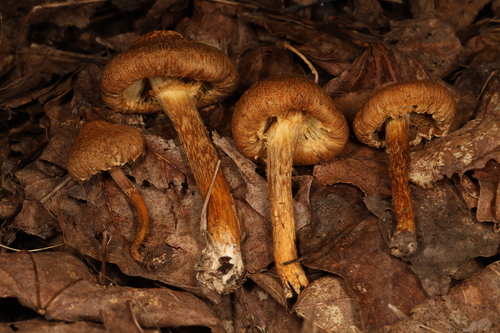
Galerina marginata — small brown mushroom growing on decaying wood with rusty-brown spore print
Photo © iNaturalist (CC BY-NC)

Funeral Bell

Galerina marginata
Tier 1 — Life-Threatening 6 to 24 hours (latent phase)
Identification Features
2–4 cm wide, honey-brown to tawny cap; smooth, hygrophanous; gills brown, adnate; stem 3–10 cm, fibrous with a partial veil remnant (ring); grows in clusters on decaying tropical hardwood and logs; spore print rusty brown.
Toxic Compound(s)
Amatoxins — alpha-amanitin identical in potency to Death Cap (Amanita phalloides).
Onset Time
6–24 hours post-ingestion. Asymptomatic latent phase masks severity.
Mechanism of Toxicity
Alpha-amanitin inhibits RNA polymerase II, blocking protein synthesis. Preferential toxicity to hepatocytes and renal tubular cells.
Clinical Symptoms
Phase 1 (6–24 hr): nausea, vomiting, diarrhea. Phase 2 (24–48 hr): apparent improvement (dangerous latent phase). Phase 3 (48–96 hr): fulminant hepatic necrosis, coagulopathy, renal failure, hepatic coma.
Treatment Protocols
Immediate Poison Control consultation. Early aggressive IV hydration, N-acetylcysteine (NAC) hepatoprotection, IV silibinin (Legalon SIL) if available. Serial LFTs, PT/INR, creatinine every 6–12 hours. Early hepatology referral; liver transplant evaluation if fulminant hepatic failure develops. Do not discharge during latent phase — apparent improvement is deceptive.
Look-Alike Warning: Honey Mushrooms (Armillaria spp.) and velvet shanks (Flammulina spp.) which are edible. Critical differentiator: Galerina marginata has a rusty-brown spore print; edible lookalikes have white spore prints.
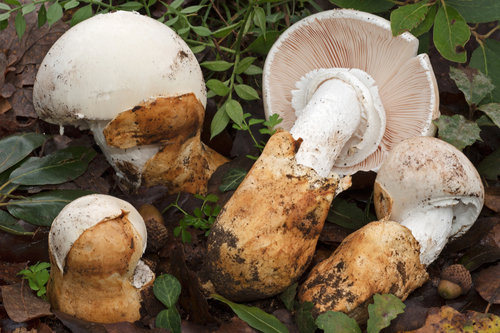
Amanita proxima — white Amanita with prominent volva, ring, and white gills characteristic of amatoxin-bearing Amanita species
Photo © iNaturalist (CC BY-NC)

Caribbean Amanita (cf.)

Amanita cf. proxima
Tier 1 — Life-Threatening 6 to 24 hours (latent phase)
Identification Features
Caribbean Amanita closely related to or matching A. proxima (taxonomy under ongoing revision). White to pale ochre cap, 5–12 cm; prominent volva at stem base; white ring; white free gills; spore print white. Found in forests and disturbed habitats. Treat any unidentified white Amanita with volva as amatoxin-bearing until ruled out.
Toxic Compound(s)
Presumed amatoxins (alpha- and beta-amanitin) pending final Caribbean taxonomy confirmation. Treat as confirmed amatoxin ingestion.
Onset Time
6–24 hours; hepatotoxic phase 48–96 hours.
Mechanism of Toxicity
RNA polymerase II inhibition (amatoxin mechanism). Enterohepatic recirculation prolongs toxic exposure.
Clinical Symptoms
Triphasic: GI crisis (6–24 hr) → latent improvement → hepatorenal syndrome (48–96 hr). Coagulopathy, elevated transaminases (may exceed 10,000 IU/L), encephalopathy.
Treatment Protocols
Treat identically to confirmed amatoxin poisoning. Immediate Poison Control contact. Aggressive fluid support, NAC infusion, IV silibinin if available. Do not wait for toxin confirmation — initiate treatment based on clinical suspicion and species morphology. Early liver transplant evaluation if synthetic function deteriorates.
Hepatorenal Lab Monitoring Timeline
Frequency: Every 6 hours (q6h) for first 48 hours, then every 12 hours until Day 5 if patient stabilizes.

Required Panels:
• Hepatic: ALT, AST, Total & Direct Bilirubin
• Renal: Serum Creatinine, BUN, Fractional Excretion of Sodium (FENa)
• Coagulation: INR, PT, PTT
• Metabolic: Glucose, Potassium, Blood Lactate, Arterial Blood Gas (ABG)

Clinical Timeline:
• 0–12 Hours: Silent incubation. Baseline labs generally normal.
• 12–24 Hours: Severe GI symptoms. Mild BUN/Creatinine elevations from dehydration.
• 24–48 Hours: Absolute Renal Divergence. Creatinine and BUN climb steeply even after aggressive rehydration. Transaminases begin rapid rise.
• 48–72+ Hours: Peak organ damage. LFTs spike toward maximums. If INR rises above 3.5 or any confusion or altered mental status appears, initiate emergency liver transplant consultation immediately.
Taxonomy Note: Caribbean Amanita taxonomy is actively being revised. Until molecular confirmation, all white Amanita spp. with a volva found in PR should be treated as potentially amatoxic.
Tier 2 — Serious / Hospitalisation Likely

High-Risk Species Requiring Medical Evaluation

These species cause severe toxicity requiring emergency evaluation and often hospitalisation. Fatalities are uncommon but serious complications including dehydration, cardiovascular instability, and organ stress are well-documented.
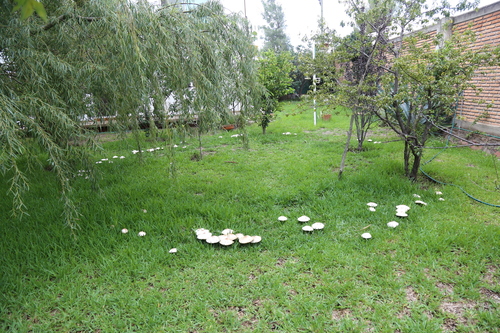
Chlorophyllum molybdites — large white scaly cap in lawn; greenish gill colour is the primary diagnostic feature
Photo © iNaturalist (CC BY-NC)

Green-Spored Parasol

Chlorophyllum molybdites
Tier 2 — Serious 30 minutes to 3 hours
Identification Features
5–30 cm wide, white to buff cap with brownish liftable scales; gills white becoming grey-green; stem with double-layered ring; spore print dull green to olive-green; found year-round in lawns, parks, roadsides, and golf courses throughout Puerto Rico.
Toxic Compound(s)
Molybdophyllysin — a zinc-metalloprotease GI toxin.
Onset Time
30 minutes to 3 hours post-ingestion.
Mechanism of Toxicity
Severe GI mucosal irritation, rapid fluid and electrolyte loss through gastroenteritis; hypovolemia is the primary complication.
Clinical Symptoms
Violent vomiting, severe abdominal cramps, explosive watery diarrhea; severe dehydration; potential acute kidney injury from fluid losses. Self-limited but serious in children and elderly.
Treatment Protocols
Aggressive IV fluid resuscitation, antiemetics (ondansetron), electrolyte replacement. Activated charcoal generally contraindicated due to violent emesis. Monitor renal function. Admission for severe dehydration or paediatric cases.
Pediatric Volume Resuscitation Protocol

Severe gastrointestinal toxicity from Chlorophyllum molybdites can mimic cholera-like fluid loss in pediatric patients. Dehydration status must be evaluated immediately using the Clinical Dehydration Scale (CDS).

Mild-to-Moderate Dehydration (Hemodynamically Stable):

  • Attempt Oral Rehydration Therapy (ORT) using a standard low-osmolality solution (e.g., Pedialyte).
  • Administer 50–100 mL/kg over 2 to 4 hours in small, frequent increments (e.g., 5 mL every 1–2 minutes via syringe).
  • If vomiting persists, consider a single dose of Ondansetron (0.15 mg/kg IV or orally disintegrating tablet; max 8 mg) to facilitate ORT.

Severe Dehydration or Hypovolemic Shock (Altered Mental Status, Delayed Capillary Refill >3s, Hypotension):

  • Establish immediate IV or IO access.
  • Administer an initial rapid fluid bolus of 20 mL/kg of an isotonic crystalloid (Normal Saline or Balanced Salt Solution/Lactated Ringer’s) over 5 to 15 minutes.
  • Reassess: Evaluate heart rate, capillary refill, mental status, and blood pressure after the first bolus.
  • Repeat 20 mL/kg boluses up to a total of 60 mL/kg within the first hour if signs of shock persist, monitoring closely for hepatomegaly or pulmonary rales indicating fluid overload.

Maintenance and Electrolyte Monitoring:

  • Once hemodynamic stability is restored, initiate maintenance fluids using the 4-2-1 Rule (4 mL/kg/hr for the first 10 kg, 2 mL/kg/hr for the next 10 kg, 1 mL/kg/hr for each kg above 20 kg).
  • Draw immediate point-of-care electrolytes. Monitor closely for hypokalemia and hyponatremia/hypernatremia driven by severe fluid shifts, and correct deficiencies incrementally to avoid central pontine myelinolysis.
Lawn Checklist: Chlorophyllum molybdites vs. Urban San Juan Lookalikes
Physical Feature Chlorophyllum molybdites (Toxic) Leucoagaricus / Agaricus (Lookalikes)
Spore Print Color Dull green to olive-gray — absolute diagnostic anchor Pure white (Leucoagaricus) or chocolate-brown (Agaricus)
Gill Maturity Tint Gills start white, turn greenish-gray as mushroom matures Stay white, turn yellow/red when bruised, or deep pink-to-brown
Flesh Color Change Cutting stalk turns flesh slowly saffron-orange or dingy red Turns instantly bright yellow or deep bruising red (L. americanus)
Ring (Annulus) Large, thick, double-edged ring that slides up and down stem Fixed, fragile ring that shreds or stays firmly attached
Look-Alike Warning: Edible Parasol (Macrolepiota procera) and edible Leucoagaricus spp. Differentiator: C. molybdites produces a green spore print — no edible species in PR has a green spore print.
Inocybe sp. from Caribbean — small brown fibrous-capped mushroom characteristic of Inocybe cubensis found in disturbed soils
Photo © iNaturalist (CC BY-NC)

Caribbean Inocybe

Inocybe cubensis
Tier 2 — Serious 15 to 60 minutes
Identification Features
Small, 2–5 cm, conical to umbonate brown cap with radially fibrous (silky) surface; brown gills; brown fibrous stem; spore print clay-brown; distinctive earthy or spermatic odour; grows in disturbed soils, roadsides, gardens, and forest margins throughout PR.
Toxic Compound(s)
Muscarine — muscarinic acetylcholine agonist.
Onset Time
15–60 minutes post-ingestion.
Mechanism of Toxicity
Muscarinic receptor agonism causing parasympathomimetic hyperstimulation.
Clinical Symptoms
Classic SLUDGE/DUMBELS cholinergic toxidrome: Salivation, Lacrimation, Urination, Defecation, GI distress, Emesis; bradycardia, bronchospasm, miosis, diaphoresis. Severe cases may develop respiratory failure.
Treatment Protocols
Atropine is the antidote — titrate to drying of secretions (not heart rate alone). Dose: 1–2 mg IV every 5–10 minutes until secretions controlled; total dose may exceed 10–20 mg in severe cases. Supportive: oxygen, airway management, IV fluids. Pralidoxime is NOT indicated (muscarine toxidrome is non-organophosphate).
Pediatric Weight-Based Atropine Dosing (Cholinergic Crisis)
Initial Resuscitation & Titration:
• Indication: Severe bradycardia, bronchospasm, or severe life-threatening airway secretions.
• Pediatric Dose: 0.02 mg/kg IV or IO (minimum single dose: 0.1 mg; maximum single dose: 0.5 mg).
• Dosing Interval: Repeat every 3 to 5 minutes as needed.
• Clinical Goal: Titrate until bronchial secretions dry up and wheezing clears. Do not stop titrating based on heart rate or pupil dilation alone.

Continuous Infusion (For Severe, Persistent Excess Secretions):
• Calculation: Calculate 10% to 20% of the total cumulative dose required to reverse initial respiratory symptoms.
• Rate: Administer this calculated amount per hour as a continuous IV infusion.
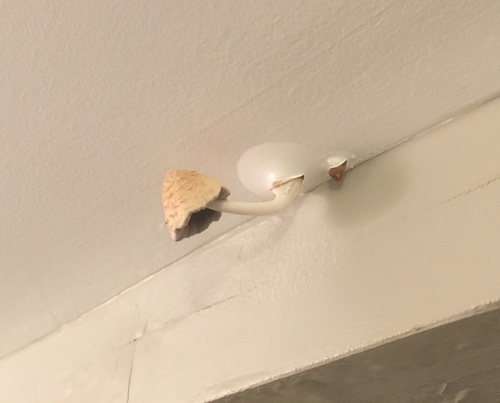
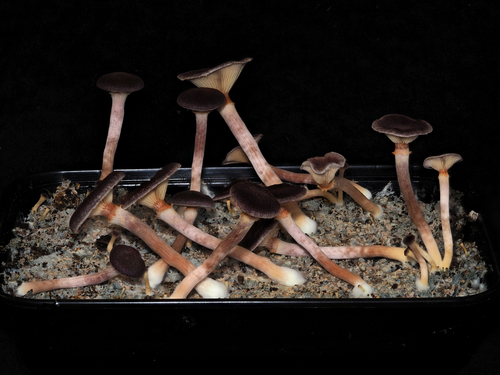
Coprinellus domesticus — small brownish ink cap mushroom growing in clusters near wood
Photo © iNaturalist (CC BY-NC)

Domestic Ink Cap

Coprinellus domesticus
Tier 3 — Low Concern Variable
Identification Features
3–6 cm oval to bell-shaped cap, pale buff-brown with tawny centre; gills pale then auto-digesting to black ink (deliquescing); stem slender, white, hollow; grows in clusters on or near wood, decaying plant matter, and disturbed soils; common in and around buildings in PR.
Toxic Compound(s)
None. Coprinellus domesticus does not contain the mycotoxin coprine and does not trigger a disulfiram-like reaction.
Onset Time
Variable. Mild gastrointestinal symptoms may occur if consumed raw or in large quantities.
Mechanism of Toxicity
No known chemical mycotoxins. Any gastrointestinal effects are non-specific and related to raw consumption or large quantities, not an identifiable toxic compound.
Clinical Symptoms
Generally minimal to none. Mild, transient gastrointestinal upset may occur if consumed raw or in large quantities. No cardiovascular or alcohol-related symptoms expected.
Clinical Note
While Coprinellus domesticus is a member of the ink cap family (Psathyrellaceae), it does not contain the mycotoxin coprine and does not trigger a disulfiram-like reaction when co-ingested with alcohol. The primary species responsible for this specific toxidrome is Coprinopsis atramentaria (the Common Inkcap). Ingestion of Coprinellus domesticus generally results in minimal to no clinical symptoms, though mild, transient gastrointestinal upset may occur if consumed raw or in large quantities.
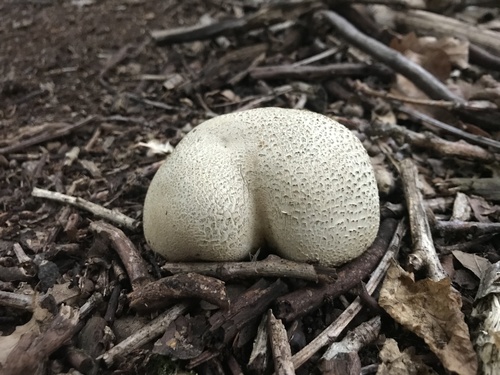
Scleroderma citrinum — toxic earthball: round, firm, yellow-brown warty exterior; dark purple-black interior spore mass
Photo © iNaturalist (CC BY-NC)

Common Earthball

Scleroderma citrinum
Tier 2 — Serious 1 to 4 hours
Identification Features
3–12 cm round to irregular puffball-like fruiting body; firm, leathery, yellow-brown to ochre exterior with flat or raised warts; interior: dark purple-black spore mass when mature (contrast with edible puffballs which have white, homogeneous flesh); no true stalk; found on soil in forests and disturbed ground.
Toxic Compound(s)
Sclerodermin and other GI irritant compounds; mechanism incompletely characterised.
Onset Time
1–4 hours post-ingestion.
Mechanism of Toxicity
GI mucosal irritation; potential systemic toxicity with large ingestions. Has been misidentified as truffle by foragers unfamiliar with local species.
Clinical Symptoms
Nausea, vomiting, severe abdominal cramping, diarrhea. Large ingestions reported to cause neurological symptoms and cardiovascular depression. Typically resolves with supportive care.
Treatment Protocols
Supportive: IV fluids, antiemetics, electrolyte replacement. Activated charcoal may be considered if presentation within 1 hour of ingestion and no severe vomiting. Monitor for neurological and cardiovascular changes with large ingestions.
Look-Alike Warning: Misidentified as edible truffles (Tuber spp.) by foragers. Key differentiator: Scleroderma has a dark purple-black interior; edible truffles have white or marbled interior flesh. Also confused with edible puffballs (Calvatia, Lycoperdon).
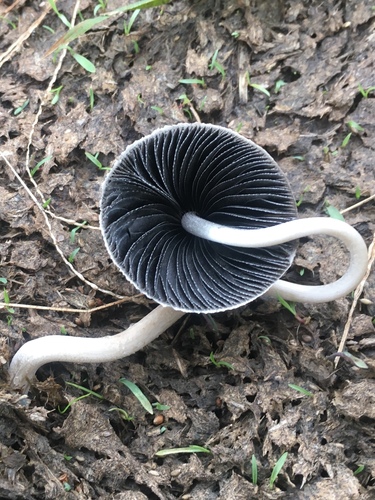
Panaeolus antillarum — mottled gilled mushroom with brown cap growing in tropical grassland
Photo © iNaturalist (CC BY-NC)

Antilles Mottlegill

Panaeolus antillarum
Tier 3 — Low Concern (Misidentification Risk) N/A — non-psychoactive
Identification Features
3–8 cm, whitish to grey-brown convex cap, smooth; gills mottled grey-black at maturity (characteristic of Panaeolus); slender grey stem; spore print black; found in lawns, pastures, and dung-enriched soils throughout PR’s tropical lowlands.
Toxic Compound(s)
None. Panaeolus antillarum is a strictly non-psychoactive species that entirely lacks psilocybin or related serotonergic compounds.
Onset Time
Not applicable. This species does not produce psychoactive or serotonergic symptoms.
Mechanism of Toxicity
No toxicological mechanism. Clinical relevance is entirely from misidentification with Panaeolus cyanescens (Blue Staining Copelandia), which is highly psychoactive and grows in the same habitats.
Clinical Symptoms
None expected from P. antillarum itself. If a patient presents with serotonergic or hallucinogenic symptoms after consuming a mushroom identified as this species, assume misidentification with Panaeolus cyanescens or a related psilocybin-containing species.
Clinical Note
Panaeolus antillarum is a strictly non-psychoactive (inactive) species that entirely lacks psilocybin or related serotonergic compounds. The clinical relevance of this species in Puerto Rico stems entirely from misidentification. It grows in the exact same dung-rich habitats and shares a strong macroscopic resemblance to Panaeolus cyanescens (Blue Staining Copelandia), which is highly psychoactive. Clinicians should evaluate patients presenting with serotonergic or hallucinogenic symptoms under the assumption that Panaeolus cyanescens or a related psilocybin-containing species was the actual fungus consumed.
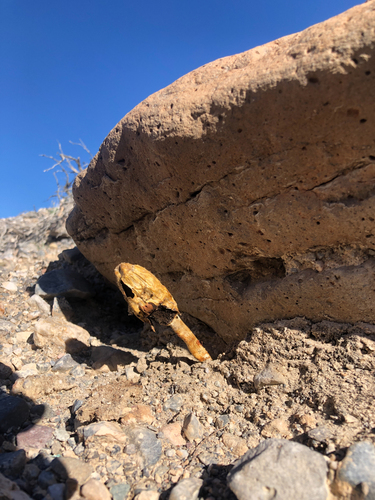
Podaxis pistillaris — elongated club-shaped dry coastal mushroom with tan exterior and powdery dark interior
Photo © iNaturalist (CC BY-NC)

Desert Ink Cap

Podaxis pistillaris
Non-Toxic Variable (mature spores only)
Identification Features
5–20 cm elongated club-shaped fruiting body; tough, papery tan to cream exterior; interior powdery brown-black spore mass at maturity; no gills (gasteroid); prominent fibrous stalk embedded in substrate; found in dry, sandy coastal areas and arid zones of southwestern and northern PR (Guánica area).
Toxic Compound(s)
None. Podaxis pistillaris does not possess intrinsic chemical mycotoxins. Historically classified as non-toxic and edible when young, white, and prior to spore maturation.
Onset Time
Variable. Mechanical irritation from mature spore mass may cause gastrointestinal symptoms; no chemical toxicological onset.
Mechanism of Toxicity
No chemical toxicity. If ingested when fully mature — when the internal gleba has converted into a dry, woody, blackish spore mass — mechanical gastrointestinal irritation and nausea may result from indigestible spore density rather than chemical toxicity.
Clinical Symptoms
Mechanical gastrointestinal irritation and nausea if ingested fully mature. Symptoms are due to indigestible spore density, not chemical poisoning. Young, white specimens are historically considered non-toxic and edible.
Clinical Note
Podaxis pistillaris is historically classified as a non-toxic and edible species when young, white, and prior to spore maturation. It does not possess intrinsic chemical mycotoxins. If ingested when fully mature—when the internal gleba has converted into a dry, woody, blackish spore mass—it can cause mechanical gastrointestinal irritation and nausea due to indigestible spore density, rather than chemical toxicity. It should be managed with simple oral hydration or outpatient observation if symptoms arise.
Tier 3 — Psychoactive / Monitor

Psychoactive Species Requiring Observation

These species cause psychoactive toxicity. Direct fatalities are rare but severe agitation, self-harm risk, and drug interaction effects (serotonin syndrome) require clinical monitoring. Duration of symptoms should guide observation period.

Photo pending — UPR Mayagüez herbarium request in progress

Guilarte Psilocybe

Psilocybe guilartensis — Puerto Rico Endemic
Tier 3 — Psychoactive / Monitor 15 to 60 minutes
Identification Features
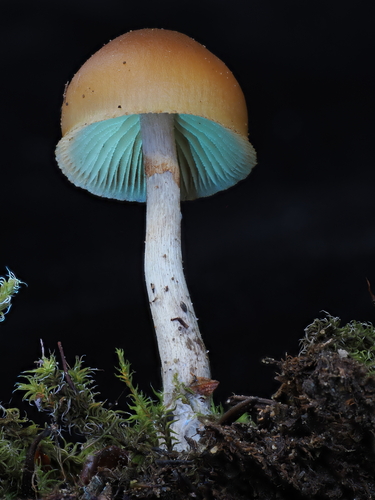
Puerto Rico endemic; described from Bosque del Estado de Guilarte (Adjuntas). Small, hygrophanous caramel-brown cap; bruising blue-green when damaged (diagnostic for psilocybin content); found in montane forest at elevation. Taxonomy based on Caribbean Psilocybe collections — limited morphological data available in clinical literature.
Toxic Compound(s)
Psilocybin and psilocin (serotonin 5-HT2A agonists).
Onset Time
15–60 minutes; duration typically 4–6 hours.
Mechanism of Toxicity
Psilocin is a partial serotonin 5-HT2A agonist causing altered perception and psychedelic effects. Risk of serotonin syndrome with concurrent serotonergic drugs.
Clinical Symptoms
Visual and auditory hallucinations, anxiety, panic attacks, agitation, tachycardia, pupil dilation, diaphoresis. Rare: seizures, respiratory depression with large ingestions or polydrug use. Risk of serotonin syndrome with SSRIs/MAOIs.
Treatment Protocols
Calm, low-stimulation environment with reassurance. Benzodiazepines (diazepam or lorazepam) for severe agitation or anxiety. Haloperidol for refractory agitation. Assess for serotonin syndrome; check all medications. Observation until resolution of symptoms (typically 4–6 hours). Do not administer phenothiazines (may lower seizure threshold).
Gymnopilus purpuratus — orange-brown bitter gymnopilus growing on wood debris with rusty gills
Photo © iNaturalist (CC BY-NC)

Purple-Staining Gymnopilus

Gymnopilus purpuratus
Tier 3 — Psychoactive / Monitor 15 to 60 minutes
Identification Features
4–12 cm bright orange to rusty-orange cap, dry, with fibrous surface; gills yellow-orange becoming rusty; stem orange, often with partial veil remnant; flesh turning purplish-blue when cut (psilocybin indicator); intensely bitter taste; spore print rusty-orange; grows in clusters on wood debris, stumps, and buried wood throughout PR.
Toxic Compound(s)
Psilocybin, psilocin, and gymnopilins (bitter sesquiterpenes that may modulate toxicity).
Onset Time
15–60 minutes; effects typically 4–8 hours depending on ingested quantity.
Mechanism of Toxicity
Psilocin is a 5-HT2A partial agonist; gymnopilins may contribute to additional CNS effects distinct from classic psilocybin trips. Bitterness often limits ingestion, reducing dose.
Clinical Symptoms
Hallucinations, dizziness, GI upset from gymnopilins, tachycardia, dilated pupils. Presentation may include more GI distress than pure psilocybin species due to bitter gymnopilins. Risk of serotonin syndrome with serotonergic medications.
Treatment Protocols
Calm, supportive environment; benzodiazepines for agitation. Antiemetics for nausea/vomiting from gymnopilins. Cardiac monitoring. Observation until symptom resolution (4–8 hours). Assess for polydrug use and serotonergic drug interactions. Haloperidol for refractory agitation if needed.

Puerto Rico Regional Notes

Puerto Rico’s year-round tropical conditions, high humidity, and diverse microclimates (El Yunque rainforest, Guilarte montane, Guánica dry coastal) support a unique fungal community distinct from North American temperate regions. Key clinical considerations: (1) Chlorophyllum molybdites peaks after seasonal rains but occurs year-round; (2) Amatoxin species such as Galerina marginata are present on decaying hardwood despite the tropical setting; (3) Taxonomy of Caribbean Amanita spp. is under active revision — treat unknown white Amanita with volva as amatoxic; (4) Children constitute a high proportion of ingestion cases in PR — paediatric dosing considerations apply; (5) Psilocybin species are controlled substances — obtain toxicological confirmation for legal documentation purposes when required.

🧪 Sample Preservation Checklist — Specimen for Mycological ID