Hospital General Agustín O'Horán, Mérida, Yucatán — referencia toxicológica regional | Campus CCBA UADY — Veterinaria, Mérida
⚠ Disclaimer: This regional reference tool is for educational and rapid decision-support purposes only. It does not replace clinical judgment, institutional protocols, or direct consultation with Medical Toxicology or emergency services. Contact
911 immediately upon suspected toxic mushroom ingestion in Mexico.
Clinical Use Only. This reference is intended for emergency physicians, toxicologists, EMS personnel, poison control specialists, and other licensed healthcare providers responding to suspected mushroom toxicity cases. It is not a guide for foragers or laypersons. For active poisoning cases, contact
911 immediately for real-time case management support. Confirm all treatment decisions with current institutional protocols.
Regional Scope: Mexico’s Tropical Lowlands & Yucatán Peninsula region encompasses Yucatán, Quintana Roo, Campeche, and the low-elevation tropical coastal zones of Tabasco and Veracruz. This region presents a distinct clinical profile driven by high-humidity lowland tropical ecosystems: year-round warm temperatures promote abundant saprobic and coprophilous fungi across coastal lawns, resort golf courses, cattle pastures, and ornamental gardens. The critical regional risks include severe gastrointestinal toxicity from Chlorophyllum molybdites — the most common cause of mushroom poisoning in tropical Americas — and Lycoperdonosis from inhalation of mature Lycoperdon spores, a significant risk in both pediatric and veterinary (canine) cases.
Quick Reference — All 5 Species
| Common Name |
Scientific Name |
Tier |
Toxin |
Onset |
Primary Syndrome |
| False Parasol |
Chlorophyllum molybdites |
Tier 2 |
GI Proteins |
1–3 hr |
Severe enterotoxic GI crisis |
| Angel's Wings |
Pleurocybella porrigens |
Tier 2 |
Amino acid derivatives |
Delayed |
Delayed encephalopathy |
| Common Puffball |
Lycoperdon perlatum |
Tier 3 |
Spore inhalation |
Hours |
Lycoperdonosis (alveolitis) |
| Flowerpot Parasol |
Leucocoprinus birnbaumii |
Tier 3 |
GI Irritants |
1–3 hr |
GI irritation (toddler/pet risk) |
| Solid Stemmer |
Panaeolus antillarum |
Tier 3 |
Mildly toxic / diagnostic |
Variable |
Anxiety, GI upset, ID confusion |
Nahuatl Name
Zacananacatl — "Pasture/grassland mushroom"
Ecological Niche
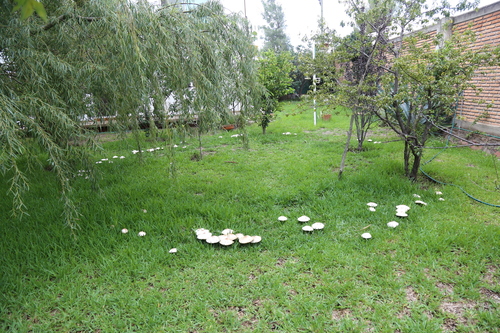
Coastal lawns, resort golf courses, humid grazing pastures after heavy tropical rains. One of the most abundant large mushrooms in tropical lowland grassy areas throughout the Yucatán Peninsula and Caribbean coast.
Identification Features
Cap 8–30 cm, white with brown scales; gills white in youth turning green with age (green spore print is diagnostic); stipe with moveable ring; large ring with double skirt. Distinguished from edible parasols by green gill/spore color.
Toxin Class
Gastrointestinal proteins — enterotoxic proteins cause direct mucosal irritation and inflammatory cascade leading to rapid severe gastroenteritis with significant fluid loss.
Onset Timeline
1–3 hours post-ingestion. Explosive, rapid-onset nausea, profuse vomiting, watery to bloody diarrhea. Hypovolemic shock risk in pediatric patients and elderly. Resolution typically within 12–24 hours with rehydration.
Lookalike Confusion
⚠ Confused with edible parasol mushrooms (Macrolepiota procera and related species). Key differentiator: green-tinged gills and green spore print are unique to C. molybdites — no edible look-alike produces green spores. Young specimens with white gills are the primary confusion point.
Treatment
Aggressive IV crystalloid volume replacement is the primary intervention. Correct severe hypokalemia from fluid losses. Ondansetron for antiemetic control. Monitor for hypovolemic shock — risk highest in children and elderly. Supportive; no specific antidote.
Nahuatl Name
Cuappatlachtli — "Shelf-like tree mushroom"
Ecological Niche
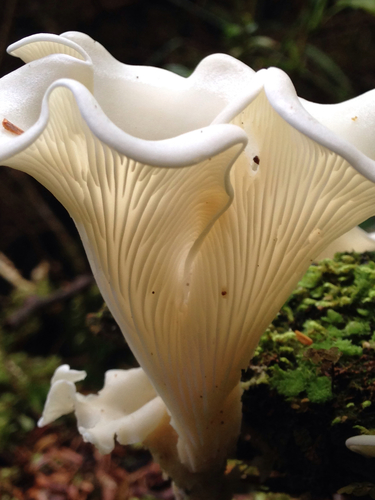
Shelf-like clusters on decaying tropical logs and damp forest wood debris. Grows on rotting conifer and hardwood in humid lowland forest environments and disturbed woodland margins throughout tropical zones.
Identification Features
Caps 2–8 cm, pure white, fan- or shell-shaped, growing in overlapping clusters on dead wood; gills white, crowded; no stipe or rudimentary lateral stipe; thin, brittle, fragile flesh. Closely resembles oyster mushrooms in form and substrate.
Toxin Class
Unstable amino acids / azetidine derivatives — mechanism not fully elucidated. Delayed encephalopathy is the primary presentation; toxicity markedly amplified in patients with pre-existing renal insufficiency.
Onset Timeline
Delayed — neurological symptoms may emerge days after ingestion. Altered mental status, confusion, seizures in severe cases, particularly in patients with renal compromise. The delay makes clinical correlation with ingestion challenging.
Lookalike Confusion
⚠ Mistaken for edible wild oyster mushrooms (Pleurotus ostreatus) — both grow shelf-like on decaying wood and share white coloration and similar form. The absence of a true stipe and the more fragile, brittle texture of P. porrigens are distinguishing features.
Treatment
Supportive care & neurological protection. Urgent hemodialysis if renal insufficiency is present or develops. Benzodiazepines for seizure management. Close neurological monitoring. Consult nephrology early in patients with any renal history.
Nahuatl Name
Ehecananacatl — "Wind/breath mushroom"
Ecological Niche
Saprobic on rich soil, decaying wood, leafy forest floors across lowland clearings. Abundant in disturbed ground, forest margins, and grassy tropical woodland openings throughout the Yucatán and lowland zones.
Identification Features
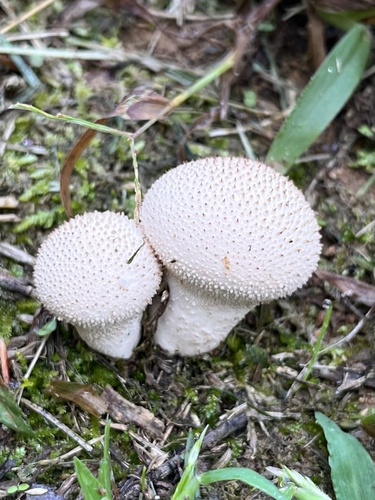
Globose to pear-shaped fruiting body 2–6 cm; white with small conical spines (warts) when young, maturing to tan-brown and papery; interior white and firm when edible-young, becoming yellowish then brown and powdery at maturity. Mature specimens release spores in visible puffs when disturbed.
Toxin Class
Physical spore irritation — no systemic chemical toxin. Lycoperdonosis is caused by massive inhalation of mature spores producing acute extrinsic allergic alveolitis (hypersensitivity pneumonitis), not chemical toxicity.
Onset Timeline
Hours post-exposure. Acute dyspnea, wheezing, cough, hypoxia, bilateral infiltrates on CXR. Severe cases progress to respiratory failure requiring ICU-level care. History of disturbing or inhaling from mature puffballs is the diagnostic clue.
Lookalike / Exposure Risk
⚠ Edible when young and interior is pure white throughout (no gills visible). Hazardous when dry and powdery — mature spore masses cause Lycoperdonosis upon inhalation. Children and dogs frequently disturb or bite into mature puffballs, generating massive spore clouds.
Treatment
Systemic corticosteroids (IV Methylprednisolone) are the primary treatment for Lycoperdonosis. Supplemental oxygen therapy; bronchodilators for bronchospasm. Antimicrobials if secondary bacterial infection develops. Mechanical ventilation for severe respiratory failure. Do NOT induce emesis if respiratory distress is present.
Nahuatl Name
Xochitlnanacatl — "Flower-garden mushroom"
Ecological Niche
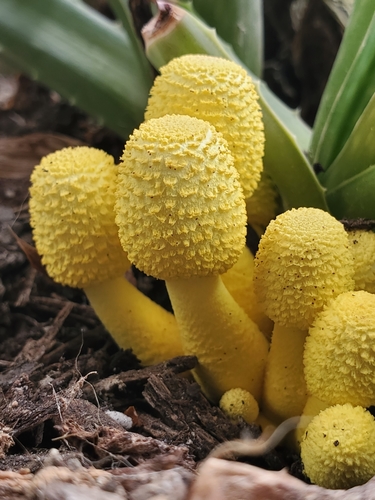
Outdoor ornamental gardens, commercial greenhouses, indoor tropical potting soil. Thermophilic; thrives in warm, humid tropical conditions. Extremely common in hotel and resort gardens, botanical parks, and indoor planters across the Yucatán Peninsula.
Identification Features
Cap 2–6 cm, bright sulfur-yellow to lemon-yellow throughout (cap, stipe, gills); surface with powdery or scaly texture; ring present on stipe; fragile; appears suddenly overnight in potting soil. Vivid yellow coloration is highly distinctive.
Toxin Class
Severe gastrointestinal irritants — exact toxin composition not fully characterized. Causes nausea, vomiting, and abdominal cramping upon ingestion. Toxicity confirmed across multiple case reports of toddler and pet exposures.
Onset Timeline
1–3 hours post-ingestion. GI symptoms: nausea, vomiting, abdominal pain. Self-limited in most adults. Pediatric and small-pet exposures require monitoring for significant fluid loss and potential systemic effects.
Exposure Risk
⚠ Bright yellow coloration frequently causes alarm and panic in parents and pet owners — most calls to poison control for this species are from households. Occasionally ingested by toddlers reaching into garden planters or pets. Severity is unpredictable; evaluate all pediatric exposures clinically.
Treatment
Supportive care. IV fluids and antiemetics for moderate-to-severe GI symptoms. Monitor pediatric patients for dehydration. No specific antidote. Most adults and older children recover without intervention within 12–24 hours.
Nahuatl Name
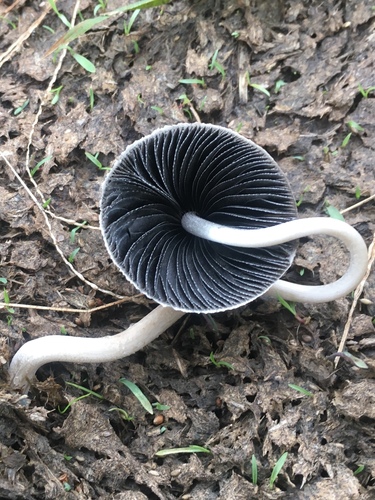
Tlapalnanacatl — "Mottled/dung mushroom"
Ecological Niche
Coprophilous; abundant on horse and cattle dung in coastal ranching lowlands. Thrives in the pastoral and ranching zones of Campeche, Yucatán, and Tabasco. Appears year-round in warm humid conditions wherever large livestock are kept.
Identification Features
Cap 2–5 cm, pale grayish-buff to whitish-gray, hemispherical then flattening; gills mottled gray-black at maturity; stipe long, slender, solid, whitish-gray; black spore print. Does not exhibit bluing reaction — this is the key differentiator from psychoactive species.
Toxin Class
Mildly toxic to non-toxic — no confirmed primary toxin at low doses. Causes diagnostic confusion and severe anxiety reactions when misidentified. GI upset reported at large ingested volumes. Does not contain psilocybin or psilocin.
Onset Timeline
Variable — GI upset if large quantities ingested. Anxiety and panic reactions dominate clinical presentations due to the belief that the patient consumed a psychoactive species. Presentations are driven by expectation and misidentification context rather than true pharmacological toxicity.
Lookalike Confusion
⚠ Misidentified by foragers seeking Psilocybe spp. or Panaeolus cyanescens. Key differentiators: no bluing reaction, pale grayish-buff cap (not caramel-brown), solid non-hollow stipe, white veil remnants. Ingestion of large quantities driven by misidentification may produce GI distress. Psychoactive effect is absent — patient anxiety should be managed accordingly.
Treatment
Supportive and reassurance-based management. GI symptoms: antiemetics and IV fluids if warranted by clinical presentation. Address anxiety through calm reassurance of non-psychoactive nature of ingested species. No specific antidote. Monitor for GI dehydration if large quantities reported.
Antidote & Treatment Matrix
| Target Toxin |
Clinical Syndrome |
Primary Antidote / Intervention |
Secondary Therapy |
| Pleurocybella toxins |
Delayed Encephalopathy (altered mental status, seizures) |
Supportive Care & Neurological Protection |
Urgent hemodialysis if renal insufficiency; seizures — Benzodiazepines |
| Lycoperdon Spores |
Lycoperdonosis (acute allergic alveolitis, respiratory distress) |
Systemic Corticosteroids (IV Methylprednisolone) |
Oxygen therapy, bronchodilators, antimicrobials if secondary infection |
| GI Toxins (Chlorophyllum) |
Hyper-acute Gastroenteritis (hypovolemic shock risk) |
Aggressive IV Crystalloid Volume Replacement |
Correct severe hypokalemia, Ondansetron |
| GI Irritants (Leucocoprinus) |
GI Irritation (pediatric/small-pet exposure) |
Supportive Care; IV Fluids + Antiemetics |
Pediatric dehydration monitoring; no specific antidote |
| Diagnostic Confusion (Panaeolus antillarum) |
Anxiety Reaction, Mild GI Upset (non-psychoactive) |
Reassurance & Supportive Management |
Antiemetics if GI symptoms; supportive if anxiety prominent |
Veterinary Reference — Canine & Equine
Lycoperdonosis — Canine
Dogs bite or dig into mature puffballs (Lycoperdon perlatum) during outdoor activity in tropical forest margins and lawns. Acute-onset dyspnea, rapid wheezing, severe coughing, and lethargy develop within hours of spore inhalation. Chest radiographs reveal bilateral pulmonary infiltrates consistent with alveolitis. Do NOT induce emesis if respiratory distress is present. Provide oxygen-rich environment immediately; administer Dexamethasone (fast-acting anti-inflammatory) promptly. Urgent referral to veterinary emergency care.
Gastroenteritis — Canine / Feline
Rapid-onset vomiting and watery diarrhea following ingestion of Chlorophyllum molybdites from lawns or Leucocoprinus birnbaumii from garden planters and potting soil. Both species are accessible to free-ranging pets in tropical gardens and resort grounds. Assess for dehydration and hypovolemia; IV fluid resuscitation as clinically indicated.
Regional Triage Protocol
- Spore inhalation (puffball): Oxygen-rich environment immediately. Dexamethasone. Urgent transport to veterinary emergency facility.
- GI toxicity (Chlorophyllum / Leucocoprinus): IV fluids for dehydration and volume replacement. Antiemetics as indicated. Monitor electrolytes.
- Equine exposure: Coastal ranching regions — assess for Chlorophyllum ingestion from pastures. Supportive care; fluid therapy for severe GI presentations.
Emergency Veterinary Contact
Campus de Ciencias Biológicas y Agropecuarias UADY (CCBA-UADY), Mérida, Yucatán — veterinary toxicology referral for the Yucatán Peninsula.
911
Regional Clinical Context — Tropical Lowlands & Yucatán
The Tropical Lowlands & Yucatán Peninsula presents a clinically distinct mushroom toxicity profile driven by year-round tropical conditions. Chlorophyllum molybdites is the dominant poisoning risk in this region — it is the most commonly reported cause of mushroom GI toxicity in the tropical Americas and is found abundantly on resort grounds, municipal parks, and suburban lawns across the Yucatán Peninsula. Clinical presentations cluster in the tourist season when non-local visitors mistake it for edible fungi found in their home countries. Lycoperdonosis from Lycoperdon perlatum is an underrecognized respiratory emergency — presentations are often initially misdiagnosed as infectious pneumonitis until the exposure history is obtained. Emergency departments in this region should maintain a low threshold for corticosteroid therapy in acute respiratory presentations with relevant outdoor exposure history.
For Emergency Cases: Call
911 immediately. For US citizens traveling in Mexico:
1-800-222-1222 (US Poison Control, 24/7). This reference guide is a decision-support tool and does not replace emergency medical services or direct clinical consultation with Medical Toxicology.