☎ Emergency Contacts — Mexico Region 2
| Common Name | Scientific Name | Tier | Toxin | Onset | Primary Syndrome |
|---|---|---|---|---|---|
| Funeral Bell | Galerina marginata | Tier 1 | Amatoxins | 6–24 hr | Lethal hepatotoxicity |
| Fiber Cap | Inocybe geophylla | Tier 2 | Muscarine | 15–30 min | SLUDGE / autonomic crisis |
| Ivory Funnel | Clitocybe dealbata / rivulosa | Tier 2 | Muscarine | 15–30 min | SLUDGE / autonomic crisis |
| Blue Meanies | Panaeolus cyanescens | Tier 2 | Psilocybin / Psilocin | 20–60 min | Neurotropic / pediatric emergency |
| Jack-o'-Lantern | Omphalotus olivascens / olearius | Tier 2 | Illudins | 30 min–2 hr | Severe necrotizing gastroenteritis |
Amatoxin Species — Lethal Hepatotoxicity
Immediate emergency management required. Delayed presentation is characteristic — absence of early symptoms does not indicate safety. Initiate 911 consultation for any suspected Galerina ingestion. Critical lookalike confusion with psychoactive Psilocybe species in this region.
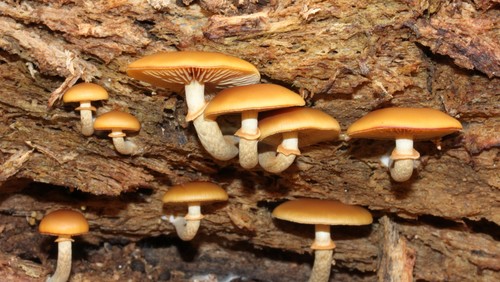
Funeral Bell
• IV Silibinin (Legalon SIL) — primary antidote where available; inhibits hepatocyte uptake of amatoxins
• Aggressive biliary flushing (nasobiliary drainage if indicated)
• Multi-dose activated charcoal (MDAC) — 50g q4–6h for first 24–48h
• N-acetylcysteine (NAC) IV — hepatoprotective adjunct
• Monitor LFTs, coagulation (PT/INR), creatinine q6–12h
• Liver transplant evaluation if INR >6, creatinine >3 mg/dL, or grade III–IV encephalopathy
Muscarinic, Neurotropic & GI Toxin Species
Rapid-onset autonomic crises, neurotropic emergencies, and severe gastroenteritis. Prompt clinical management required — particularly for muscarinic species where airway compromise can develop within minutes.
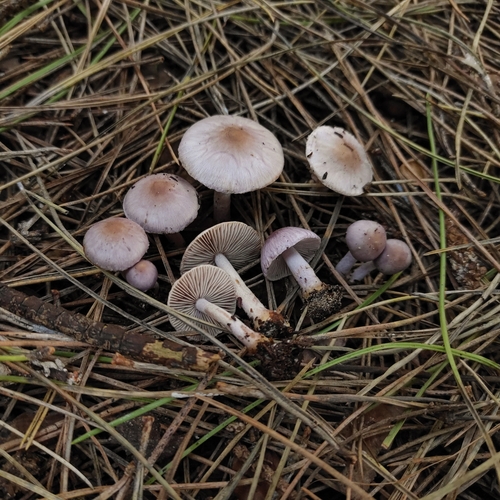
Fiber Cap
Also: bradycardia, bronchospasm, bronchorrhea, miosis, diaphoresis. DUMBELS mnemonic equivalent.
• Atropine Sulfate IV 1–2 mg — titrate to drying of secretions (not to heart rate). Repeat q5–10 min as needed; large doses may be required
• Airway management — secretion-induced bronchospasm may require intubation
• Aggressive IV fluid replacement for losses from salivation, diarrhea, diaphoresis
• No role for pralidoxime (muscarine is not an organophosphate)
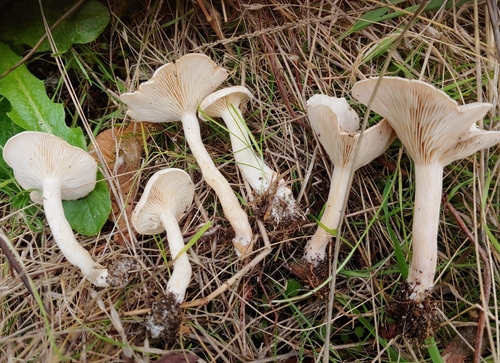
Ivory Funnel
• Atropine Sulfate IV 1–2 mg titrated to secretion drying
• Airway management — bronchospasm and bronchorrhea may be life-threatening
• Aggressive IV fluid replacement
• Symptomatic supportive care; monitor cardiac rhythm
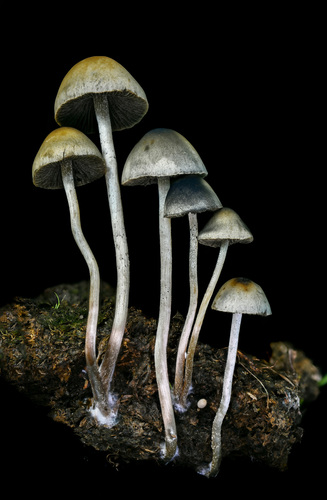
Blue Meanies
• Quiet, low-stimulation environment — reduce sensory triggers
• Low-dose Benzodiazepines — Diazepam IV/PO for severe agitation or seizures; preferred over antipsychotics
• Monitor cardiac rhythm, temperature, blood pressure
• Pediatric seizures: standard benzodiazepine protocol (Diazepam 0.2–0.3 mg/kg IV)
• No specific antidote; supportive care is definitive management
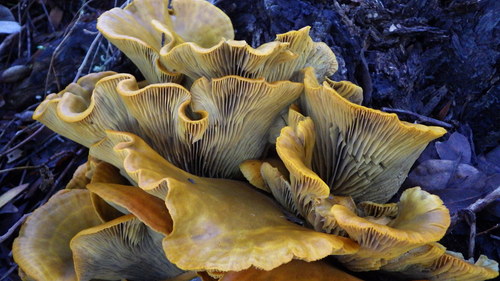
Jack-o’-Lantern
• Aggressive IV Fluid Hydration — isotonic crystalloid; target urine output >0.5 mL/kg/hr
• Ondansetron IV 4–8 mg for refractory vomiting
• Mucosal protectants (sucralfate, PPIs)
• Electrolyte correction — monitor and replace potassium, sodium
• Activated charcoal if <1 hour post-ingestion
• No specific antidote; supportive GI management is definitive
| Toxin Class | Species | Syndrome | Primary Treatment | Adjunct / Notes |
|---|---|---|---|---|
| Amatoxins | Galerina marginata | Cyclopeptide — hepatic failure | IV Silibinin (Legalon SIL) + aggressive biliary flushing | MDAC q4–6h; N-acetylcysteine IV; transplant evaluation if INR >6 |
| Muscarine | Inocybe geophylla, Clitocybe dealbata | SLUDGE — cholinergic crisis | Atropine Sulfate IV 1–2 mg, titrated to dry secretions | Airway management, aggressive IV fluid replacement; no pralidoxime |
| Illudins | Omphalotus olivascens | Severe necrotizing gastroenteritis | Aggressive IV Fluid Hydration + Ondansetron IV | Mucosal protectants; electrolyte correction (K⁺, Na⁺) |
| Psilocybin / Psilocin | Panaeolus cyanescens | Neurotropic / hallucinogenic | Supportive care in quiet environment | Low-dose Diazepam IV for severe agitation or seizures; pediatric protocol |
🐾 Veterinary Reference — Canine & Livestock Toxicology
Regional Veterinary Context
Cloud forest farms and rural homesteads in Oaxaca, Chiapas, and Veracruz keep dogs as working animals in environments where all five species occur. Livestock grazing in pastures bordering cloud forest have direct access to Panaeolus cyanescens and Clitocybe/Omphalotus fruiting bodies. Rapid triage is essential as muscarinic crises can be fatal within hours in small-breed dogs.
Triage: Atropine sulfate 0.02–0.04 mg/kg — administer half dose IV, half dose IM/SQ. Repeat q5–10 min until secretions dry. Monitor airway patency; bronchospasm and bronchorrhea can be rapidly fatal in small dogs.
Supportive: IV fluid support for dehydration losses; monitor cardiac rhythm.
Triage: Prioritize gastric lavage if <2 hours post-ingestion; immediate activated charcoal binding (1–3 g/kg PO). Aggressive IV fluid therapy; serial liver enzyme monitoring q12–24h.
Supportive: Liver support with SAMe (S-adenosylmethionine) 20 mg/kg PO daily; Milk Thistle (silymarin) where IV silibinin unavailable; N-acetylcysteine IV in severe cases.
Triage: Diazepam 0.5–1 mg/kg IV for seizure control. Quiet, low-stimulation environment. Monitor thermoregulation.
Supportive: Activated charcoal if <1 hour post-ingestion; IV fluid support.
Triage: IV crystalloid fluid replacement; antiemetics (maropitant 1 mg/kg SQ); electrolyte monitoring (potassium).
Supportive: GI protectants; rehydration; monitoring for dehydration-related complications.
Regional Clinical Note — Cloud Forest Dual-Risk Profile
The Southern Cloud Forest presents a unique dual poisoning risk not found in other Mexican regions. Galerina marginata shares ecological niche and morphological features with the Psilocybe species gathered for traditional Zapotec and Mazatec ceremonial use in Oaxaca and Chiapas. Clinicians should be aware that patients presenting with unexpectedly severe GI symptoms following intentional mushroom ingestion may have gathered Galerina rather than Psilocybe — this clinical scenario requires immediate amatoxin protocol regardless of stated intent. The bioluminescent Omphalotus / chanterelle confusion is the most common poisoning presentation in this region during rainy season (July–October).