About This Guide
This guide covers the 10 most clinically significant toxic mushroom species in Alberta, Saskatchewan, and Manitoba — including amatoxin species, orellanine nephrotoxins, gyromitrin, ibotenic acid/muscimol, muscarine, and gastrointestinal toxins. A unique agricultural landscape risk section addresses hazards specific to prairie cattle pastures, grain fields, and rural foraging communities that have no equivalent in other regional guides.
Poison Control (tap to call): Alberta 1-800-332-1414 • Saskatchewan 1-866-454-1212 • Manitoba 1-855-776-4766
Quick Reference — All 10 Species
| Species | Common Name | Tier | Toxin | Onset | Primary Risk |
|---|---|---|---|---|---|
| Amanita phalloides | Death Cap | Tier 1 | Amatoxins | 6–24h GI / 72–96h hepatic | Fulminant hepatic necrosis |
| Galerina marginata | Autumn Skullcap | Tier 1 | Amatoxins | Biphasic (identical) | Fulminant hepatic necrosis |
| Cortinarius rubellus | Deadly Webcap | Tier 1 | Orellanine | 3–14 days | Irreversible renal failure |
| Gyromitra esculenta | False Morel | Tier 1 | Gyromitrin/MMH | 6–12h | Hemolysis, seizures, hepatorenal |
| Paxillus involutus | Brown Roll-Rim | Tier 2 | Paxilline (IgG-mediated) | Variable (cumulative) | Immune hemolytic anemia |
| Amanita muscaria var. flavivolvata | Prairie Fly Agaric | Tier 2 | Ibotenic acid/Muscimol | 30 min – 2h | CNS toxidrome, delirium |
| Amanita pantherina | Panther Cap | Tier 2 | Ibotenic acid/Muscimol | 30 min – 2h | CNS toxidrome (more potent) |
| Clitocybe dealbata | Ivory Funnel | Tier 2 | Muscarine | 15–30 min | Cholinergic crisis (SLUDGE) |
| Inocybe species | Prairie Fibrecap | Tier 2 | Muscarine | 15–30 min | Cholinergic crisis |
| Scleroderma citrinum | Common Earthball | Tier 3 | Sclerodermin | 30 min – 2h | GI toxicity; puffball misidentification |
Lab Value Monitoring: Amatoxin False-Recovery Phase
The false recovery phase occurs between 24 to 72 hours post-ingestion. While the patient's severe gastrointestinal symptoms resolve, subclinical hepatic necrosis progresses aggressively.
Order the following labs every 6 hours (q6h) from initial presentation through Day 5:
- Transaminases: ALT and AST
- Coagulation: INR, PT, and PTT
- Metabolic/Renal: Creatinine, BUN, Glucose, and Total Bilirubin
- Acid-Base: Blood Lactate and Arterial Blood Gas (ABG)
Critical thresholds:
- Aminotransferases (AST/ALT): May remain normal or mildly elevated (<100 U/L) during the first 24 hours. A steep logarithmic rise (often exceeding 2,000 to 5,000+ U/L) typically begins abruptly around hour 36 to 48.
- Hepatic Encephalopathy: Any alteration in mental status (lethargy, confusion, asterixis) indicates progression to Fulminant Hepatic Failure (FHF).
- King's College Hospital Criteria: Contact a liver transplant center immediately if INR > 6.5 (regardless of encephalopathy), OR any three of: age < 10 or > 40 years; jaundice-to-encephalopathy interval > 7 days; INR > 3.5; Serum bilirubin > 300 µmol/L (or a rapidly rising bilirubin combined with an INR > 3.5 on Day 3 or 4) (~17.5 mg/dL).
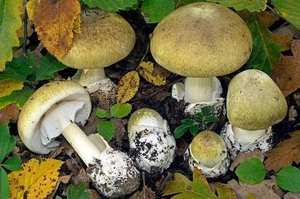
Identification: Yellow-green to olive cap (5–15 cm), white gills, skirt-like ring on stem, sack-like volva at base. Always dig for the volva. Lookalike: White button mushroom (Agaricus) — has pink/brown gills, no volva.
Clinical Syndrome: Phase 1 (6–24h): Explosive GI — vomiting, profuse watery diarrhea, cramping, dehydration. Phase 2 (24–72h): False recovery — LFTs normalizing; do not discharge. Phase 3 (72–96h+): Fulminant hepatic failure, coagulopathy, hepatic encephalopathy, multi-organ failure, death.
Alberta-specific note: A. phalloides is established in urban Calgary and Edmonton under ornamental European trees planted in parks and residential gardens. Most prairie cases involve urban foragers, immigrants familiar with edible Amanita species in their home countries, and residents gathering "white mushrooms" in parks. Take a careful foraging history including location.
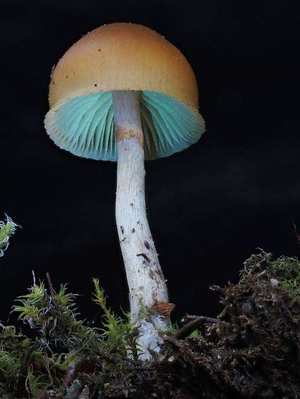
Identification: Small brown LBM (Little Brown Mushroom), 2–5 cm, honey-tan cap with slight umbo, ring on stem (often fragile), rusty-brown spore print. Growing on wood (diagnostic distinction from soil-growing species). Deceptively unremarkable appearance. Lookalike: Honey mushroom (Armillaria — edible), Psilocybe species (recreational drug-seeker confusion — fatal outcome reported).
Treatment: Identical to A. phalloides protocol — see above. ICU admission. Multi-dose activated charcoal. IV NAC. IV Silibinin. Benzylpenicillin G. Serial LFTs & INR q6–12h. Liver transplant centre early.
Alberta-specific note: Galerina marginata grows throughout aspen parkland — the broad transition belt across central AB, SK, and MB where recreational foraging is most common. Fatalities have occurred when collectors confused it with edible Pholiota or when recreational drug users sought Psilocybe mushrooms from logs.
3-Phase Delayed Onset Timeline:
Phase 1 (0–3 days): Completely silent — no symptoms. Patient has no warning. Phase 2 (3–14 days): Subacute onset — nausea, fatigue, flank pain, thirst/polyuria. Creatinine rises. May be confused with UTI, pyelonephritis, or viral illness. Phase 3 (weeks–months): Progressive CKD, potential ESRD requiring long-term dialysis or renal transplant.
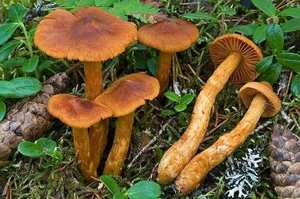
Identification: Rusty reddish-brown cap, cinnamon-colored gills, cortina remnants (cobweb-like veil) on stem, rusty-brown spore print. Lookalike: Chanterelle (edible — forking blunt ridges, no true gills, apricot/fruity odor) — this confusion has caused multiple fatalities in Europe.
Steam Inhalation Warning: MMH is volatile — boiling produces toxic vapours. Patients (and household members) may develop symptoms after standing over a pot of cooking False Morels without eating any. Ask about cooking activity. This is the same warning as on the Ontario guide — it applies equally in Alberta.
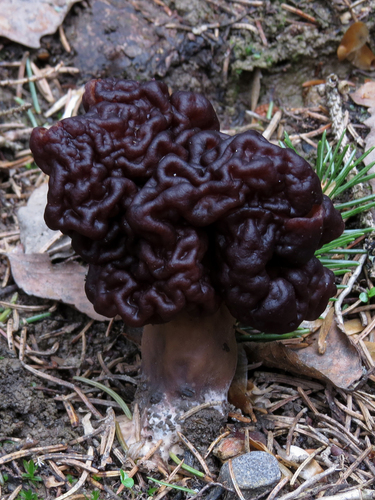
Identification: Brain-like or saddle-shaped cap (NOT honeycomb), reddish-brown, chambered stem (hollow in Morchella). Lookalike: True Morel (Morchella — highly prized edible) — honeycomb cap, fully hollow stem, Gyromitra cap is wrinkled/brain-like NOT pitted/honeycomb. This is the #1 spring foraging error in prairie provinces.
Clinical: GI onset (6–12h): nausea, vomiting, cramping. Followed by hemolytic anemia, methemoglobinemia (chocolate-brown blood, cyanosis), hepatorenal failure, seizures. High fatality if untreated seizures.
True Morel vs. False Morel — Differential Diagnosis
| Diagnostic Feature | True Morel (Morchella species) | False Morel (Gyromitra species) |
|---|---|---|
| Cap Texture | Pitted with distinct, geometric ridges and hollow pits (looks like a honeycomb or sponge). | Brain-like, wrinkled, wavy, or folded lobes (looks like a crumpled walnut). |
| Cap Attachment | Continuous. The bottom edge of the cap is directly fused to the stem (no overhang). | Skirt-like. The cap hangs free over the top of the stem, attached only at the very apex. |
| Internal Cross-Section | 100% Hollow. Cutting the mushroom completely in half from top to bottom reveals a single, continuous empty chamber. | Stuffed or Chambered. Internal structure is filled with cottony white flesh, chambers, or folds. |
| Flesh Consistency | Brittle but crisp; snaps cleanly. | Fragile, plastic-like, or squishy; easily turns to mush. |
| Primary Season | Mid to late Spring (May–June in Western Canada). | Early Spring, often fruiting immediately post-snowmelt (April–May). |
If a patient presents with symptoms after eating a mushroom matching the False Morel criteria, assume Gyromitrin toxicity. Have IV Pyridoxine (Vitamin B6) ready at 25 mg/kg to treat seizures.
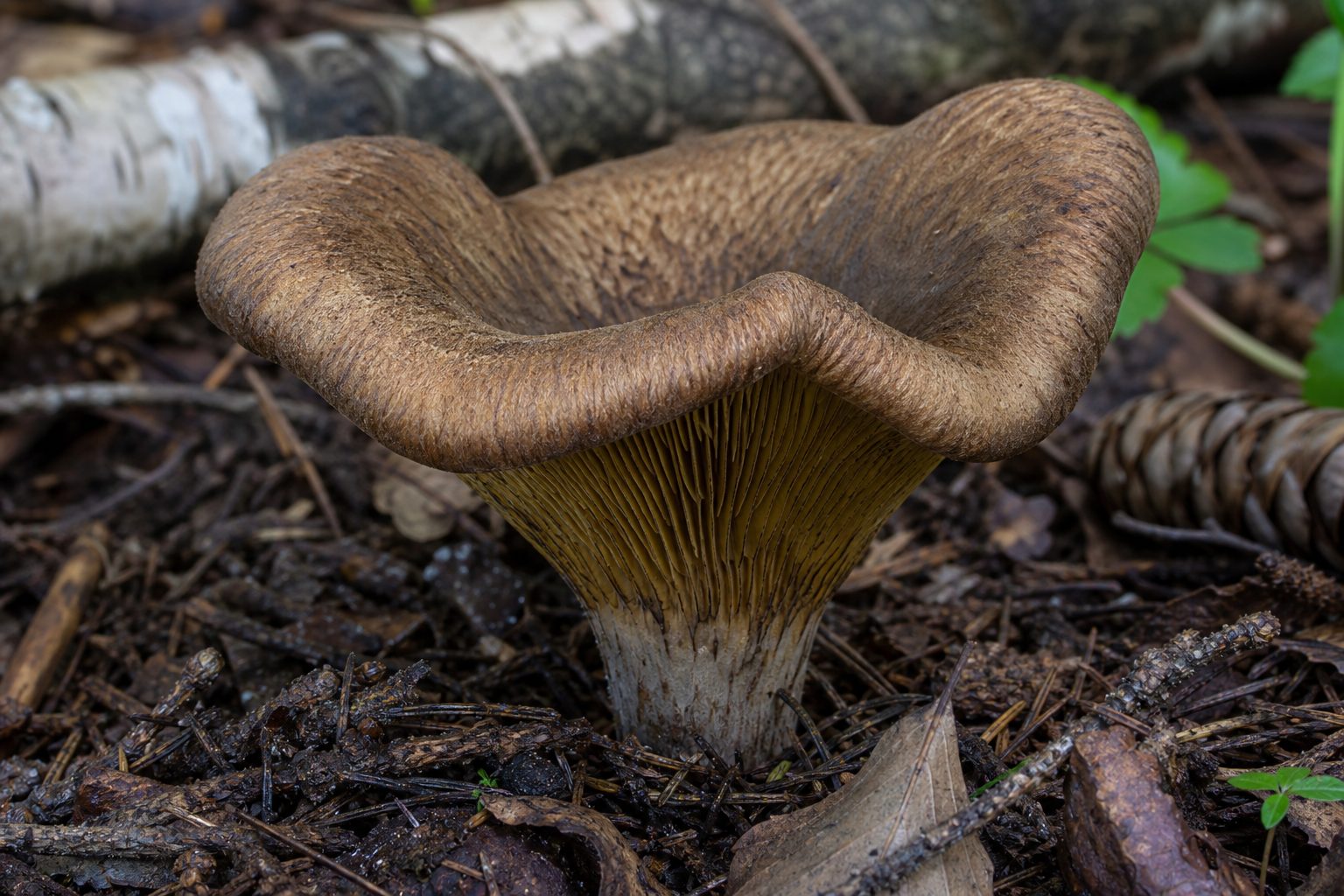
Mechanism: Paxilline (and related antigens) trigger immune complex formation and complement activation, leading to intravascular hemolysis. Unlike most mushroom toxins, this is an immune-mediated reaction — the mushroom itself is not acutely toxic on first exposure, but sensitization accumulates. Fatal hemolytic crises have occurred in individuals who ate Paxillus involutus regularly for decades.
Identification: Brown cap with involuted (inrolled) margin, decurrent gills that bruise brown when pressed, brown spore print. Commonly mistaken for edible Boletus-family mushrooms by inexperienced foragers.
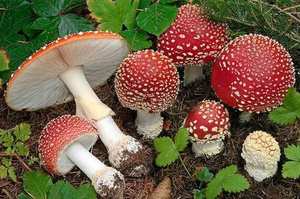
Prairie-specific note: var. flavivolvata is the prairie variant of Amanita muscaria — the cap is yellow-orange, not red as commonly depicted. This is an important identification distinction for Alberta and Saskatchewan foragers who may not recognize it as Fly Agaric based on color alone. White warts, white gills, ring, and bulbous base are consistent.
Clinical: CNS toxidrome — confusion, delirium, hallucinations, ataxia, sedation, mydriasis (dilated pupils). Muscarinic symptoms (salivation, lacrimation) minor. NOT a typical anticholinergic toxidrome — sweating often present. Self-limiting 6–12h. Rarely fatal but requires airway monitoring in severe cases.
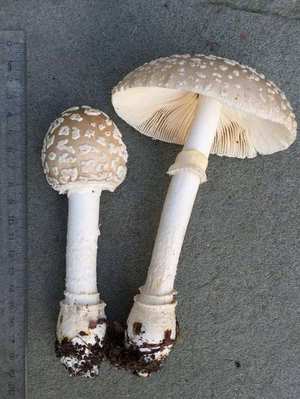
Identification: Brown cap with white warts, white gills, ring, bulbous base with distinctive gutter-like volva collar. Similar structure to A. muscaria but brown cap. Lookalike: Amanita rubescens (Blusher — edible but turns pink when cut) — confirm color change before assuming edibility.
Compared to A. muscaria: A. pantherina contains higher concentrations of ibotenic acid and muscimol. Clinical syndrome is similar but often more severe — deeper sedation, more pronounced ataxia, higher risk of respiratory depression in large ingestions.
SLUDGE Syndrome: Salivation, Lacrimation, Urination, Defecation, GI distress, Emesis — classic cholinergic crisis. Also bradycardia, bronchospasm, miosis (pinpoint pupils), diaphoresis. Severe cases: bronchorrhea, respiratory failure.
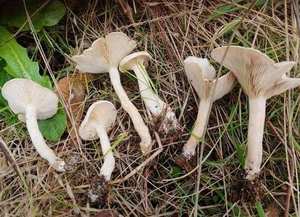
Identification: Small white to pale buff funnel-shaped cap (3–6 cm), crowded decurrent gills, white spore print. Grows in grassland, lawns, often in fairy rings. Lookalike: Marasmius oreades (Fairy Ring Mushroom — common edible), field mushrooms (Agaricus species). Prairie foragers sometimes collect these from lawn edges.
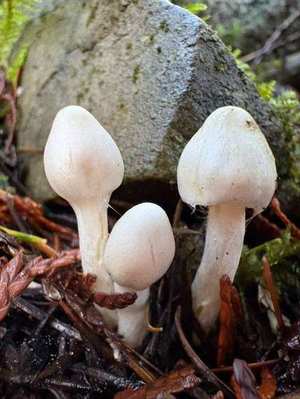
Identification: Fibrous/silky (fibrillose) cap texture, typically brown to buff, often with central umbo. Gills pallid to brown, often with musty/spermatic odor. Spore print brown. Multiple prairie species in this genus — species-level ID not required clinically (all treated identically). Lookalike: Various small edible LBMs (Little Brown Mushrooms) — an extremely common and dangerous confusion group.
Treatment: Identical to Clitocybe dealbata. Atropine IV, titrate to secretions. ECG monitoring. Most cases resolve with adequate atropinization within hours.
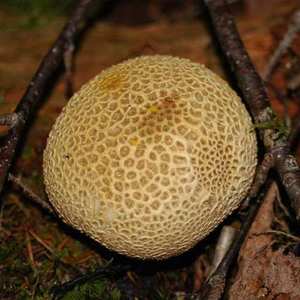
Interior Distinction (diagnostic): Slice through the fruiting body. Scleroderma citrinum interior is solid purple-black or marbled purple-grey — NEVER pure white. Edible Giant Puffball (Calvatia gigantea) and Gem-studded Puffball (Lycoperdon perlatum) interiors are pure homogeneous white throughout when edible. Any discoloration = do not eat. This visual check prevents the majority of puffball misidentifications.
Clinical: Primarily GI symptoms — nausea, vomiting, cramping, diarrhea. Generally self-limiting but can be severe. Atropine-like effects reported at high doses (uncertain). Cardiovascular effects (tachycardia, hypotension) reported in rare cases.
Diagnostic Flowchart — Mushroom Ingestion
Initial Assessment Algorithm
Toxin Stability Matrix
| Toxin | Heat Stable? | Water Soluble? | Clinical Note |
|---|---|---|---|
| Amatoxins (α-amanitin) | Yes — fully heat stable | Partially | Cooking does NOT destroy. Boiling water retains toxin. |
| Orellanine | Yes — fully heat stable | Partially | Not destroyed by any cooking method. No antidote. |
| Gyromitrin/MMH | Partially — volatile | Yes | Partially reduced by open-pot boiling; steam is toxic. Drying reduces but doesn't eliminate. |
| Paxilline (antigen) | Partially | Yes | Immune sensitization accumulates over years of exposure. |
| Ibotenic acid | Partially | Yes | Partially converted to muscimol on drying. Cooking reduces but doesn't eliminate. |
| Muscimol | Yes | Yes | More potent CNS effect than ibotenic acid. |
| Muscarine | Yes | Yes | Not reduced by cooking; boiling water retains toxin. |
| Sclerodermin | Yes | Partially | Cooking does not prevent GI toxicity. |
🌾 Agricultural Landscape Risk — Unique to Alberta & Prairies
This Section Has No Equivalent in Other Regional Guides
The prairie agricultural landscape creates specific mushroom toxicity risks that are absent or rare in forested regions. Healthcare providers in rural Alberta, Saskatchewan, and Manitoba should be aware of the following hazards specific to agricultural environments:
- Cattle pasture mushroom ingestion: Children playing in cattle pastures may ingest Amanita, Inocybe, Clitocybe, and Paxillus species growing in manure-enriched grassland. Livestock themselves may develop mushroom toxicity, and foragers may gather field mushrooms (Agaricus) alongside toxic lookalikes. Agaricus xanthodermus (Yellow-Staining Mushroom) causes GI distress and is commonly found in prairie pastures.
- Grain field species: Post-harvest grain fields and silage areas create disturbed soil habitat for Gyromitra, Inocybe, and Clitocybe species. Spring cultivation of flax and canola fields commonly disturbs False Morel habitat, increasing exposure during morel season. Rural families foraging near grain fields after spring rains are at heightened risk.
- Rural forager risk profile: Prairie foragers often lack access to the mycological societies and identification resources available in urban centres. New immigrant communities from Central and Eastern Europe (where Gyromitra esculenta is traditionally eaten after drying/boiling — a practice that is not reliably safe) represent a specific risk population. Educate rural healthcare providers on the cultural context of prairie foraging.
- Irrigation ditch and shelter belt species: Shelter belts (planted rows of trees) in prairie agricultural areas host aspen parkland species including Galerina marginata on decaying poplar and Cortinarius species under mature spruce. These planted tree belts create isolated patches of forest habitat in otherwise open prairie — concentrating the forest mushroom risk along predictable linear corridors.
- Livestock toxicity & secondary exposure: Cattle and sheep may consume toxic mushrooms in pastures. Producers may handle or process animals that have ingested toxic species. Cases of ranchers tasting or cooking fungi found near sick livestock have occurred. If a producer presents after exposure to a sick animal and reports unusual fungal growth in the pasture, consider mushroom toxicity in the differential.
- Community gardens and urban agriculture: Community gardens in Calgary and Edmonton introduce mushrooms from imported soil and wood chip mulch — including Amanita phalloides mycorrhizae transported with ornamental European oak saplings. Urban agriculture spaces with wood chip beds should be treated as high-risk environments for Death Cap presence.
Regional Context — Alberta & Saskatchewan Foraging Communities
Alberta and Saskatchewan have active foraging communities, particularly in urban centres (Calgary, Edmonton, Saskatoon, Regina) and rural areas with Ukrainian, Polish, and Scandinavian heritage communities where traditional mushroom foraging is a cultural practice. The Rocky Mountain foothills attract wilderness foragers seeking chanterelles, porcini, and pine mushrooms. The boreal transition zone of northern Alberta and northern Saskatchewan is prime territory for amatoxin and orellanine species.
Manitoba foragers concentrate activity in the Whiteshell, Riding Mountain, and Duck Mountain provincial parks — mixed boreal/parkland habitat where Galerina, Cortinarius, and Gyromitra species are found. Winnipeg has a significant Ukrainian community with traditional mushroom gathering practices.
Spring morel season (April–May) is the highest-risk period in all three provinces. Gyromitra esculenta peaks during the same window as true morels — concentrated in northern Alberta and Saskatchewan boreal edges, post-fire areas, and disturbed conifer habitat.